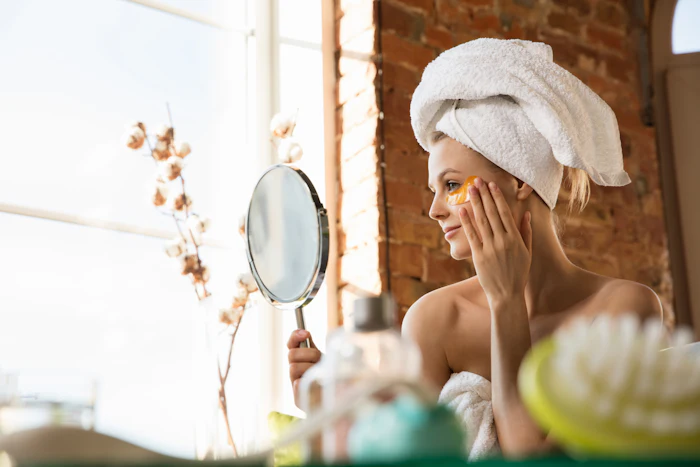
One of the conversations I find myself having more frequently in the clinic nowadays is not about wrinkles, pigmentation or radiance. It is about curating the face as a living, aging structure.
Consumers’ Choice
Facial aging follows recognizable patterns involving changes in skin, soft tissue and underlying structure. Increasingly, consumers seeking to address their aging concerns are navigating an overwhelming choice in terms of skincare products, supplements, injectables and other aesthetic interventions, with very little understanding of the cumulative results. They are often making decisions feature by feature, and each with a different practitioner — correcting an increasingly prominent nasolabial fold, unevenness of the upper lip line due to aging, the under-eye area due to lack of sleep or flattened cheeks following weight loss — without necessarily understanding the wider biological and structural changes affecting the skin and the tissues beneath.
Attempting to correct individual signs of aging over time can alter the overall appearance of the face, particularly when interventions are undertaken for years without considering the broader structural and age-related changes occurring across the face. Alongside aesthetic procedures, consumers are also navigating increasingly sophisticated skincare routines involving multiple products, active ingredients and layering approaches tailored to different skin types and concerns, adding a further layer of complexity to their decision making.
The challenge is that the face continues to age across multiple interconnected compartments. Bone remodels, fat compartments shift, muscles change their activity patterns and the skin itself undergoes structural and functional alterations. Dental interventions can influence facial support structures and proportions, while changes in oral architecture may affect the positioning of soft tissues across the lower face. Yet consumers often focus on a particular feature rather than seeing the face as an integrated biological system. In affluent circles, one practitioner can have oversight of a client's facial aging, monitor these changes objectively and discuss their subjective impact in line with clinical opinion. However, in many cases consumers consult multiple practitioners at one time.
Technologies Advance in Time
In advertising, on social media and increasingly in public life, we see faces with “work done” looking less harmonious with time. This is not always the result of poor practice, but rather reflects the cumulative effect of multiple interventions performed with good intentions, using technologies and techniques that were considered advanced at the time. Aesthetic medicine evolves rapidly. New understanding of facial anatomy, lymphatic drainage, tissue biomechanics and long-term tissue behavior continues to emerge, often changing how previous treatments are viewed.
In the clinic, I recommend skincare routines that work alongside all other modalities — mindfully excluding massage in areas regularly treated with Botox and navigating around skincare advice given by other practitioners. We now know that some fillers may remain within tissue far longer than originally anticipated. Imaging studies have demonstrated detectable hyaluronic acid filler years after placement, raising important questions about cumulative treatment planning and long-term tissue behavior5. Filler migration is another increasingly recognized phenomenon. Scientific literature describes several potential mechanisms through which filler movement may occur, with changes sometimes becoming apparent months or even years after treatment and influencing facial contours and proportions4,7.
As understanding of long-term filler persistence and migration continues to evolve, cumulative effects of repeated interventions over time should always be considered. Growing awareness of long-term filler persistence and migration has prompted discussion within the field of aesthetic medicine about reassessment of past treatments and long-term treatment planning, but the decision-making is still in the hands of the consumer. If repeated interventions require us to think more carefully about the long-term behavior of tissues, they also raise a broader question: how can we better support the skin's own capacity for repair and regeneration throughout the aging process?
Evolving the Pro-Aging Conversation
I believe the conversation around skin health and aging needs to evolve. I believe that skincare and interventions should be viewed as part of an overall strategy to support facial skin quality, structure and function, rather than a simple replacement of lost volume or correct individual features. Increasingly, the focus should shift to regeneration, repair and supporting the skin's own biological capacity.
From a systems biology perspective, aging and repair are intimately connected processes. Aging skin demonstrates reduced regenerative capacity, altered inflammatory responses and slower healing. Moreover, many of the cellular pathways involved in aging also play critical roles in tissue repair. The relationship is not straightforward. Certain biological processes that contribute to visible aging can simultaneously support healing and regeneration. This highlights an important trade-off within human biology: mechanisms that help protect and repair tissues may also contribute to age-related changes later in life3,6. This perspective shifts the discussion away from simply filling, lifting or freezing tissue and moves it towards supporting healthier tissue function, achieving balance and understanding when less may be more appropriate.
There is also a psychological dimension at play. Facial appearance strongly influences perceptions of age, health and vitality. Perceived age is influenced by both biological and environmental factors, and age-related facial characteristics contribute significantly to how individuals are assessed by others1. Facial aging follows recognizable patterns that can be identified by both human observers and computational models2.
When facial appearance changes in ways that differ from expected age-related characteristics, it does not look “natural.” The relationship between facial appearance and age perception is complex and shaped by multiple biological and environmental influences1. While people may not always be able to articulate why a face appears different, they are responding to subtle changes in the relationships between facial structures and age-related cues.
Integrated Approach to Skin Health and Aging
An increasing interest in maintaining facial tissue quality, supporting skin function and preserving facial individuality requires collaboration across disciplines. Dermatologists, aesthetic practitioners, dentists, facial surgeons, beauty therapists and skincare scientists all hold different pieces of the puzzle. Consumers do not experience their face through professional silos but as one connected biological structure.
Perhaps the next evolution of skin health and skincare is not simply the development of more efficacious products, but a more integrated understanding of the face itself — one that recognizes the interconnected biology of aging, repair and appearance. Ultimately, healthy aging is not about making a face look younger; it is about helping people age in a way that preserves function, appearance and a recognizable sense of self.
References
- Clatici, V. G., Voicu, C., Voaides, C., Rosca, A. E., Tataru, C. P., Dalle, C., & Tatu, A. L. (2017). Perceived age and lifestyle: The specific contributions of biological and environmental factors to facial ageing. Clinical, Cosmetic and Investigational Dermatology, 10, 191–202. https://doi.org/10.2147/CCID.S103180
- Georgopoulos, M., Panagakis, Y., & Pantic, M. (2018). Modeling of facial aging and kinship: A survey. Journal of Visual Communication and Image Representation, 58, 528–549. https://doi.org/10.1016/j.jvcir.2018.11.004
- Khalid, K. A., Tan, J. J., Kabir, M. H., Chowdhury, S. R., & Islam, M. T. (2022). Aging and wound healing of the skin: A review of clinical and pathophysiological hallmarks. International Journal of Molecular Sciences, 23(23), 14837. https://doi.org/10.3390/ijms232314837
- King, M., & Bassett, S. (2015). Filler migration: A number of mechanisms to consider. Journal of Clinical and Aesthetic Dermatology, 8(12), 27–32.
- Master M, Azizzadeh A, Master V. Hyaluronic acid filler longevity in the mid-face: a review of 33 magnetic resonance imaging studies. Plast Reconstr Surg Glob Open. 2024;12:e5934.
- O'Reilly, S., O'Connor, R., Murphy, M., et al. (2024). Aging, senescence, and cutaneous wound healing—A complex relationship. Frontiers in Immunology, 15, Article 1382212. https://doi.org/10.3389/fimmu.2024.1382212
- Wollina, U. (2023). Filler migration after facial injection—A narrative review. Cosmetics, 10(4), 115. https://doi.org/10.3390/cosmetics10040115