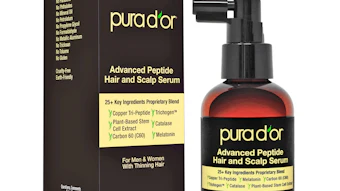
For decades, hair care innovation focused primarily on hair fiber, improving shine, softness, strength, and manageability. Today, consumers and formulators are increasingly focusing on the scalp.
Driven by the convergence of beauty, wellness, and science, scalp care has emerged as one of the fastest-growing segments in personal care. Consumers increasingly recognize that scalp health influences hair appearance, vitality, and resilience, making the scalp an essential part of their beauty routine.
This evolution is being accelerated by the "skinification" of hair care, a trend that treats the scalp with the same level of attention traditionally reserved for facial skin. According to Mintel GNPD, consumers want clearer segmentation and education: 70% believe there should be separate products for scalp versus hair. Consumers are embracing skincare-inspired ingredients and routines, from scalp serums and microbiome-friendly formulations to targeted treatments, seeking solutions that offer immediate benefits and long-term scalp health. Younger consumers (aged 18-29) globally are the core adopters and fastest-moving audience, as per Mintel GNPD data.
For brands, this creates new opportunities to address a wide range of scalp needs, from dandruff and oil control to hydration and sensitivity. As scalp health becomes central to hair beauty, it is opening new avenues for innovation. As the category evolves, one message is becoming increasingly clear: healthy scalps are the foundation of beautiful hair. No longer an afterthought: the scalp is now at the center of the modern hair care journey.
The present study describes a routine-based approach to sensitive scalp care, combining a mild cleansing shampoo with a rebalancing leave-on serum. Developed through microbiome-conscious ingredient selection, the formulations were evaluated using an integrated testing approach combining in vitro and in vivo assessments as well as sensory evaluation.
Formulation Approach
A shampoo and a serum were designed as part of the broader routine dedicated to sensitive scalps. Within this work, the shampoo, named hereafter Calming Shampoo, serves to gently remove soils (sebum, sweat residues, cellular debris, cosmetic residues, environmental dirt, etc.) while preserving scalp integrity, and the serum, named hereafter Rebalancing Serum, offers targeted hydration and rebalancing benefits.
Like the skin, the scalp hosts a diverse community of microorganisms that play a fundamental role in maintaining scalp homeostasis and protecting against disorders such as dandruff and seborrheic dermatitis1,2. The use of microbiome‑friendly ingredients that preserve beneficial bacteria and respect the scalp’s microbial balance and diversity is essential to achieving and maintaining scalp microbiome homeostasis.
Both the Calming Shampoo and Rebalancing Serum were developed using microbiome-friendly ingredients that had been independently certified for their compatibility with the skin and scalp microbiome.3,4 Standardized in vitro testing demonstrated that these ingredients neither inhibited the growth of representative scalp microorganisms nor disrupted microbiome diversity and balance. Ingredients intended for rinse-off formulations were evaluated following dilution and a 15-minute exposure period, while ingredients designed for leave-on applications were tested undiluted after four hours of exposure. Microbiome compatibility was determined by comparing colony-forming unit (CFU) counts with those of untreated controls. The scalp-specific microbial panel comprises Cutibacterium acnes, Malassezia furfur, Malassezia globosa, Staphylococcus capitis, and Staphylococcus epidermidis.
The Calming Shampoo was developed using a sulfate-free surfactant system centered on biosurfactants (INCI: Glycolipids), chosen for their mildness and suitability for sensitive scalp care. To counteract the drying effects commonly associated with cleansing, the formulation was enriched with conditioning agents, including a low-viscosity cationic dextran polymer (INCI: Dextran Hydroxypropyltrimonium/ Laurdimonium Chloride) and an amino-functional silicone glycol copolymer (INCI: Bis (C13-15 Alkoxy) PG-Amodimethicone). These ingredients were selected to improve wet combability and detangling performance while maintaining a pleasant sensory profile after washing. The formulation also included piroctone olamine as an anti-dandruff active, together with panthenol and niacinamide to support scalp hydration and reinforce scalp barrier function (see Table 1).
| Phase | INCI name | Wt% |
|---|---|---|
A | Water | 63.28 |
| Tetrasodium EDTA | 0.2 | |
| Niacinamide | 0.2 | |
| Glycerin | 3 | |
| B | Sodium Methyl Oleoyl Taurate | 2.5 |
C | Cocamidopropyl Betaine | 6.67 |
| Decyl Glucoside (a) | 6 | |
| *Glycolipids (b) | 2.5 | |
| *Glycolipids (c) | 1.1 | |
| Sodium Lauroyl Methyl Isethionate | 6.25 | |
| Piroctone Olamine | 0.3 | |
| Bis (C13-15 Alkoxy) PG-Amodimethicone (d) | 1 | |
| D | Citric acid | q.s. |
| E | Acrylates Copolymere | 5 |
| F | Sodium Hydroxide | q.s. |
| G | Dextran Hydroxypropyltrimonium/ Laurdimonium Chloride (f) | 1 |
| Panthenol (and) Propylene Glycol | 0.5 | |
| Phenoxyethanol | 0.5 |
*Microbiome-friendly ingredients
a: EcoSense 3000 Surfactant; b: EcoSense GL-60 HA Surfactant; c: EcoSense GL-60 HL Surfactant; d: DOWSIL 8500 Conditioning Agent; e: ACULYN 22 Polymer; f: DEXCARE CD-2 Polymer
The Rebalancing Serum was designed as a lightweight leave-on formulation structured with a water-soluble rheology modifier (INCI: Hydroxyethyl Cellulose). To enhance sensory attributes and product aesthetics, the formulation incorporated a conditioning silicone emulsion containing a high-viscosity silicone polymer (INCI: Divinyldimethicone/Dimethicone Copolymer (and) C12-13 Alketh-23 (and) C12-13 Alketh-3). In addition, a water-soluble silicone wax with a skin-temperature melting profile (INCI: Bis-PEG-18 Methyl Ether Dimethyl Silane) was included to help maintain scalp hydration. To promote scalp rebalancing, moisturization, and soothing benefits, the serum was supplemented with a combination of recognized scalp-care actives, including saccharide isomerate, sodium hyaluronate, and Salix alba (willow) bark extract (see Table 2).
| Phase | INCI name | Wt% |
|---|---|---|
A | Water | 76.72 |
| Hydroxyethyl Cellulose (a) | 0.75 | |
| Sodium Hydroxide | 0.02 | |
| Glycerin | 5 | |
| Bis-PEG-18 Methyl Ether Dimethyl Silane (b) | 2 | |
B | Glycerin (and) Water (and) Salix alba (Willow) Bark Extract | 2 |
| Saccharide Isomerate | 0.8 | |
C | Water | 10 |
| *Sodium Hyaluronate | 0.15 | |
D | Phenoxyethanol | 0.5 |
| *Divinyldimethicone/Dimethicone Copolymer (and) C12-13 Alketh-23 (and) C12-13 Alketh-3 (c) | 2 | |
| E | Citric acid | 0.06 |
*Microbiome-friendly ingredients
a: CELLOSIZE Hydroxyethyl Cellulose PCG-10; b: DOWSIL 2511 Cosmetic Wax; c: DOWSIL HMW 2220 Non-Ionic Emulsion / Dow
The benefits of these two formulations were studied using a combination of instrumental and sensory evaluations. Both moisturization and sensorial attributes were assessed on volar forearm skin, while the irritation potential was evaluated using three-dimensional in vitro reconstructed human epidermal skin equivalents. Although the scalp differs from other skin sites through the presence of larger hair follicles and a higher density of sebaceous and sweat glands, its overall architecture remains comparable. The principal physiological differences are related to a reduced barrier function, which has been associated with variations in stratum corneum lipid composition and organization.5 These considerations support the use of volar forearm skin and reconstructed human epidermal skin models as relevant and reproducible surrogate systems for assessing the hydration, sensory, and mildness properties of scalp care formulations.
Mildness and Scalp Compatibility
The mildness profile and scalp compatibility of the Calming Shampoo was benchmarked against two commercially available sulfate-free shampoos (see Table 3).
| Formula | Anionic | Amphoteric | Nonionic |
|---|---|---|---|
| Calming Shampoo | Isethionate, Taurate | Betaine | Glucoside, Glycolipids |
| Benchmark 1 | Isethionate, Taurate | Betaine | Amide |
| Benchmark 2 | Isethionate, Sulfosuccinate, Sulfoacetate, Sarcosinate | Betaine | Glucoside |
Ocular irritation potential was assessed using the EpiOcular model (MatTek Corp., Sartorius, Bratislava, Slovakia). Shampoos formulations were diluted to 20 wt% in water and applied to the tissue surface for 26 minutes and 30 seconds, followed by extensive rinsing with phosphate-buffered saline (PBS). Tissue viability was subsequently determined using the MTT assay based on 3-(4,5-dimethylthiazol-2-yl)-2,5-diphenyltetrazolium bromide. Test substances resulting in tissue viability above 50% were classified as non-irritating, whereas viability below 50% indicated mild to moderate irritation potential.6
Scalp irritation potential was assessed using human epidermal tissues reconstructed according to the protocol published by Dijkhoff et al.7 Shampoos formulations were diluted to 10 wt% in water and applied to the tissue surface for 60 minutes before extensive rinsing with PBS.8 Following exposure, tissues were post-incubated under standard culture conditions for 24 hours. Tissue viability was then evaluated using the MTS assay based on 3-(4,5-dimethylthiazol-2-yl)-5-(3-carboxymethoxyphenyl)-2-(4-sulfophenyl)-2H-tetrazolium. In addition, the release of the pro-inflammatory cytokine interleukin-1α (IL-1α) was quantified by enzyme-linked immunosorbent assay (ELISA) to assess the inflammatory response induced by the test formulations.
 Figure 1 - Mildness of shampoos formulations dedicated to sensitive scalps. A: Ocular irritation testing – Effect on tissue viability. B: Scalp/skin irritation testing – Effect on tissue viability. C: Scalp/skin irritation testing – Release of pro-inflammatory cytokines. Different letters (a, b) show a statistical difference at 95% confidence.Courtesy of Dow
As shown in Figure 1, the Calming Shampoo was classified as non-irritating to the eyes and demonstrated a favorable scalp mildness profile. Comparable results were obtained for Benchmark 1, which also met the criteria for ocular and scalp mildness. In contrast, Benchmark 2 exhibited both ocular and scalp irritation potential and induced substantially higher levels of the pro-inflammatory cytokine IL-1α. In vitro irritation testing of the Calming Shampoo indicated low cytotoxicity compared to conventional surfactant systems, supporting suitability for sensitive scalp applications.
Cleansing Efficacy and Foaming Characteristics
Foaming properties are among the most important attributes of shampoo performance from a consumer perspective.9 Although foam generation is not directly correlated with cleansing efficacy, consumers often associate abundant and persistent foam with effective cleansing. In addition, sebum is known to interfere with foam formation and stability by disrupting the air-liquid interface of foam bubbles.9 Consequently, evaluating both foam generation and foam persistence in the presence of sebum offers a realistic assessment of shampoo performance under conditions representative of actual use.
Foam generation and foam persistence were evaluated using a foam tester (Mathis ESP-S-B, Werner Mathis AG, Zürich, Switzerland). Briefly, 80 mL of a 1 wt% shampoo solution in water was introduced into a graduated cylinder and subjected to 40 rotations. The initial foam volume was then recorded. Incremental additions of artificial sebum (10-20 μL) were subsequently introduced, with the cylinder subjected to 15 rotations after each addition. Residual foam volume was measured after each cycle, and the procedure was repeated until complete foam collapse was observed.
 Figure 2 - Foam generation and lasting performance of shampoos formulations dedicated to sensitive scalps.Courtesy of Dow
As shown in Figure 2, Benchmark 2 generated the highest initial foam volume and exhibited the greatest resistance to foam collapse following successive additions of artificial sebum. This behavior is likely attributable to the presence of multiple anionic surfactants known to enhance foam generation and stability. In comparison, the Calming Shampoo demonstrated foaming characteristics similar to those of Benchmark 1, producing a moderate initial foam volume and a moderate level of foam persistence in the presence of sebum. Although lower than Benchmark 2, the foam performance of the Calming Shampoo remained consistent with consumer expectations for sulfate-free cleansing systems and reflected the formulation strategy of prioritizing scalp mildness alongside effective cleansing.
These findings underscore the critical role of surfactant selection in the development of shampoos intended for sensitive scalp applications. These results suggest that carefully designed sulfate-free surfactant systems can offer good foam quality and sebum resistance while minimizing irritation potential and inflammatory responses.
Hair Conditioning Performance
The effect of the Calming Shampoo and the two benchmark shampoos on hair smoothness and combability was evaluated using a Dia-Stron Miniature Tensile Tester (MTT175; Dia-Stron Limited, Hampshire, UK). Slightly bleached, Caucasian flat hair tresses were treated with shampoo formulations at a dosage of 0.4 g product per gram of hair. Dry friction and wet combability assessments were performed 24 hours after treatment. Hair smoothness was determined using a compliant rubber probe designed to simulate fingertip contact, which traversed the hair tress from root to tip while recording frictional forces. Hair combability was assessed using a comb attachment that traversed the hair tress from root to tip while recording combing forces, from which cumulative combing energy was calculated.
 Figure 3 - Hair conditioning performance of shampoos formulations dedicated to sensitive scalps. A: Dry friction (with the cuticles). B: Wet combability. Different letters (a, b) show a statistical difference at 95% confidence.Courtesy of Dow
As shown in Figure 3A, treatment with the Calming Shampoo and both benchmark products resulted in a significant reduction in the coefficient of friction compared with untreated hair, indicating improved hair smoothness. A similar trend was observed for wet combability (see Figure 3B). All three shampoo formulations significantly decreased the cumulative combing energy required to comb the full tress, demonstrating enhanced hair fiber alignment and easier combing. These findings confirm that the Calming Shampoo offers conditioning and combing performance comparable to that of established benchmark products.
Long-Lasting Hydration and Sensorial Properties
Despite advances in mild cleansing technologies, shampooing can still result in temporary reductions in scalp surface hydration.10 Consequently, the use of a complementary leave-on serum can help support scalp homeostasis by maintaining appropriate moisture levels. The inclusion of humectant and conditioning agents that provide both hydration and a pleasant, non-tacky sensorial experience is critical for encouraging regular consumer use and long-term adherence to the scalp care regimen.
The long-lasting hydration performance and sensorial attributes of the Rebalancing Serum were compared with those of two established benchmark products claiming instant scalp hydration and prolonged relief. Both benchmark products contained well-recognized scalp-care ingredients: niacinamide and sodium hyaluronate in Benchmark 3, and sodium hyaluronate and saccharide isomerate in Benchmark 4.
Skin hydration was assessed by monitoring in vivo changes in the dielectric constant of the stratum corneum using capacitance measurements obtained with a Corneometer CM 825 (Courage + Khazaka electronic GmbH, Cologne, Germany). Serum formulations were applied to the volar forearm of panelists at a dose of 2 mg/cm², and capacitance values were recorded over a 6 h period. Higher capacitance values indicate greater skin hydration.
 Figure 4 - Instant and prolonged hydration performance of serum formulations
dedicated to sensitive scalps.Courtesy of Dow
As shown in Figure 4, the Rebalancing Serum offered substantially higher hydration levels than either benchmark product throughout the study period. Moreover, hydration remained consistently elevated over the full 6 h evaluation period, whereas both benchmarks exhibited a progressive decline in hydration over time, particularly Benchmark 3. These results demonstrate the exceptional ability of the Rebalancing Serum to offer immediate and sustained moisturization, supporting the restoration and maintenance of scalp moisture levels following the cleansing step.
The sensory attributes of the serum formulations were evaluated on the volar forearm of 18 panelists. For each sensory parameter, panelists ranked the products using an arbitrary assessment scale. Attribute scores were processed using dedicated sensory analysis software, which also performed the corresponding statistical analyses.
 Figure 5 - Sensorial benefits of serum formulations dedicated to sensitive scalps.Courtesy of Dow
While the two benchmark products exhibited broadly similar sensory profiles, the Rebalancing Serum was perceived as significantly smoother, more slippery, and less tacky following product absorption (see Figure 5). In addition, 17 of the 18 panelists expressed an overall preference for the Rebalancing Serum over both benchmark formulations. These results highlight the contribution of the conditioning ingredients present in the formulation, which offer a pleasant, silky feel without residual tackiness.
Conclusion
This study demonstrates how a routine-based approach combining a mild shampoo with a rebalancing serum can effectively address the multifaceted needs of sensitive scalp care. By integrating microbiome-friendly ingredients with multifunctional conditioning and moisturizing technologies, the regimen offers complementary benefits for both scalp and hair, including mild cleansing, improved scalp hydration, enhanced hair smoothness, and easier combability.
Brands seeking to enter the segment or expand existing portfolios increasingly require scientifically validated formulations and successful ingredients to develop differentiated scalp-care solutions that address evolving consumer expectations for efficacy, comfort, and sensory appeal.
The findings highlight the value of combining rinse-off and leave-on products within a coherent scalp-care routine and underscore the importance of using multiple evaluation methods, including in vitro, instrumental, and sensory assessments, to comprehensively substantiate product attributes.
By leveraging substantiated formulation platforms, formulators can accelerate product development and strengthen confidence in product efficacy and claims. Overall, these results demonstrate that a well-designed scalp-care regimen can offer relevant benefits while maintaining the sensory attributes needed to support consumer satisfaction and long-term adherence.
References
- Shah, R. R., Larrondo, J., Dawson, T. and Mcmichael A. (2024). Scalp microbiome: a guide to better understanding scalp diseases and treatments. Arch Dermatol Res 316(8) 495. doi: 10.1007/s00403-024-03235-2.
- Tao, R., Li, R. and Wang, R. (2021). Skin microbiome alterations in seborrheic dermatitis and dandruff: A systematic review. Exp Dermatol 30(10) 1546-1553. doi: 10.1111/exd.14450.
- Neumann, K. (2022, Sep). Skin microbiome claims – science versus marketing. Personal Care Magazine, 22-24.
- https://microbiome-friendly.com/en/cosmetic-standards/standard-19-20.
- Kim, S., Shin, S., K. S.-N., and Na, Y. (2021). Understanding the characteristics of the scalp for developing scalp care products. J Cosmet Dermatol Sci Appl 11 204-216. doi: 10.4236/jcdsa.2021.113018.
- https://www.mattek.com/wp-content/uploads/2025/11/EpiOcular-Dilution-Method-MTT-MK-24-007-0002.pdf
- Dijkhoff, I. M., Petracca, B., Prieux, R., Valacchi, G., Rothen-Rutishauser, B. and Eeman, M. (2021). Cultivating a Three-dimensional Reconstructed Human Epidermis at a Large Scale. J Vis Exp 171. doi: 10.3791/61802.
- Walters, R. M., Gandolfi, L., Mack, C., Fevola, M. et al. (2016). In Vitro Assessment of Skin Irritation Potential of Surfactant-based Formulations by Using a 3-D Skin Reconstructed Tissue Model and Cytokine Response. ATLA 44 523-532. doi: 10.1177/026119291604400611.
- Kourbaj, G., Bielfeldt, S., Kruse, I. and Wilhelm, K.-P. (2022). Confocal Raman spectroscopy is suitable to assess hair cleansing‐derived skin dryness on human scalp. Skin Res Technol 28(4) 577-581. doi: 10.1111/srt.13157.
- Draelos, Z. D. (2010). Essentials of Hair Care often Neglected: Hair Cleansing. Int J Trichology 2(1) 24-29. doi: 10.4103/0974-7753.66909.