The lines between the beauty industry and the wellness space are becoming more and more blurry. Cosmetic formulators are borrowing ingredients and trends from wellness practitioners and vice versa. Research in skin health has demonstrated a linkage between cortisol levels in the skin and stress, and brands are taking notice.
“As beauty and inner wellness become more and more interconnected, there will be heightened attention towards products and ingredients that promote natural symbiosis and mental wellbeing,” said Dr. Gervaise Gerstner, chief medical officer at Virginskin. “In fact, it has been found that your skin and nervous system share the same embryonic origin, with high chronic stress being reflected on the skin.”
And younger consumers, ever aware of new trends and shifting mindsets, are looking for stress relief from their cosmetics. Gen Z and millennial consumers reported spending more on discretionary wellness purchases than older generations, according to data from McKinsey & Company1. These purchases range from massage devices to IV drips to cosmetic procedures.
As consumers turn to self-care and wellness to enhance their overall wellbeing, cosmetics can play an essential role in relieving stress and offering a calming experience. From addressing the visible signs of stress on the face to incorporating scent science, beauty brands are making waves in creating truly anti-stress cosmetics.
Stress as a Visible Sign of Aging
When someone feels stressed or anxious, cortisol levels increase, which can degrade skin proteins and break down the moisture barrier. These effects manifest in visible signs of aging.
“People increasingly recognize that stress is not only psychological,” said Yulia Yakovleva, head of marketing and brand management at Instytutum. “It can worsen acne, eczema, psoriasis, itch, hair shedding, skin sensitivity and barrier dysfunction. This creates a simple consumer logic: if stress affects my skin, then my skincare should help my skin cope with stress.”
Instytutum is marketed as a “result driven skincare” brand, founded by anti-aging Instytutum was founded by Natalia Bobok after years of research into biological age and healthy aging. Courtesy of Instytutum
“A key step for the brand was our large-scale study on stress and skin, involving more than 12,000 participants,” Yakovleva said. “The findings helped us better understand how stress is reflected in the skin – including fatigue, dullness, dryness, redness, puffiness, dark circles, increased sensitivity and weakened barrier function. This research became an important foundation for our transition toward working not only with visible signs of aging, but with the biological age and adaptive capacity of the skin.”
According to a review article published in the journal Cureus, the hypothalamic-pituitary-adrenal (HPA) axis is at the center of stress/skin interactions2. When the HPA axis is activated under stress, the skin induces pathological immune responses, leading to neurogenic inflammation. Further, mast cells in skin play a key role in these interactions, as their activation can trigger inflammation, itching and alterations in barrier function.
Even luxury brands are taking on the anti-stress trend in their new launches. Lancôme launched its Hydra Zen collection in 2020 with an emphasis on addressing the visible signs of stress on the skin. The collection includes a hyaluronic acid toner and three moisturizer formats, all formulated with Centifolia rose. Other brands, such as Dr. Dennis Gross, Dermalogica and AVEDA have added products to their portfolios to address visible stress signs.
Gentle and Soothing and Sensory
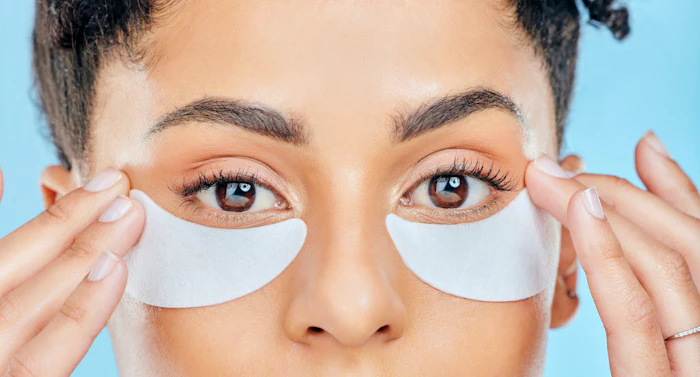
When it comes to specific applications for anti-stress products, a few examples rose to the top. Moisturizers were a common answer, with its immediate connection to barrier repair and hydration. Other experts answered that masks and eye patches are the most suitable due to their association with self-care and wellness. The common thread among all of these examples: a sensory benefit.
 NEOM Wellbeing conducted its own study on the effects of its fragrances on mood and emotion. Courtesy of NEOM Wellbeing
“Product formats that offer a sensory benefit enhance the experience and form that instant connection between the mind and the body, creating a conscious pause,” said Amanda Kahn, general manager at NEOM Wellbeing. “So, formulations that feel luxurious, cooling, create a tingle or warmth or simply smell incredible all help to induce that ‘drop your shoulders’ moment.”
Increased research in the role of scent and mood has increased the number of products with “mood enhancing” properties. Scents like lemon and grapefruit are intended to increase energy and awaken optimism, while scents like lavender and chamomile are known for calming properties and are often used in sleep-aid products. For example, Dove’s Anti-Stress Beauty Bar combines a gentle cleanser with a calming scent.
“Dove Anti-Stress Beauty is thoughtfully made to moisturize your skin, leaving you feeling calm from head to toe,” the brand’s website states. “Infused with a blue chamomile and oat milk scent, our anti-stress bar also has a calming scent that’ll help you unwind as you cleanse.”
Consumer data from Mintel shows that fragrances that improve mood are becoming more popular in online conversations, with over 2,200 mentions in 20253. Further, Mintel’s analysts predict that by 2030, beauty products will not just enhance mood and emotions, but actively regulate them.
Gentle cleansers are also becoming increasingly popular for stress relief. In fact, Yakovleva with Instytutum said that it’s an essential piece of the puzzle.
“Cleansing is often underestimated in anti-stress skincare,” they said. “If a cleanser is too aggressive, it can increase dryness, sensitivity and barrier disruption – exactly the conditions associated with stressed skin.”
Cleansers hold the largest share of the soothing skincare product market, according to a market report from Fact.MR4. The market for soothing skincare products is growing across the world, with a projected worth of $72.4 billion by 2036 at a compound annual growth rate of 3.8%.
Beauty brand harmonie launched The Caring Cleanser, which claims to help relieve stress while cleaning the skin. The cleanser includes ingredients like the brand’s proprietary Resurrection Concentrate for a gentle cleanse without a stripping feeling. Additionally Tower 28’s SOS Gel Cleanser has been certified by several organizations, including the National Eczema Association and National Rosacea Society, for its gentle cleaning power.
The Beauty-Wellness Venn Diagram
If I were to draw a Venn diagram for the similarities and differences between the Virginskin's portfolio relies on botanical actives for its effects. Courtesy of Virginskin
“The intersection of neuroscience and cosmetics is one of the most exciting frontiers in the industry right now,” Khan said. “For a long time, the beauty industry relied on sensory experience and consumer perception to validate efficacy. Neuroscience is changing that entirely, giving brands the tools to measure and prove the physiological and neurological impact of their [products] in a way that was never previously possible.”
By using neuroscience, cosmetic chemists can now quantify certain aspects of formulation that were previously subjective. There is an opportunity to definitively show a reduction in stress, from the repair of the moisture barrier to a reduction in wrinkles to a boosted radiance.
Maybe cosmetics can’t fix everything related to stress; one moisturizer isn’t going to miraculously cure burnout. But perhaps using these products can allow us a moment of respite in a chaotic world. We can use our daily routines to slow down, to breathe and to take care of ourselves.
References
- McKinsey & Company, Future of Wellness 2025, https://www.mckinsey.com/industries/consumer-packaged-goods/our-insights/future-of-wellness-trends
- Bobok N, Taskesen T. Stress-Induced Changes of the Skin: A Narrative Review. Cureus. 2025 Nov 7;17(11):e96285. doi: 10.7759/cureus.96285.
- Mintel, 2026 Global Beauty & Personal Care Predictions, https://www.mintel.com/insights/beauty-and-personal-care/beauty-trends/
- Fact.MR, Soothing Skin Care Products Market Forecast and Outlook 2026 to 2036, https://www.factmr.com/report/soothing-skin-care-products-market?spm=a2700.accio_bizSeo.0.0.1266122eEd8kR5