Professor Francis McGlone is a Visiting Professor at Manchester Metropolitan University, UK & Aalto University, Finland, with a research career spanning neuroscience, pain and somatosensory science. He is internationally recognized for his work on C-tactile afferents and affective touch, exploring how gentle touch is sensed and translated into emotional and social experience, using techniques including microneurography and neuroimaging. He is also President of the International Association for the Study of Affective Touch (IASAT).
Science of touch is an emerging field, and almost 18 months on from our 2025 article, I have taken a closer look at how this science is evolving and where the field might go next.
For Professor Francis McGlone, touch should not be understood simply as a physical somatosensory experience. It is a neurobiological input with the potential to regulate affect, stress and resilience - an insight I share through my clinical work and a much stronger scientific basis for understanding skincare than the familiar language of relaxation, pampering or simply feeling good. McGlone’s central argument is that the skin and brain should not be treated as separate systems. His work on affective touch has helped establish the importance of a second modality for touch, beyond its conventional discriminative function: touch can also provide an emotional, affective input to the brain impacting our feelings1.
In our discussion, he repeatedly returned to the “second modality” of touch, the C-tactile (CT) system and, in particular, to the evidence that stimulation CTs , such as gently applying a face cream, can influence stress regulation, lower heart rate and release endorphins and oxytocin3. Recognizing the negative impact the COVID-19 pandemic was having on people's well-being, with the frequent cry for “I want a hug,” he coined the phrase ‘Vitamin-T’ as a metaphor for affective touch as a neurobiological necessity for emotional and social well-being.
The skincare industry still tends to divide efforts into understanding biological efficacy on one side and marketing emotional experience on the other. I have increasingly challenged this separation through the lens of psychodermatology, with Professor Francis McGlone’s work being a major influence on my scientific thinking and clinical practice. A skincare ritual also has a neurobiological effect whereby the act of applying it simultaneously influences affective state through the stimulation of CTs. The way it is experienced and applied also changes not only the skin, but also the person.
Affective Touch is Skin’s Stress-Regulating Sensory System
The strongest evidence McGlone discussed comes from experimental work examining whether affective touch can actually build stress resilience. He also described this as one of the most exciting experiments he had undertaken because it moved the value from pleasantness into stress physiology. In the study by Walker and colleagues, adult rats were exposed to chronic unpredictable mild stress while receiving daily stroking targeted towards the optimal stimulation range of low-threshold C-fiber mechanoreceptors – and it is important to note here that the daily stroking touch delivery was just ten minutes. Animals receiving the appropriate stroking subsequently showed evidence of greater resilience to a number of the stress challenges, including a corticosterone response comparable to that of non-stressed animals5.
 Takibi at Adobe Stock
The distinction is key. Facial massage can make someone relax in the moment, but potentially repeated targeted touch could alter the way the body responds to subsequent stress. A review of resilience to stress and social touch similarly positions affective touch as a route through which somatosensory information can influence coping with stress6. Given the intervention was only ten minutes a day, if replicated in humans, it fits directly with the practical constraints of contemporary life. People may not commit to a one-hour massage every day, but they can incorporate a brief tactile ritual into an existing skincare routine. As I remind my clients in the clinic, the value of self care may lie less in intensity and more in regularity. That creates a potentially powerful distinction between a treatment and a ritual becoming integrated into behavior.
Skincare Product Application Already Contains Touch
When people apply creams and lotions, they are already delivering a form of self-touch capable of engaging the CT affective touch system. The foundational work of Löken and colleagues showed that CTs respond particularly strongly to gentle stroking at approximately 1–10 cm/s, with these velocities also being perceived as particularly pleasant. McGlone sees a striking symmetry between the experimental properties of CT activation and the natural tactile movements associated with caressing, stroking and grooming behaviors.
Not any application of skincare automatically produces a therapeutic effect; it is the manner of application that matters. A cream applied rapidly, mechanically or without attention to movement will provide an entirely different sensory input from a gentle, dynamic application approximating the characteristics of natural stroking. The active ingredients and formulation remain relevant but the sensory behavior through which the product is delivered may itself have biological significance.
I have argued for over a decade now that skincare application should be considered as more than product delivery - but a form of structured self-grooming and self-touch. McGlone described physiological effects associated with self-touch, including reductions in physiological arousal, and argued that these effects extend beyond interpersonal touch. As experimental evidence for stress resilience comes from targeted tactile stimulation in animal models, we are awaiting clinical trials to show that skincare rituals reproduce relevant physiological and neural effects. This gap represents a research opportunity.
Grooming is About Feeling Good as Much as Looking Good
Throughout my work, I have argued that, in skincare, feeling often precedes thinking. McGlone repeatedly returned to this statement: “People groom as much to feel good as to look good.” He uses the example of older people in the hospital, and having their hair washed or hand cream applied makes them feel good in the moment despite severe illness. These experiences are not about cleanliness or skin health; they are an act conveying care.
In primates, grooming originated for hygiene yet became increasingly socially and affectively significant. In humans, grooming has conventionally been interpreted in functional and aesthetic terms as keeping clean and looking good but there is an increasingly visible emotional and social dimension4.
Another of McGlone’s strongest messages was that one experience may not be enough, even with regular facial massage’s meaningful effect develops over time. The important factor is that the ritual becomes familiar and reinforcing, rather than expecting a dramatic transformation after one session.
Also, resilience is not a single emotional state but an adaptive process that develops through repeated interaction with stressors and regulatory experiences6. A small reward that helps promote continuation and helps with implicit learning. People may not consciously understand why a particular behavior makes them feel better, yet repeated experiences can teach the brain that a particular sensory context predicts reward, comfort or regulation.
Different Tactile Techniques Have Different Benefits
The experience of touch is modified by mood, expectation, context, previous experience, life events and the environment. The same tactile stimulus may be experienced very differently by someone who is relaxed compared with someone who is grieving, anxious or having a particularly difficult day.
We have agreed that CT activation alone cannot explain the whole experience. Fairhurst, McGlone and Croy proposed a wider communication model incorporating the signal, receiver, sender, multisensory context and individual differences, rather than defining affective touch simply by a particular stroking velocity7.
 Екатерина Клищевник at Adobe Stock
This provides a strong scientific basis for the importance of the surrounding sensory environment. McGlone specifically described the “theatre” surrounding grooming - the lighting, smell, atmosphere and other contextual cues - as potentially important in creating a state in which we are more receptive to the experience.
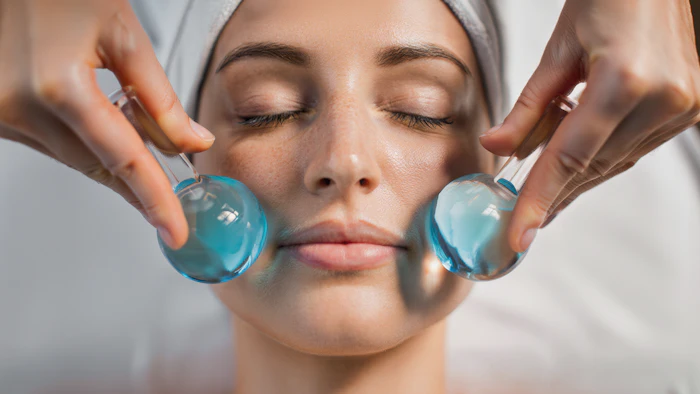
Not all touch techniques are equivalent. Gentle, dynamic stimulation is particularly relevant to the CT system2,3. Deeper or more forceful technique introduces additional sensory systems, including interaction with the fascia – and neurobiology and consequences of these forms of stimulation are less clearly understood. Stronger stimulation may also engage pain-related pathways and may therefore produce a different neurobiological response. This suggests that apparently similar experiences of “feeling good after massage” could arise through different biological mechanisms.
Future research should aim to investigate different tactile signatures and determine which produces which physiological and emotional response, in which cohorts and under what conditions.
The Important Benefits May be Wordless
McGlone also raises a methodological problem that is particularly relevant to skincare and again, close to my heart in the clinic - much of the affective experience of touch is implicit and difficult to verbalize. A questionnaire can tell us what a person consciously believes they experienced, yet it may not capture the subtle physiological or behavioral changes that accompany a tactile ritual, nor the implicit associations built up through repetition.
Relying too heavily on conventional self-reporting provides skewed outcomes. Therefore, more focus should be given to objective physiological and neural measures, particularly EEG and MEG because their temporal resolution allows researchers to examine rapid responses to sensory stimuli. McGlone’s EEG work demonstrates that observing affectionate touch can produce measurable neurophysiological responses, including changes in sensorimotor and higher-order socio-affective processing8.
EEG cannot exactly provide a validated “skincare signature” but it supports the feasibility of investigating neural responses to affective tactile experiences. Together with physiological stress and behavioral measures as well as well characterized touch techniques, this provides a particularly interesting direction for future skincare research.
Message to the Industry: Move from “Relaxation” to Stress Reduction and Resilience
The most important conceptual shift arising from McGlone’s work is therefore from immediate relaxation to longer-term stress regulation and resilience. His 2024 review on “touch medicine” explicitly brings together affective touch, CT afferents, stress regulation, massage and clinical applications, illustrating how the field is beginning to move from basic sensory neuroscience towards therapeutic translation9.
He argues that the evidence now justifies investigating whether skincare rituals contribute to the regulation of affect and maintenance of a “safe zone.” Becoming less stressed may also lead to a healthier attitude towards aging. His work has supported my clinical teaching - everyday skincare touch becomes a short, repeated, embodied intervention that engages affective-touch pathways, helps regulate stress and gradually contributes to resilience. Placing skincare within the biology of touch, reward, context, learning and stress regulation creates a clear scientific focus for what has until now largely remained intuitive.
References
- McGlone F, Wessberg J, Olausson H. Discriminative and affective touch: sensing and feeling. Neuron. 2014;82(4):737–755. doi:10.1016/j.neuron.2014.05.001.
- Löken LS, Wessberg J, Morrison I, McGlone F, Olausson H. Coding of pleasant touch by unmyelinated afferents in humans. Nature Neuroscience. 2009;12:547–548. doi:10.1038/nn.2312.
- Walker SC, Trotter PD, Swaney WT, Marshall A, McGlone FP. C-tactile afferents: Cutaneous mediators of oxytocin release during affiliative tactile interactions? Neuropeptides. 2017;64:27–38. doi:10.1016/j.npep.2017.01.001.
- McGlone FP, Walker SC, Ackerley R. Affective Touch and Human Grooming Behaviours: Feeling Good and Looking Good. In: Affective Touch and the Neurophysiology of CT Afferents. Springer; 2016:265–282. doi:10.1007/978-1-4939-6418-5_16.
- Walker SC, Cavieres A, Peñaloza-Sancho V, El-Deredy W, McGlone FP, Dagnino-Subiabre A. C-low threshold mechanoafferent targeted dynamic touch modulates stress resilience in rats exposed to chronic mild stress. European Journal of Neuroscience. 2022;55(9–10):2925–2938. doi:10.1111/ejn.14951.
- Dagnino-Subiabre A. Resilience to stress and social touch. Current Opinion in Behavioral Sciences. 2022;43:75–79. doi:10.1016/j.cobeha.2021.08.011.
- Fairhurst MT, McGlone F, Croy I. Affective touch: a communication channel for social exchange. Current Opinion in Behavioral Sciences. 2022;43:54–61. doi:10.1016/j.cobeha.2021.07.007.
- Schirmer A, McGlone FP. A touching sight: EEG/ERP correlates for the vicarious processing of affectionate touch. Cortex. 2019;111:1–15. doi:10.1016/j.cortex.2018.10.005.
- McGlone F, Uvnäs Moberg K, Norholt H, Eggart M, Müller-Oerlinghausen B. Touch medicine: bridging the gap between recent insights from touch research and clinical medicine and its special significance for the treatment of affective disorders. Frontiers in Psychiatry. 2024;15:1390673. doi:10.3389/fpsyt.2024.1390673.