Editor’s Note: The following article comes from our partners at in-cosmetics Asia, set to take place November 3-5, 2026, in Bangkok, Thailand. Stay tuned for our trend report focused on the Innovation Zone at this year’s show!
We talk a lot about what skincare does. We discuss active ingredients, efficacy, texture, absorption and clinical results. But before we have even touched a product, its scent can already be influencing how we feel about it.
Fragrance has too often been treated as another ingredient in a formulation, but that is a mistake. The right scent can reinforce almost every aspect of a skincare product, from its positioning and packaging to its texture, claims and intended mood. Get it right and these elements work together; get it wrong and the fragrance can contradict the story the rest of the product is trying to tell.
This matters because skincare is about more than functionality. It is also a ritual associated with self-care and, increasingly, emotional wellbeing. Recent research from McKinsey illustrates this1. When consumers were asked what beauty meant to them, the most common response was “feeling confident,” followed by “loving myself” and “taking care of my mind and body beyond my appearance.” Those responses ranked ahead of looking attractive to others or looking younger for longer.
Feeling is Believing
A skincare product may contain highly effective active ingredients, but those ingredients need time to work. Fragrance operates differently, as its influence begins as soon as the product is opened.
Smell has an extraordinary connection with emotion and memory. A scent can help us feel relaxed, energised, comforted or uplifted. It can also become strongly associated with a particular experience. Revisit a familiar smell years later and it can immediately bring back the emotion or memory attached to it.
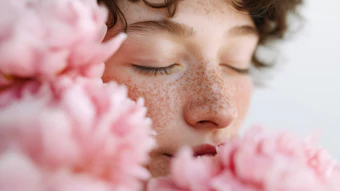
This gives fragrance an important role within skincare. A comforting scent can complement the richness of a nourishing cream. Something fresh might reinforce a product intended to feel revitalising. A fragrance can make a formulation feel softer, cleaner, more luxurious or more natural. I think of fragrance as dressing the product for the right occasion, reinforcing what the formulation, packaging, name and claims are already communicating.
Without that layer, part of the story is missing. It is like watching a film with beautiful visuals but no soundtrack. You can still understand what is happening, but some of its emotional power has disappeared.
Everything is Scentable
A fragrance needs to make sense alongside the formulation, texture, packaging and brand story. For a perfumer, almost every element can provide inspiration. Creaminess, softness, colour, warmth and even the design of the packaging can be interpreted through scent.
This connection becomes even more interesting as beauty becomes increasingly multisensory. When someone applies a moisturiser, its appearance, texture, feel on the skin and fragrance are experienced together. Scent can amplify those other qualities, helping a product feel cocooning, refreshing, nurturing or indulgent, while creating an emotional association that can last long after application. Just like how we associate the smell of aloe vera with the cooling effect it brings after too long in the sun.
Not all of this is a conscious response. Much of the way we experience scent happens instinctively, shaped by associations and memories that we may not be able to explain, connected to hidden but silently influencing archetypes. Sometimes a fragrance simply feels right for a product. That elusive je ne sais quoi is difficult to quantify, but it is another reason why fragrance needs to be considered as part of the complete product experience rather than selected in isolation.
The Emotional Role of Scent
We are also seeing growing interest in fragrances designed around specific moods, from calm and happiness to focus and sociability. This is particularly relevant in Asia Pacific, where the relationship between beauty and wellbeing is becoming increasingly important. Mintel reports that 94% of Thai women see maintaining good mental health as key to overall wellbeing, while its wider research points to growing demand for stress-relief solutions and greater interest in connecting sleep, stress and preventative beauty2.
For fragrance, that creates an interesting opportunity. If skincare is increasingly expected to contribute to how we feel as well as how we look, scent has an obvious role to play. But we are still only scratching the surface. Human emotion is considerably more complex than five or six moods, and our response to smell is influenced by the limbic system, as well as memory, culture and individual interpretation.
This is why developments in neuropsychology and brain mapping are so exciting, as they could eventually give us a deeper understanding of how particular olfactory materials influence different emotional states.
Creating Fragrance with Purpose
The opportunity now is to become much more precise about the role fragrance plays in skincare. We are already moving away from generic catalogue scents towards bespoke perfumery. Brands increasingly want us to understand their formulation, philosophy, target consumer and story before we begin creating.
Start with the product story. Understand who you are creating it for and how you want them to feel when they use it. Then consider how fragrance can reinforce that experience. What should the texture, colour, packaging and scent communicate together? Are they telling the same story, or is one element working against the others?
What Comes Next for Fragrance?
Natural perfumery is evolving too. When I began working extensively with natural fragrance around 20 years ago, achieving consistency and stability could be extremely challenging. Today, the ability to work with fractions of natural materials gives perfumers far greater control while retaining the character brands and consumers are looking for.
Biotechnology could take us further still, with microorganisms enabling the creation of novel fragrance molecules and potentially expanding the perfumer's palette in entirely new directions.
All of this comes at a moment of strong growth for fragrance. McKinsey expects fragrance to grow consistently across price tiers through 2030 and has identified it as the third-largest beauty category, ahead of color cosmetics for the first time1. For skincare brands, however, the opportunity is not simply to add more fragrance. It is to think much more carefully about what scent is there to achieve.
These are some of the questions we will be exploring through the new Fragrance Zone at in-cosmetics Asia this November. There, we will look at how scent can work alongside formulation, texture and product concept to create more compelling and emotionally resonant skincare experiences.
For me, that is where the conversation around fragrance in skincare needs to go next. When scent, texture, formulation, packaging and story all communicate the same idea, fragrance stops being another ingredient on the list. It becomes one of skincare's most powerful silent tools.
References
- McKinsey, From aisle to algorithm: The beauty categories, channels, and concepts shaping 2030 growth, https://www.mckinsey.com/industries/consumer-packaged-goods/our-insights/state-of-beauty
- Mintel, Beauty and Personal Care Landscape: APAC, https://www.mintel.com/insights/beauty-and-personal-care/asia-pacific-beauty-landscape/#download