In his story “Chromium”,1 Italian writer and chemist Primo Levi relates how he added ammonium chloride to a chromate-based anti-rust primer formulation to neutralize the excess base in the pigment and stabilize the product. Decades later, a colleague told Levi about a strange anti-rust recipe calling for ammonium chloride. Levi realized he was the chemist who introduced the ammonium chloride, which was still in the formula even though it no longer had a function, since the defective basic chromate that made it necessary was long gone. It remained in the recipe since no one had seen a reason to remove it.
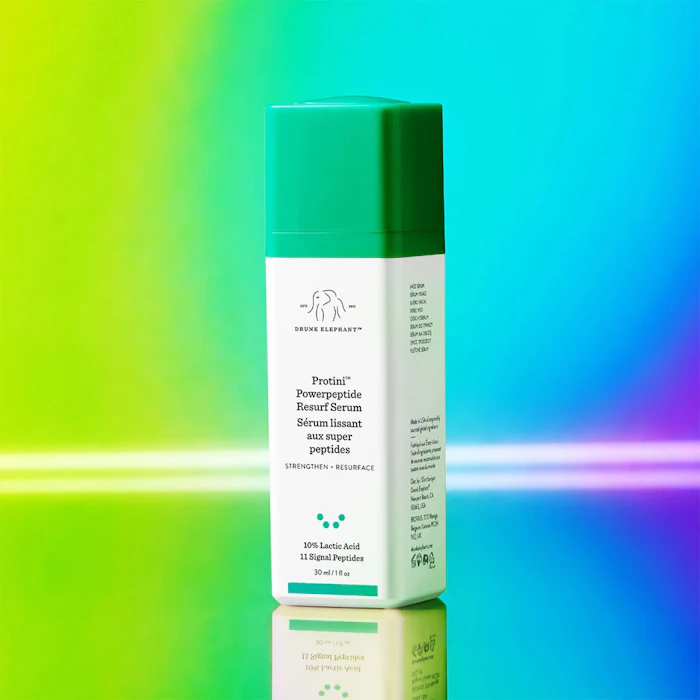
Generally, formulators should strive to achieve desired product claims with the lowest number of ingredients possible. This lowers both formula cost and the potential for ingredient interactions that may cause instability and skin irritation. In this edition of Read the Label, we study the Drunk Elephant Protini Powerpeptide Resurfacing Serum with Lactic Acid, a formulation with 77 ingredients. Based on a cosmetic ingredient count using Claude AI, this is one of the highest numbers of ingredients among 2,500 cosmetic products evaluated.2
With the help of Claude AI, it is possible to group several ingredients together as supplier blends with a high degree of confidence. Likely blends used by Drunk Elephant are listed in table 1. Nearly all blend ingredients correspond to the ingredients listed on the Protini serum INCI list, the exceptions being 1,2-hexanediol in BIO-Placenta, which does not appear on the label, and the X50 peptide, which the label names Copper Palmitoyl Heptapeptide-14. Counting each blend as one ingredient, and counting water and glycerin separately because both are present well above the levels the blends could contribute, 45 ingredients remain. This is still high for a serum, but most likely there are other not easily identified blends that would reduce the total ingredient count even more.
| Ingredient Trade Name | Supplier | Ingredient INCI | Recommended Use Level in Leave-on Product |
|---|---|---|---|
| PRODEW 500 | Ajinomoto | Sodium PCA, Sodium Lactate, Arginine, Aspartic Acid, PCA, Glycine, Alanine, Serine, Valine, Proline, Threonine, Isoleucine, Histidine, Phenylalanine, Water | 0.2 – 2.0% |
| Matrixyl 3000 | Sederma (Croda Beauty Actives) | Glycerin, Water, Butylene Glycol, Carbomer, Polysorbate 20, Palmitoyl Tripeptide-1, Palmitoyl Tetrapeptide-7 | 3-10% |
| Matrixyl synthe’6 | Sederma (Croda Beauty Actives) | Glycerin, Water, Hydroxypropyl Cyclodextrin, Palmitoyl Tripeptide-38 | 2-10% |
| BIO-Placenta | LABIO | Bacillus/Folic Acid Ferment Filtrate extract, Lecithin, Acetyl Glutamine, sh-Oligopeptide-1, sh-Oligopeptide-2, sh-Polypeptide-1, sh-Polypeptide-9, sh-Polypeptide-11, Sodium Hyaluronate, Caprylyl Glycol, Butylene Glycol, 1,2-Hexanediol, Water | 3% |
| X50 Antiaging | Infinitec | Lactic Acid/Glycolic Acid Copolymer, Copper Heptapeptide-14 Pantothenate, Heptapeptide-15 Palmitate, Polyvinyl Alcohol | n/a |
| Kollaren BG 100 | Lucas Meyer Cosmetics | Water, Butylene Glycol, Dextran, Tripeptide-1 | 1-10% |
| PhytoCellTec Symphytum | Mibelle Biochemistry | Symphytum Officinale Callus Culture Extract, Isomalt, Lecithin, Sodium Benzoate, Aqua / Water | 0.4-1% |
Product Claims
Drunk Elephant claims skin texture, radiance, and elasticity benefits based on a clinical study with 31 participants. This study is said to show that 100% of panelists had more radiant skin after 4 weeks and that 100% showed improved elasticity after 8 weeks of use. Further, 93% had smoother skin after 8 weeks.
There were also barrier strengthening and wrinkle reducing benefits after 8 weeks, but these were not quantified, and the measurement method was not disclosed. The clinical study report that would mention the study methodology, statistical significance, blinding, placebo effects, etc. is not available; we have to take the clinical benefits at face value.
The skin radiance and smoothness benefits can be supported by the 10% lactic acid chemical exfoliation system at a pH of 3.5. Lactic acid is an alpha hydroxy acid with a pKa of about 3.86, so at a pH of 3.5 it will be mostly in the free acid form, which penetrates the stratum corneum more easily. At 10% the lactic acid is expected to be a strong exfoliator, weakening the bonds between corneocytes on the skin surface, leading to a skin surface that feels and looks smoother. It may cause stinging and redness, especially when combined with other skin resurfacing actives.
Drunk Elephant states on its website that the serum is infused with nine “signal peptides” to “exfoliate and firm skin.” However, the ingredient list shown below has 12 peptides or polypeptides, which may be an oversight because they are spread out over several supplier blends. The company offers no evidence that the peptide system acts as anything else than a humectant.
The supplier blends (Matrixyl, PRODEW, etc.) have their own supporting claims and claims support. For example, Matrixyl 3000 led to significant improvements in wrinkle size and density over a placebo in a supplier clinical study3. Similarly, X50 Antiaging is supported by a clinical study with 30 volunteers that reported a 33% wrinkle reduction after four weeks. However, these studies cannot support finished product claims, which must rely on serum testing, especially in a formula with 10% lactic acid, where exfoliation and hydration can explain many of the same visible benefits attributed to the peptide complexes.
The serum contains several hydrating ingredients: glycerin, sodium PCA, amino acids, hyaluronates, panthenol, sodium lactate and Tremella polysaccharide. Some of these may also contribute to strengthening the skin barrier in combination with linoleic acid, phytosphingosine and phospholipids. In addition to the clinical evidence, the barrier strengthening claim would be more convincing with a barrier measurement, such as a transepidermal water loss assessment.
Other than the emollients and humectants, the Protini serum contains several botanical extracts and oils (Glycine Max Seed Extract, Sclerocarya birrea Seed Oil, Camellia sinensis Seed Oil, Nymphaea alba Root Extract and others), which are probably not part of supplier blends. These are usually presented as antioxidants.
There is also a three-preservative system of phenoxyethanol, sodium benzoate and chlorphenesin, supported by multifunctional boosters including ethylhexylglycerin, caprylyl glycol, pentylene glycol, phenylpropanol and glyceryl caprylate. Some of these may not be intentionally added, but rather be part of one of the supplier blends listed in Table 1.
Conclusion
Protini Powerpeptide Resurfacing Serum shows why a long ingredient list does not mean that every ingredient was carefully selected by a formulator. Many of the 77 ingredients derive from supplier blends of peptides, amino acids and botanical materials. These blends bring their own claims and supporting studies, but that evidence does not automatically apply to the finished serum.
The product’s most clearly supported benefits, smoother texture and greater radiance, are most likely driven by 10% lactic acid at pH 3.5, supported by a strong moisturizing system. The peptides and botanical actives may contribute to longer-term anti-aging effects, but solid claims support has not been offered. The high ingredient count would be more meaningful if the product claims were supported by published independent product testing.
Ingredient List
Water/Aqua/Eau, Glycerin, Lactic Acid, Dicaprylyl Carbonate, Squalane, Sodium Hydroxide, Glycine Max (Soybean) Seed Extract, Sclerocarya Birrea Seed Oil, Camellia Sinensis Seed Oil, Sodium PCA, Caprylic/Capric Triglyceride, Borago Officinalis Seed Oil, Tremella Fuciformis Polysaccharide, Tocotrienols, Sh-Oligopeptide-1, Sh-Oligopeptide-2, Sh-Polypeptide-1, Sh-Polypeptide-9, Sh-Polypeptide-11, Copper Palmitoyl Heptapeptide-14, Heptapeptide-15 Palmitate, Palmitoyl Tetrapeptide-7, Palmitoyl Tripeptide-1, Palmitoyl Tripeptide-38, Palmitoyl Hexapeptide-12, Tripeptide-1, Pyrus Malus (Apple) Fruit Extract, Propanediol, Sodium Hyaluronate, Panthenol, Sodium Hyaluronate Crosspolymer, Sodium Lactate, PCA, Alanine, Arginine, Glycine, Histidine, Isoleucine, Phenylalanine, Proline, Serine, Threonine, Valine, Adenosine, Nymphaea Alba Root Extract, Bacillus/Folic Acid Ferment Filtrate Extract, Symphytum Officinale Callus Culture Extract, Dextran, Oryza Sativa (Rice) Bran Oil, Linoleic Acid, Linolenic Acid, Butylene Glycol, Acetyl Glutamine, Coconut Alkanes, Coco-Caprylate/Caprate, Pentylene Glycol, Isomalt, Lecithin, Xanthan Gum, Aspartic Acid, Phytosphingosine, Phospholipids, Glycine Soja (Soybean) Sterols, Tocopherol, Citric Acid, Lactic Acid/Glycolic Acid Copolymer, Polyvinyl Alcohol, Phenoxyethanol, Sodium Benzoate, Hydroxypropyl Cyclodextrin, Polysorbate 20, Caprylyl Glycol, Phenylpropanol, Chlorphenesin, Carbomer, Glyceryl Caprylate, Ethylhexylglycerin
References
- Primo Levi, “Chromium” in “The Periodic Table”, translated from the Italian by Raymond Rosenthal, Schocken Books, New York, 1984.
- Unpublished data, available from the author.
- Karl Lintner, “Compositions containing mixtures of tetrapeptides and tripeptides”, World Patent WO/2005/048968 (2005).