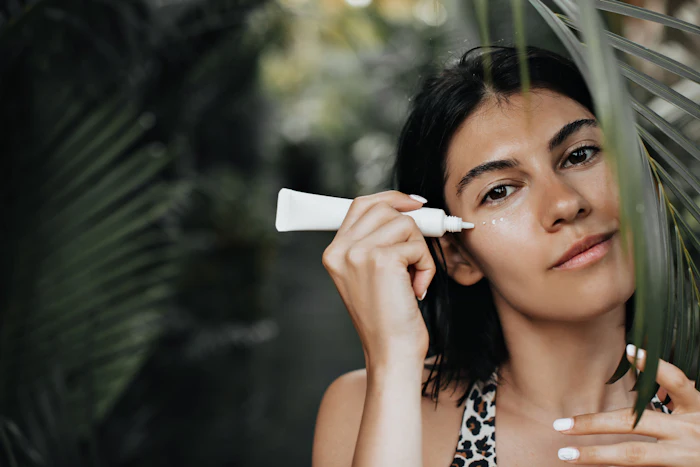
The way we care for skin is evolving as a consequence of climate change and a growing awareness of the need for environmental protection. Climate-responsive beauty seeks to address the relationship between skin health and our changing planet with smarter formulas and daily routines that adapt to the weather. Sun protection has especially become an indispensable practice shaped by global temperatures rising and stronger UV exposure.
Climate change affects ecosystems and hotter temperatures encourage more time outdoors, while the depletion of the ozone layer influences the intensity and duration of UV radiation reaching the earth’s surface, thereby evoking more significant damage to the skin – even during winter and on cloudy days. It is estimated that a 10% depletion of the ozone layer may result in an increase in keratinocyte and melanoma cancers by 300,000 and 4,500 cases, respectively.1
This article is only available to registered users.
Log In to View the Full Article
The way we care for skin is evolving as a consequence of climate change and a growing awareness of the need for environmental protection. Climate-responsive beauty seeks to address the relationship between skin health and our changing planet with smarter formulas and daily routines that adapt to the weather. Sun protection has especially become an indispensable practice shaped by global temperatures rising and stronger UV exposure.
Climate change affects ecosystems and hotter temperatures encourage more time outdoors, while the depletion of the ozone layer influences the intensity and duration of UV radiation reaching the earth’s surface, thereby evoking more significant damage to the skin – even during winter and on cloudy days. It is estimated that a 10% depletion of the ozone layer may result in an increase in keratinocyte and melanoma cancers by 300,000 and 4,500 cases, respectively.1
The challenge for climate-responsive sun care is about creating formulations that perform under different environmental stresses like extreme temperatures with high humidity, pollution in urban areas, and arid climates causing dryness of the skin. Cosmetic companies are increasingly developing formulas designed to counteract such conditions while maintaining protection throughout the day.
This article describes approaches to create climate-responsive sun care. It also provides case studies of efforts to obtain the water resistance requirement according to ISO 16217:2020 and ISO 18861:2020 in two types of sunscreens: an oil with a light texture and an oil-in-water sprayable emulsion, whereby traditional polymers are replaced with eco-friendlier alternatives.
Fundamentals for Climate-Responsive Sunscreens
The most important requirements for climate-responsive sunscreens are, first and foremost, broad spectrum protection against UVA-UVB-HEV-IR rays and water/sweat resistance. Additional considerations are a moisturizing but light texture and antioxidant activity, to prevent free-radical damage intensified by heat and smog.
What’s more, minimalist formulas with fewer, multitasking ingredients are preferred, following the trend of sustainable cosmetics. Indeed, a good sun product should not ignore sustainability and environmental responsibility to minimize its ecological impact. This can be achieved by selecting “ocean-friendly” UV filters, so as to avoid potential reef damage, and natural-derived water-resistant polymers.
Additionally, eco-friendly SPF boosters with antioxidant, soothing and hydrating effects can be selected to lower the percentage of UV filters. Examples include naturally derived ingredients like cyanobacteria, propolis and lichen species. Cyanobacteria, or blue-green algae, produce two types of light-absorptive pigments, scytonemin and mycosporine-like amino acids (MAAs), that are secreted in response to UV light.
Formulations with propolis can enhance SPF by providing synergistic effects. Lichens synthesize usnic acid, which is a dibenzofuran derivative that has shown good UVB protection in vivo, comparable to octocrylene.2 Sustainable sunscreens can also be produced by using recycled packaging materials or refillable solutions and low-impact manufacturing processes that involve the use of renewable energy, minimal waste and water consumption.
Eco-Friendly Film Formers for Water Resistance
The sunscreen market constantly evolves to meet the demand for safe and eco-friendly options, and is projected to reach $24.4 billion worldwide by 2029.3 Public interest in the safety of cosmetic ingredients, both for the skin and the marine ecosystem, has grown significantly over the last 10 years. As such, a variety of novel technologies and approaches is being explored to provide solutions to environmental concerns about synthetic ingredients like acrylate-based film formers, in favor of more eco-friendly, biodegradable alternatives.
Natural polymers derived from plant-based materials like starches, alginates and chitosan are viewed as more sustainable options.4 Nevertheless, the replacement of traditional acrylate polymers with greener alternatives is anything but simple, especially for those formulations without an intrinsic water-resistant structure like oil-in-water emulsions. This type of emulsion is essential to obtain good sprayable formulas; on the contrary, water-in-oil emulsions have stronger water-resistance properties but are not suitable for sprays.
In relation, two types of sunscreens were developed – and oil with a light texture and an oil-in-water sprayable emulsion – to meet the water resistance requirements of ISO 16217:2020 and ISO 18861:2020. Following describes their formulation and testing.
Case Study: Sprayable O/W Sunscreen Emulsion SPF 30 UVA
In the first study, an o/w sunscreen emulsion was prepared (see Formula 1) that additionally integrated the following film formers at 3%:
- Polyglyceryl-3 stearate/sebacate crosspolymer
- Hydrogenated castor oil/sebacic acid copolymer
- Capryloyl glycerin/sebacic acid copolymer
- Diisostearoyl polyglyceryl-3 dimer dilinoleate
- bis-Octyldodecyl dimer dilinoleate/propanediol copolymer
All formulas were homogeneous after preparation except for that containing the added maleated soybean oil glyceryl/octyldodecanol esters, which showed a separation of phases. It was necessary to increase the percentage of emulsifiers to obtain a stable emulsion.
Preliminary trials were carried out to select the best-performing film formers according to the following method: a small amount of each formula (0.03 g) was applied to a polymethyl methacrylate plate for the in vitro UVA test and allowed to dry for 10 min. Then, the plates were soaked in a bath at 25°C for 40 min and allowed to dry for 10 min. Pictures were taken before and after the baths to determine the performance of the polymers in terms of homogeneity immediately after application, and for water resistance after the bath procedure. Figures 1-6 illustrate the results.
Results: O/W Sunscreen Emulsion In vitro
One of the best-performing polymers was hydrogenated castor oil/sebacic acid copolymer (see Figure 2). The two additional polymers demonstrating favorable homogeneity performance were capryloyl glycerin/sebacic acid copolymer and polyglyceryl-3 stearate/sebacate crosspolymer.
O/W Sunscreen Emulsion In vivo
Based on these results, two additional formulations were prepared incorporating the following film-forming combinations:
- Hydrogenated castor oil/sebacic acid copolymer 3%, capryloyl glycerin/sebacic acid copolymer 2%
- Hydrogenated castor oil/sebacic acid copolymer 3%, capryloyl glycerin/sebacic acid copolymer 2% and polyglyceryl-3 stearate/sebacate crosspolymer 1%
The formulas were tested in three volunteers according to ISO 16217:2020 and ISO 18861:2020. The formula containing blend 1 gave a water resistance result equal to 48.3%, whereas the formula containing blend 2 passed the test with a water resistance of 58% (data not shown).
Further tests were performed by increasing the percentage of the main oils (dibutyl adipate and C12-15 alkyl benzoate) and the wax (synthetic beeswax), with the purpose to enhance the lipophilicity and consequently the water resistance but no significant outcomes were obtained, and at the expense of a greasier sensory profile.
Discussion: O/W Sunscreen Emulsion
The described study exploring a sprayable o/w sunscreen emulsion to find the best-performing acrylate-free polymer for water resistance made evident that combinations are necessary to pass the in vivo test. In this specific formula, blend 2, comprising hydrogenated castor oil/sebacic acid copolymer 3%, capryloyl glycerin/sebacic acid copolymer 2% and polyglyceryl-3 stearate/sebacate crosspolymer 1%, was successful.
Another relevant consideration is that the chemistry of sebacic acid is effective for synthesizing film-formers for sunscreens and other long-lasting cosmetics. This long-chain aliphatic diacid contributes to hydrophobicity, its two carboxyl groups are excellent monomers for polycondensation, and it is derived from castor oil – i.e., a renewable source for "green" cosmetics.
Case Study: Sunscreen Oil SPF 20
In the second study, a water-resistant sunscreen oil was formulated according to Formula 2. Similarly to the emulsion, several tests were carried out to replace the film former VP/hexadecene copolymer with the following eco-friendly polymers:
- Capryloyl glycerin/sebacic acid copolymer 4%
- bis-Octyldodecyl dimer dilinoleate/propanediol copolymer 2%
- Diisostearoyl polyglyceryl-3 dimer dilinoleate, caprylic/capric triglyceride 3%
- Hydrogenated castor oil/sebacic acid copolymer 2%
- Trimethylpentanediol/adipic acid/glycerin crosspolymer 2%
- Maleated soybean oil glyceryl/octyldodecanol esters 3%
The percentages used were chosen in accordance with the suggestions of each product’s supplier. All tested solutions remained clear after the addition of the polymers except for hydrogenated castor oil/sebacic acid copolymer, which turned the oil slightly opalescent.
Quick tests for preliminary water resistance were carried out using polymethyl methacrylate (PMMA) plates. However, unlike the results clearly observed for the sunscreen o/w emulsion SPF 30, this method did not show significant differences, as all polymer combinations exhibited similarly high performance.
Therefore, a small amount of sunscreen oil (0.02 g) was spread onto the forearm of three volunteers in a 4 x 4-cm area. The film was allowed to dry for 10 min and a photo was taken under UVA using Wood’s lamp. The forearm was then soaked in a bath at 25°C for 5 min and left dry for 10 min more and another photo was taken. The pictures before and after the baths are shown in Figures 7-10.
Results: Sunscreen Oil SPF 20
In comparison with VP/hexadecene copolymer at 4%, none of the polymers performed equally but the best performers were:
- Hydrogenated castor oil/sebacic acid copolymer
- Diisostearoyl polyglyceryl-3 dimer dilinoleate, caprylic/capric triglyceride
- Maleated soybean oil glyceryl/octyldodecanol esters
The preliminary assessment suggested that the substitution of VP/hexadecene copolymer was not simple. The hydrogenated castor oil/sebacic acid copolymer was the only polymer that exhibited behavior comparable to that of the VP/hexadecene copolymer, particularly with respect to the formation of a uniform film upon application before and after the bath.
Sunscreen Oil In vivo
Based on these findings, formulas using combinations of the aforementioned polymers were prepared and tested in vivo in three volunteers according to ISO 16217:2020 and ISO 18861:2020. The combinations included:
- Diisostearoyl polyglyceryl-3 dimer dilinoleate 3% + hydrogenated castor oil/sebacic acid copolymer 2%
- Diisostearoyl polyglyceryl-3 dimer dilinoleate 3% + maleated soybean oil glyceryl/octyldodecanol esters 3%
- Maleated soybean oil glyceryl/octyldodecanol esters 2% + hydrogenated castor oil/sebacic acid copolymer 1%
The formula containing blend 1 was slightly opalescent and gave the best result in terms of water resistance (60.7%; data not shown). The formula containing blend 2 was clear and showed a percentage of water resistance near the minimum value of 47.3%. The sunscreen oil blend 3 was slightly opalescent and did not pass the water resistance test.
Discussion: Sunscreen Oil
This study only focused on substituting the polymer, in order to maintain the light sensory profile of the formula. The results showed that greener alternatives to the acrylate-based polymers should be used in combination to boost the water resistance. In the current formulation, the blend of diisostearoyl polyglyceryl-3 dimer dilinoleate at 3% and hydrogenated castor oil/sebacic acid copolymer at 2% was successful.
Conclusions
Concerns about the effects of sunscreens for human safety and the environment raise continuous questions about the future of this category of cosmetics. However, given their critical role in protecting against the harmful effects of UV radiation, especially considering the global warming of the planet and increasing environmental stressors, the efforts to formulate safe and pleasant climate-responsive sunscreens represent a necessary adaptive response.
The development of effective, durable and eco-friendly sun protection systems is fundamental to safeguarding human skin health while minimizing environmental impact. New combinations of renewable, bio-based polymers such as those described here offer environmentally sustainable alternatives to conventional synthetic film formers.
References
1. Thangavel, S. and Reddy, K.K.S. (2011). Ozone layer depletion and its effects: A review. International Journal of Environmental Science and Development. Available at https://www.ijesd.org/show-29-343-1.html
2. Guo, L., Hsu, C. and Lio, P. (2024, Feb 1). Sunscreens: What Might the future hold? Journal of Integrative Dermatology. Available at https://jintegrativederm.org/doi/10.64550/joid.nt9d8375
3. Ma, Y. and Yoo, J. (2021, Feb 21). History of sunscreen: An updated view. Journal of Cosmetic Dermatology. Available at https://pubmed.ncbi.nlm.nih.gov/33583116/
4. Hasan, M., Kumar, V.A. and Maheshwari, C. (2020). Biodegradable and edible film: A counter to plastic pollution. International Journal of Chemical Studies. Available at https://www.chemijournal.com/archives/2020/vol8issue1/PartAH/8-1-267-539.pdf