One of the fastest growing beauty categories in recent years has been fragrance, partly due to the popularity of fragrance mists. Fragrance mists are low-concentration water and/or alcohol-based solutions of a fragrance that provide a refreshing, cooling and lightly scented experience on skin. Such refreshing and cooling sprays have existed for centuries, starting with rose water and other floral extracts.
The fragrance mist category was popularized by Bath & Body Works in the late 1990s, followed by Victoria’s Secret. These companies marketed seasonal scents at an affordable price point, which made them accessible to younger consumers. The formulations were simple: a solvent made up of ethanol and water and a fragrance at a low level. Observing that the fragrance mist trend caught on, prestige brands improved on the basic formula by adding humectants, emollients, conditioners and fragrance deposition agents.
Recently, a new generation of mists has been popular with teenage consumers because of their affordability, colorful packaging and ability to layer with other products. For many of these consumers, fragrance mists are a way to experiment and learn about more sophisticated fragrances.1 Teenagers receive most of their fragrance marketing messages from social media, particularly TikTok.2 This has transformed how consumers use fragrance. Rather than choosing a single scent, many consumers now build fragrance collections and layer multiple cosmetic products to create a personalized scent experience.3 This trend has helped drive strong growth in body and hair fragrance mists. According to market research firm Circana, in 2024 US sales of layering-type fragrance products such as body sprays jumped by 94% and hair fragrance sales increased 32%.4
The fragrance mist category leader today is Sol de Janeiro, with over 70% of the hair and body mist market as of early 2025.2 The brand also offers products like oils and moisturizers which complement the fragrance mists. Competing brands have taken some market share through category expansion by adding emollients and humectants to the fragrance solution.
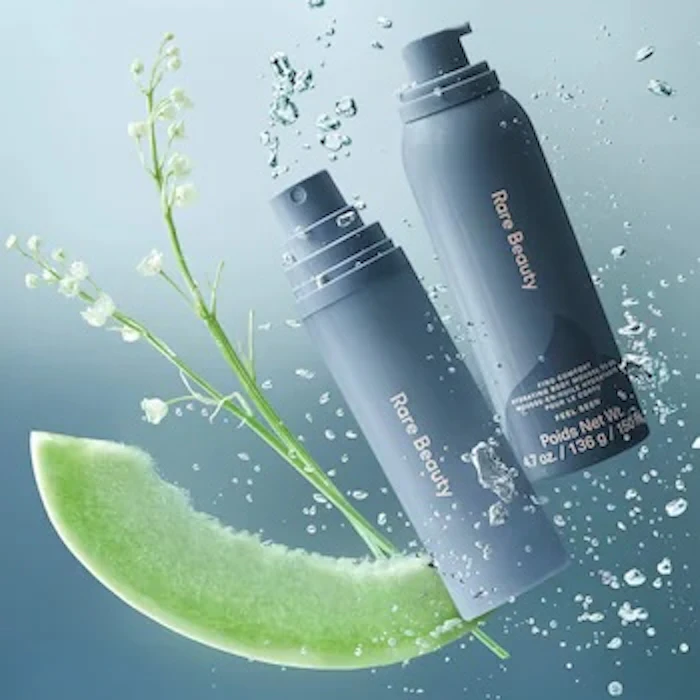
One of these is Rare Beauty, which was launched in 2020 by actress and singer Selena Gomez with a mission to help customers highlight their individuality and not compare themselves to others. It started with a makeup collection but has since expanded to skin care and fragrance. Products such as the Find Comfort Body & Hair Fragrance Mist combine sensory experiences with skin-conditioning ingredients, moving the brand into the skin and hair care categories.
Rare Beauty mists are formulated as skin care products: they contain niacinamide, biotin and ashwagandha. These are ingredients commonly used in skin and hair care to improve hydration and hair strength. For Rare Beauty, skin and hair benefits are strong motivations to buy in addition to the fragrance.
Product Claims
For the Find Comfort Body & hair Fragrance Mist in the scent “Feel Seen,” Rare Beauty claims skin and hair benefits. A claim that it “softens skin and hair with up to 24 hours of hydration” is supported by an independent consumer test with 63 respondents, although details of the test design are not offered. The product contains several functional ingredients in addition to the fragrance. Notably, it has niacinamide to support the hydration claim, in addition to a set of emollients and humectants, including butylene glycol, glycerin, caprylic/capric triglyceride and squalane. Biotin is claimed to strengthen hair, but it’s likely not in the formula at an effective level, based on its position near the end of the ingredient list.
A group of botanical extracts offers antioxidants and skin wellness benefits. These include extracts of green unicellular microalgae (Chlorella vulgaris), peach (Prunus persica), pineapple (Ananas sativus), ashwagandha root (Withania somnifera) and tomato (Solanum lycopersicum).
Interestingly, several ingredients act to prolong the persistence of the fragrance. Among these are pentylene glycol and polycitronellol, a terpene-derived citronellol polymer commercialized by P2 Science. The pentylene glycol-polycitronellol combination was claimed in a 2021 world patent5 and the fragrance-enhancing properties of polycitronellol by itself are known.6 In this formula it supports the long-lasting fragrance claim.
Another ingredient set may support a microbiome-preserving claim, although Rare Beauty doesn’t make that claim. These are the Lactobacillus ferment, yeast polysaccharides, fructooligosaccharides, glucose and fructose. These ingredients may support a good skin microbiome balance, although at the levels in the formulation this effect is probably weak.
The formula uses a preservation system consisting of 1,2-hexanediol, ethylhexylglycerin, sodium benzoate, sodium phytate and citric acid, which is typical for beauty products.
Safety and Sustainability
Rare Beauty makes no natural or sustainability claims on the packaging. On their website, they state that the bottles have 43% post-consumer recycled resin, but there is no mention of plant-based ingredients. These claims may not be driving purchase intent for young beauty consumers.
The formulation contains many allergenic fragrance ingredients, among which are several required to be declared in the European Union among the 26 regulated fragrance allergens. It is not suitable for individuals with sensitive or eczema-prone skin, which includes many teens and tweens whose skin barrier is still developing. Rare Beauty is not unique in the fragrance mist segment for containing allergenic fragrance ingredients; most fragrance mists do, even if they are oriented towards young consumers.2
In conclusion, the Rare Beauty Find Comfort Body & Hair Fragrance Mist is an innovative formula, transcending existing fragrance mists by offering skin and hair care benefits, along with a long-lasting scent.
References
- Kristin Limoges, “The Triumphant Return of Body Sprays”, Harper’s Bazaar, July 15, 2025.
- Sara Spruch-Feiner, “Inside the Gen Z-Gen Alpha hair perfume and body mist explosion”, Glossy Pop Newsletter, March 28, 2025.
- Elvis Kachi, “The Scent of Entry: How Body Mists Became Fragrance’s Biggest Gateway”, Beautymatter August 7, 2025.
- Larissa Jensen, “US Beauty Industry Sales Grow for the Fourth Consecutive Year, Circana Reports”, circana.com, February 11, 2025.
- A Saint-Paul, E Perrotta, JM Velazques Mendoza, SKK Nyakana, World Patent WO 2023/055927 A1 (2023).
- Delano Wood, Tania Salam, Patrick Foley, Marc N.G. de Mul, “How Polycitronellol Enhances Fragrances”, Personal Care Magazine 2024, 25 (8), 79.
INCI Ingredient List
Water (Aqua/Eau), Fragrance (Parfum), Caprylic/Capric Triglyceride, Butylene Glycol, Coco-Caprylate/Caprate, Glycerin, Alcohol, Niacinamide, Polycitronellol, Pentylene Glycol, Methylpropanediol, Pyrus Malus (Apple) Seed Oil, 1,2-Hexanediol, Sodium Chloride, Chlorella Vulgaris Extract, Glucose, Fructooligosaccharides, Fructose, Ananas Sativus (Pineapple) Fruit, Yeast Polysaccharides, Ethylhexylglycerin, Lactobacillus Ferment, Sodium Phytate, Prunus Persica (Peach) Flower Extract, Citric Acid, Withania Somnifera Root Extract, Sodium Benzoate, Biotin, Raspberry Seed Oil/Tocopheryl Succinate Aminopropanediol Esters, Squalane, Tocopherol, Solanum Lycopersicum (Tomato) Fruit Extract, Linalyl Acetate, Limonene, Citrus Aurantium Bergamia (Bergamot) Peel Oil, Benzyl Salicylate, Hydroxycitronellal, Alpha-Isomethyl Ionone, Linalool, Citronellol, Pinene, Citrus Aurantium Peel Oil, Terpinolene, Eugenol, Citral, Terpineol, Beta-Caryophyllene, Geranyl Acetate, Alpha-Terpinene, Geraniol.