For many R&D teams, safety substantiation has never been the question. The challenge has been determining how to best demonstrate it in a consistent and defensible way.
In the United States, personal care products have always been expected to be safe. What has evolved over time is how safety is expected to be documented and an emphasis on doing so at the finished product level. As a result, approaches have varied across organizations, with safety supported through internal standards, established guidance, historical precedent or ingredient-based assessments rather than a consistent, product-level evaluation. These approaches have provided a strong foundation for development and evaluation across categories, but do not offer strong industry harmonization.
This variability has shaped how products move from development to market. In some cases, safety decisions rely heavily on supplier data or known ingredient profiles. In others, testing is applied based on product type or perceived risk. As regulatory expectations and market scrutiny have increased, the need for greater alignment and consistency has become more apparent. Terms such as clean, natural and hypoallergenic are widely used, yet they do not have standardized definitions. This creates variation in how products are evaluated and positioned across audiences and businesses.
The Modernization of Cosmetics Regulation Act (MoCRA) of 2022 introduced new requirements tied to manufacturing practices along with expanded FDA authority and increased expectations around documentation. In recent months, FDA guidance has further clarified expectations. Safety substantiation must be supported by documented evidence, including analytical data, finished product testing and safety assessments. The agency has also expanded expectations around record access, including documentation tied to consumer complaints. At the same time, detailed regulatory definitions remain limited, leaving technical teams responsible for interpreting what “adequate” safety substantiation looks like in practice.
The focus is shifting toward more consistent and transparent methods that can be applied across product portfolios. This evolution introduces new considerations for technical teams. R&D, regulatory and marketing functions must align more closely around how safety is demonstrated and how claims are supported.
NSF/ANSI 527: Personal Care Products reflects the next step in that progression1. As a nationally adopted standard, it provides a structured framework for evaluating finished products against defined safety and quality criteria. For chemists and formulators, it offers a more consistent way to align formulation, testing and claims with current regulatory expectations.
Regulatory Pressure Is Already Here
MoCRA introduced changes that are already influencing how products are evaluated and maintained in the market. Some of the most notable updates are mandatory facility and product registration, the expansion of FDA authority to mandate recalls, mandatory serious adverse event reporting and real-time posting of cosmetic adverse events through the FDA Adverse Event Monitoring System Public Dashboard.
This shift removes a layer of anonymity that previously existed. Products are now tied directly to manufacturing facilities, and documentation must demonstrate that safety of the finished product was evaluated and supported prior to distribution.
FDA draft guidance has clarified expectations for record access, emphasizing the need for robust documentation. Companies are expected to maintain raw ingredient data, finished product analytical results and safety assessments, with the scope of review now extending beyond formally reported adverse events to include consumer complaints. As a result, records must be complete, well-organized and readily accessible.
Microbial contamination and chemical hazards are areas of heightened concern, closely linked to formulation, testing and manufacturing practices. Processes once viewed as optional, such as preservative efficacy testing and stability studies on finished formulations, are increasingly shifting from best practice to baseline expectation.
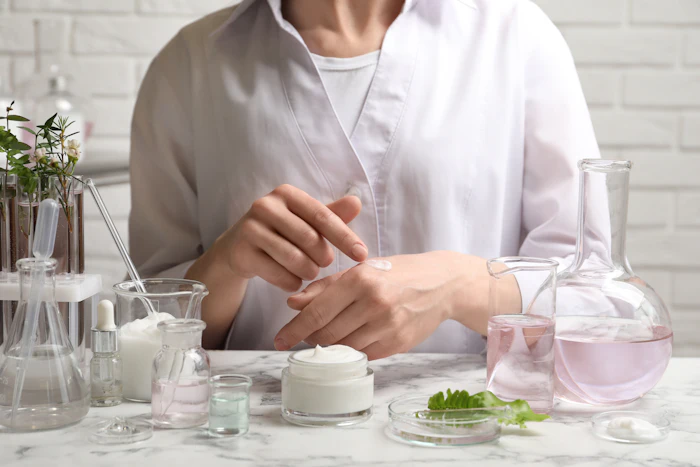
 Norah Allen at Adobe Stock
Microbial Risk and the Cost of Getting It Wrong
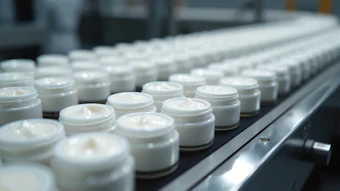
Market data continues to show that microbial contamination remains a primary driver of cosmetic recalls. Between 2005 and 2025, combined FDA and RAPEX data show more than 400 recalls in the US and Europe were linked to bacterial contamination2,3.
This risk spans product categories and reflects the complexity of controlling microbial exposure across formulation, packaging and manufacturing environments.
For formulators, this connects directly to development decisions. Ongoing microbial concerns can be addressed by creating a formula with an environment that doesn’t lend itself to microbial growth or by the inclusion of preservative systems. In either case, a formula must perform under expected use conditions, including repeated consumer interaction and variable storage environments. Packaging design can influence exposure risk, while manufacturing controls and environmental conditions affect final product integrity.
The financial impact of a recall can be significant. A 2025 ScienceDirect study estimates range from $3 million to $72 million when accounting for product removal, investigation, legal exposure and brand impact4.
Beyond cost, recall events influence retailer confidence and consumer trust.
When we discuss microorganisms for cosmetics, it’s important to confirm that not only is your initial product free of microorganisms, but that the product can withstand consumer interactions. Can the formula maintain integrity through fingers being repeatedly dipped into the product? Can it withstand being left open in the shower and exposed to water? What if the consumer leaves the product open on their nightstand?
Some formulations might combat preservation by creating environments that are naturally inhospitable to microorganism growth and therefore don’t use preservative ingredients or require preservative efficacy testing. Examples of these strategies include keeping the water activity below 0.6 aw or maintaining an extreme pH. Products that cannot rely on these strategies require appropriate preservative systems.
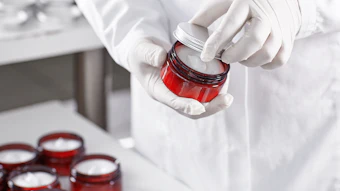
When needed, preservatives play a vital role in formulations by safeguarding product integrity over time. An effective preservative system both inhibits ongoing microbial growth and reduces the microbial load introduced through handling or use. That’s where preservative efficacy testing, or PET, comes in. This type of test is also called “challenge testing” this means the formulation is intentionally inoculated with a known number of microorganisms then evaluated over time to ensure that the microorganism population doesn’t grow and that the initial load of microbes introduced is reduced or eliminated. It is important to evaluate preservative systems within the final formulation as ingredient additions that alter the water activity and pH can impact the effectiveness of the system.
Typically, PET is conducted on the more common microbial species of concern. While methods may vary, NSF/ANSI 527 requires that preservative systems are challenged with a selection of organisms, often including Pseudomonas aeruginosa, Staphylococcus aureus, Escherichia coli, Candida albicans and Aspergillus brasiliensis.
While PET addresses preservation of a formula over time for common microbial contamination, it’s only a piece of the microbial picture. There are other less common but relevant microorganisms that are not typically evaluated in challenge testing. These include species such as Burkholderia cepacian and Klebsiella pneumoniae, both of which have been responsible for personal care product recalls in recent years. These represent a suite of microorganisms that all products should be evaluated for, regardless of preservative method.
These factors reinforce the importance of testing approaches that reflect how products perform over time and under real use conditions.
From Guideline to National Standard
The development of NSF/ANSI 527 Personal Care Product Standard builds on work that began with earlier guidance designed to support safety evaluation and product integrity.
That guidance established a foundation for aligning testing, formulation and documentation practices across organizations. It provided direction at a time when regulatory expectations were less defined and allowed technical teams to apply consistent scientific principles to product development. As regulatory expectations expanded under MoCRA and industry scrutiny increased, there was an opportunity to further formalize that approach. The transition from guidance to a nationally adopted standard reflects that progression.
A significant benefit of evaluating a product against a national standard is that all products that undergo certification evaluation are measured against the same criteria. While the specific tests performed may vary as they are tailored to the needs of the formulation, any product that requires that test will be treated the same way and held to the same expectations. It also removes the burden of justifying why a specific quality was measured and why a particular specification was chosen. The specifications that products are measured against in the standard were agreed upon unanimously by a panel of industry, regulatory and public health experts then further reviewed by a public health committee before they were approved as appropriate and results have been reviewed independently.
This evolution supports greater consistency in how finished products are evaluated, while maintaining the scientific principles established through earlier guidance. It also creates a framework that can be reviewed and updated over time as expectations continue to change. Most importantly, it reflects documented assessment supported by testing and review.
For technical teams, this provides a clearer reference point that supports alignment across formulation, testing, and documentation.
A Finished Product Approach to Evaluation
A key distinction of NSF/ANSI 527 is its focus on the finished product. Many existing approaches begin with ingredient level evaluation or exclusion criteria. While this standard does evaluate ingredients against international criteria, it prioritizes analytical testing performed on finished formulation in finished packaging as received by consumers whenever practically and scientifically possible.
This approach reflects how product safety and quality are influenced by interactions between ingredients, packaging, and use conditions. It provides a more complete view of performance in the final formulation.
Evaluation includes microbiological testing, preservative challenge testing, heavy metal screening and ingredient review against international expectations. It also includes content claim substantiation, label review, verification of good manufacturing practices and ongoing annual testing.
NSF/ANSI 527 includes an extensive microorganism panel. It addresses “common” microbial species as well as less common species that have been identified in product recalls and enforcement actions. By evaluating species that have been the cause of withdrawing product from the market and adverse events, but are not typically part of lot release testing, certification offers added assurances that products meeting the Standard are among the most thoroughly screened.
Sensitive populations deserving of additional safeguards and justifications are also addressed by NSF/ANSI 527. These groups include young children, defined as children 3 years old or younger, those who identify as having “sensitive skin” and sensitized individuals who desire “hypoallergenic” products.
For products intended for children 3 years or younger, contaminant limits for aerobic bacteria, yeast and mold have been set lower. This is in keeping with acknowledging the higher risk such contaminants can pose to smaller bodies with less robust and experienced immune systems. Therefore, products marketed for this population must meet these more stringent requirements to earn certification.
The Standard goes on to distinguish between products that are intended as “made Adobe Stock
The difference is slight, but relevant in evidence that appropriately supports such claims for these two populations. In both cases, a formula must demonstrate that it is appropriate to make such claims by containing ingredients that are not identified as skin sensitizers and in some cases supplying in-human evidence such as dermatological tolerance studies or patch testing. Additionally, hypoallergenic products undergo specific allergenic metal screening.
Claims Require Alignment With Data
For products certified to NSF/ANSI 527, any content claims that are declared on product labeling are verified for consumers. This might include verifying that claims to be vegan or cruelty-free are supported by a third-party evaluation or that contents highlighted in label claims such as “with rose hip oil” or “aloe vera gel” are present and contain the ingredient that is being highlighted.
At times, what is not present in a product is just as important as what is there. All products seeking certification are screened for a suite of specific PFAS compounds that may be unintentionally present in formulation. “Free of” claims for chemical contaminants such as phthalates, parabens and formaldehyde are tested directly in the finished formula as well.
NSF/ANSI 527 provides structure by linking content claims to substantiated evidence. It creates a pathway for evaluating whether claims are supported by formulation data, testing results and safety assessments.
The Role of Independent Evaluation
Third party certification also serves as a vehicle for consumer trust and transparency.
In a recent survey of 1000 randomly selected consumers conducted by TGM Research, only 9% trust label claims on personal care products that are not verified by a third party5. In contrast, 95% of consumers trust the product claims of cosmetics/personal care products that have been independently certified. This further translates into 89%of consumers expressing a higher likelihood of purchasing cosmetics/personal care products that have been certified, indicating a strong correlation between certification and consumer trust. These high percentages underscore certification’s pivotal role in influencing consumer purchasing decisions.
Independent evaluation is becoming more central as expectations around safety and transparency increase and consumer trust decreases. Third-party certification provides documented evidence that products have been assessed against defined criteria.
NSF/ANSI 527 combines finished product testing with regulatory and claims review. Certification includes detailed laboratory reporting and ongoing annual testing to support consistency over time.
This supports internal alignment as well as external communication. It provides a reference point for regulatory readiness, retailer discussions, and consumer trust.
Preparing for Continued Regulatory Development
FDA guidance continues to evolve, with additional clarification expected in coming years.
In this environment, waiting for clear regulatory guidance may not be practical. A structured standard provides a way to align with current expectations while preparing for future requirements.
NSF/ANSI 527 reflects this approach by incorporating current guidance and providing a consistent framework for evaluation. As an ANSI Standard, the certification will continue to be evaluated by an expert panel annually and will grow to support industry’s needs and regulation development.
A More Defined Approach to Safety
The industry has built a strong foundation around product safety, and expectations for how that safety is demonstrated continue to evolve.
NSF/ANSI 527: Personal Care Products reflects that evolution. It connects formulation, testing and claims through a structured process grounded in evaluation and documented review.
For technical teams, this provides a clearer path forward. Safety is supported by data, validated through testing and documented in a way that aligns with current regulatory expectations and the direction of the industry.
References
- NSF, Product and Ingredient Certifications. Available at: https://www.nsf.org/nutrition-wellness/product-and-ingredient-certification
- U.S. Food and Drug Administration (FDA). Recalls, Market Withdrawals, & Safety Alerts. 2013 – 2023. Available at: https://www.fda.gov/safety/recalls-market-withdrawals-safety-alerts
- European Commission. Safety Gate – EU Rapid Alert System for Dangerous Non-Food Products. 2005 – 2025. Available at: https://ec.europa.eu/safety-gate-alerts/screen/search
- Ackerley, N., Berlind, A., Black, M., Kho, K., McLaughlin, C., Sassi, A., Sertkaya, A., & Walker, S. Costs of Overly Broad Recalls. Journal of Food Protection, Volume 88, Issue 3, 2025, Article 100450. ISSN 0362-028X. Available at: https://doi.org/10.1016/j.jfp.2025.100450
- NSF. “The Future of Conscious Beauty and Personal Care”. 789 N. Dixboro Road Ann Arbor, MI 48105 USA www.nsf.org [email protected]