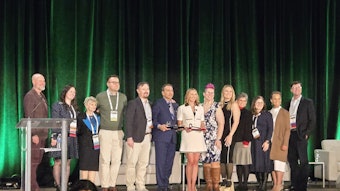
Azelis has appointed Pierre-Jean Hellivan as group platform leader for flavors and fragrances, tasking him with leading its global flavors and fragrances platform. The role is central to strengthening coordination across the company’s regional businesses, enabling more consistent engagement with global key accounts and principals while maintaining locally tailored support for flavor and fragrance manufacturers. Hellivan brings more than 25 years of industry experience, including leadership roles at Vigon, and has been instrumental in advancing cross-regional collaboration within Azelis since its acquisition of Vigon in 2021. His appointment reflects the company’s strategic focus on delivering globally aligned yet locally responsive solutions, as demand grows for partners capable of operating seamlessly across markets.
In this exclusive interview, Perfumer & Flavorist+ spoke to Hellivan about his plans to define success for Azelis’s global F&F platform by balancing global coordination with local agility, applying B2B customer experience principles to deliver consistent yet customized engagement, and leveraging lessons from Vigon’s integration to drive effective cross-regional collaboration and execution.
You’re stepping into a role designed to unify global engagement while preserving local agility. What does success look like in the first 12–18 months for the global flavors and fragrances Platform—and where do you expect the hardest trade-offs to emerge?
Hellivan: Over the past five years, Azelis has significantly strengthened its position in flavors and fragrances through a series of strategic acquisitions. Today, we operate one of the most extensive F&F distribution platforms globally. The opportunity now is to connect that scale in a way that simplifies global business for our customers and principals.
Our network already spans the Americas, EMEA and Asia Pacific through leading distribution businesses such as Vigon, Ashapura and BLH. Together, they give us access to exceptional talent, deep local market knowledge, and a very broad portfolio–from aroma chemicals, natural ingredients and essential oils to complementary product categories such as food and personal care ingredients.
The next phase of our journey is about deeper connectivity across the organization. Following a period of significant growth and expansion, the opportunity today is to further connect the capabilities we have built. The goal of the global F&F platform is to combine our strong local expertise with greater global coordination, making it easier for customers and principals to work with Azelis across regions while preserving the agility and proximity that come from our local-for-local approach.
For global customers, this means a clearer and more connected key account structure. We are mapping complex procurement organizations and aligning them with dedicated Azelis relationship owners. The objective is simple: full alignment around the customer, ensuring we support their innovation, sourcing and growth strategies consistently worldwide.
For principals, success will be measured by how easily they can unlock opportunities across our network. By strengthening internal connectivity and creating clearer peer-to-peer engagement structures, we can help principals expand their reach faster and identify new applications or markets for their portfolios.
And on the sourcing side, we are beginning to coordinate more closely with vendors globally. Collaboration between our procurement teams has already started, for example, through joint supplier engagements at industry events such as IFEAT. Over time, this will evolve into a more connected sourcing platform, allowing us to leverage our global scale while continuing to work closely with suppliers locally.
The main challenge lies in balancing global alignment with the entrepreneurial strength of our regional businesses. Flavors and fragrances remain a highly local and relationship-driven industry. The goal is not to centralize decision-making, but to connect our capabilities more effectively. The result will be a platform that combines global reach with the agility and customer intimacy that define Azelis.
Your doctorate focused on B2B customer experience. How does that research practically shape the way Azelis should work with global key accounts and principals in flavors and fragrances, especially as customers demand both scale and customization?
Hellivan: Customer experience has been a long-standing interest of mine, both professionally and academically. Early in my career in the flavors and fragrances industry, I became increasingly interested in how customers actually experience their interactions with suppliers. That curiosity ultimately led me to pursue a Doctorate in Business Administration and defend a thesis titled “Analyzing B2B Customer Experience in Industrial Markets: Value Co-creation and Co-destruction Practices in the Case of the Flavor and Fragrance Industry.”
Through dozens of interviews with F&F buyers and suppliers, my research explored how value in B2B relationships is not created solely through products or pricing, but through the way organizations manage key interactions across the customer journey. One of the most important insights is that every interaction creates an experience, whether intentional or not. That experience can strengthen a partnership and unlock value, or it can erode trust and create friction.
In practical terms, this means that customer experience in B2B starts with operational excellence. Delivering on time, in full and on quality is the foundation of any successful relationship. Without consistent transactional reliability, it is very difficult for a relationship to evolve from transactional to strategic.
Beyond that foundation, managing customer experience becomes about consistency and alignment, particularly in global organizations. Global customers expect a coherent experience across regions, even when their needs require local adaptation.
At Azelis, we address this by combining our local-for-local model with increasing global coordination. Our local teams remain close to customers and understand their specific market realities, while global alignment ensures that customers and principals experience the same level of expertise, responsiveness and partnership wherever they engage with us.
Digitalization also plays an important role here. By progressively harmonizing systems across the organization, including shared ERP and CRM platforms, we can standardize best practices and ensure that insights are shared across regions. For example, some of the structured customer engagement processes developed at Vigon are now being used as a blueprint to enhance the broader Azelis CRM environment.
Ultimately, the goal is to combine the strength of our local relationships with a consistent, high-quality global experience, one that helps our customers innovate faster, navigate complexity and succeed in their markets.
Having lived through Vigon’s integration into Azelis, what lessons from that journey are most relevant as you now lead cross-regional collaboration across the full F&F platform—and what would you do differently this time?
Hellivan: Vigon’s integration into Azelis has been an extremely valuable experience, both professionally and personally. Looking back, I would describe it as a story with two complementary lessons.
First, the integration showed the importance of pacing change correctly. From my perspective, Azelis leadership managed the process thoughtfully. Changes were introduced progressively, allowing teams to adapt while preserving the entrepreneurial culture and customer focus that had made Vigon successful. The fact that the vast majority of Vigon’s leadership and sales team remained in place sends a strong signal about how the integration was handled.
At the same time, the journey also highlighted that transformation inevitably brings operational challenges. One example was Vigon’s ERP system. Over the years, Vigon had developed a highly customized platform that supported many of its customer-centric processes. However, it had also reached a point where modernization was necessary - the system lacked capabilities such as cloud infrastructure and more advanced planning tools.
Moving to the Azelis Microsoft Dynamics 365 environment, therefore, made strategic sense. This was a major transformation for us with a lot of complex requirements and a number of evolutions to reach our desired end state. What stood out during that period was how the organization responded. Leaders took accountability, addressed the issues transparently, and teams across the business stepped up to ensure smooth operations.
From that experience, I draw three principles that guide how I approach the development of the global F&F platform:
- First, change should feel like an evolution rather than a revolution, but leaders must remain closely connected to their teams, because what feels incremental to some may feel transformational to others.
- Second, strategy is important, but execution ultimately determines success. As Mike Tyson famously said, “Everyone has a plan until they get punched in the face.” In business transformations, reality inevitably challenges the plan, and organizations need the agility to adapt quickly.
- Third, accountability builds trust. When challenges arise, owning them and resolving them quickly strengthens both teams and partnerships.
Importantly, the global F&F platform is not being built from scratch. Collaboration across regions has already been happening organically for years, through shared customer engagements, joint sourcing initiatives and industry events. What we are doing now is connecting these capabilities more intentionally so that we can better support our customers and principals worldwide.