In June of 2026, bemotrizinol (commercially known as Tinosorb S and Parsol Shield) was approved by the US Food & Drug Administration for use in sunscreen applications.1 Bemotrizinol (bis-ethylhexyloxyphenol methoxyphenyl triazine, or BEMT) is the first UV filter approved by the FDA in decades.2 It is expected to reshape the US sunscreen landscape as brands move away from traditional UV filters to the newly approved BEMT.3
The advantages of BEMT over other UV filters are legion. BEMT has a molecular weight of 627.8 g/mol, much larger than other organic filters, such as homosalate, octisalate, octinoxate, octocrylene and oxybenzone. This means that BEMT is not easily absorbed through skin, unlike the other filters. It is also much better than the salicylates and octocrylene in UV extinction per unit weight, so that sunscreen formulations don’t have to use as much filtering material, making them lighter on skin.4 BEMT will probably replace octocrylene and some of the other filters in most formulas. However, octinoxate is one of the best solvents for the crystalline BEMT at 17% solubility, so it may survive.5
A major constraint is that BEMT was approved but not the other European UV filters with which it is often combined. These include diethylamino hydroxybenzoyl hexyl benzoate (DHHB, Uvinul A Plus/Parsol DHHB), ethylhexyl triazone (Uvinul T 150/Parsol EHT) and bisoctrizole (Tinosorb M). Combinations of these with BEMT achieve cosmetic elegance and broad spectrum protection, which are sorely needed in the US to increase consumer usage of sunscreens and limit the incidence of skin cancer. However, none of these are in the pipeline for US approval.
Most European sunscreen formulations can still not be exported to the US because they use BEMT in combination with other non-approved filters. Additionally, some use cosmetic-grade colorants such as ultramarines and manganese violet, which are not listed for drug use and cannot be used in OTC drugs such as sunscreens. This eliminates many EU tinted sunscreens and SPF foundations.
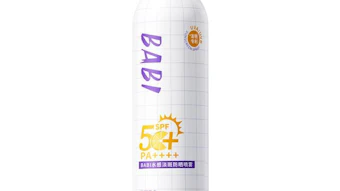
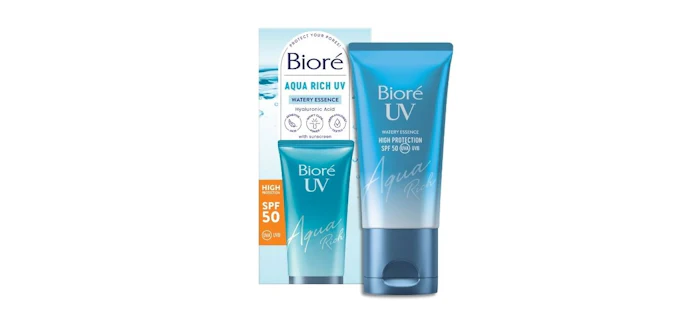
There are a few exceptions where the European formulas can be exported unmodified to the US, with the necessary label changes. The most direct are probably the Bioré UV Aqua Rich Weightless Moisturiser SPF 30 and the Watery Essence SPF 50, found in the United Kingdom. Both contain BEMT in combination with the US approved filters avobenzone, homosalate, octisalate and octocrylene (see Table 1). These UK products share a name but not a formula with the Japanese Bioré UV Aqua Rich Watery Essence, which combines BEMT with ethylhexyl triazone and DHHB, neither of which is approved in the US.⁶ US sunscreen labels are required to list the active percentages in the product, but EU labels list the UV filters among the other ingredients without a percentage. However, the EU labels list ingredients in order of concentration in the formula, so we can make some inferences about their levels.
| UV Filtering Ingredient | Level in US Bioré UV Aqua Rich Watery Essence SPF 50 | Level in EU Bioré UV Aqua Rich Watery Essence SPF 50 |
|---|---|---|
| Avobenzone | 3% | Present (regulatory limit, 5%) |
| Homosalate | 10% | Present, low in the list |
| Octisalate | 5% | Present, high in the list |
| Octocrylene | 5% | Present, high in the list |
| Bemotrizinol | - | Present |
Since homosalate is low in the EU ingredient list, we can assume that its level is less than that of octisalate and octocrylene, which are at 5% in the US formula. BEMT is listed after avobenzone in the EU ingredient list, indicating that its level is at most 5%, lower than the US regulatory limit of 6%. So using the EU formula in place of the US one should be a straightforward labeling change. The inactive ingredients in the formulations are nearly identical, indicating that the US and EU products use the same formulation chassis.
There are regulatory requirements that are different between the US and Europe, none of which are big obstacles to formula transfer. The concentration limits for the UV filters differ slightly, which might be an issue for avobenzone only, because it has a low 3% limit in the US, lower than the 5% limit in Europe. The manufacturing site must be registered with the FDA, which is already the case for the Bioré product. SPF and broad spectrum testing data according to US test methods probably does not yet exist and would need to be completed. The same is true for HRIPT (human repeat insult patch test) and preservative efficacy testing, if that data does not yet exist. Finally, shipping OTC products without an expiration date requires 3 years of in package stability testing. Since the Bioré formula has been on the market in Europe, that data may also exist. The total list of required tests may take about 3 months.
However, the impending approval of BEMT as a UV filter in the US was known for months, at least since the publication of the proposed order on the FDA website in December 2025. The final order came in June with almost identical wording to the proposed order. Brands were reformulating starting in December, if not before, which is enough time to assemble the regulatory package for product launch. Still, Kao would have a head start with the European formula. Its products with BEMT should have been ready to launch on the first sale date of August 9, 2026.
Other brands are known to be planning launches of reformulated products within months. The constraint is the US sunscreen season, which starts in January or February. The FDA order was effective well after the season peak in May and June. Generally, new sunscreens launch into retail in January, so an August launch would be very early.
Another constraint is that there is no new performance claim to make with BEMT, which makes it difficult to increase product sales after the reformulation with BEMT. The Bioré sunscreen already claims a watery, fast absorbing texture, an invisible finish without a white cast and high UVA and UVB protection. A claim could potentially be made for lower skin penetration, but the other UV filters in the formula negate that. Given that the BEMT-containing formulation is probably more costly than the same formula with homosalate, there is no strong incentive to move quickly.
The non-sunscreen ingredients in the Bioré formulation are mostly solvents and emollients. The denatured alcohol and water continuous phase dries quickly and allows other ingredients to spread. BEMT requires a specific organic solvent, in this case C12-15 Alkyl Benzoate, which is combined here with dicaprylyl ether and phenyl trimethicone. Diethylhexyl 2,6-naphthalate is a UV absorber not declared as a filter in the US or EU. It stabilizes the avobenzone against photooxidation. Lauryl Methacrylate/Sodium Methacrylate Crosspolymer and Acrylates/C10-30 Alkyl Acrylate Crosspolymer are film formers, while Dextrin Palmitate, Glyceryl Behenate, and Cetyl Alcohol are oil phase thickeners. The emulsifier system is headed by Sorbitan Distearate with Stearoyl Glutamic Acid and Arginine, while Glycerin and Sodium Hyaluronate function as humectants. Finally, Citral, Geraniol, Limonene, and Linalool are potentially allergenic fragrance components that are required to be listed separately under EU regulations as potential fragrance allergens. The presence of these ingredients is noteworthy because the product claims to be suited for sensitive skin.
In summary, the Bioré UV Aqua Rich Watery Essence SPF50 is less complex to convert to the new BEMT filter, but the long lead time available since the first announcement of the FDA rule makes that advantage less important. Most sunscreens with BEMT will launch on the normal timeline in January 2027.
INCI Ingredient List
Active ingredients. Avobenzone 3%, Homosalate 10%, Octisalate 5%, Octocrylene 5%. Total actives 23%.
Inactive ingredients. Water, Alcohol Denat., Lauryl Methacrylate/Sodium Methacrylate Crosspolymer, Diethylhexyl 2,6-Naphthalate, Glycerin, Dextrin Palmitate, Dicaprylyl Ether, Acrylates/C10-30 Alkyl Acrylate Crosspolymer, Fragrance, Glyceryl Behenate, Phenyl Trimethicone, Cetyl Alcohol, Sorbitan Distearate, Sodium Hydroxide, Stearoyl Glutamic Acid, Arginine, Disodium EDTA, Sodium Hyaluronate, Phenoxyethanol, Citral, Geraniol, Limonene, Linalool
References
- “Amending Over-the-Counter Monograph M020: Sunscreen Drug Products for Over-the-Counter Human Use, and Related Information,” Food & Drug Administration, June 10, 2026.
- “FDA Expands Sunscreen Options for the First Time in 20 Years”, FDA News Release, June 9, 2026.
- Tatiana Luts, Connor DeVoe, Joshua D. Williams “Formulating high efficacy sunscreens with bis-ethylhexyloxyphenol methoxyphenyl triazine (BEMT): a new sunscreen filter expected to be approved in the United States”, poster presented at the American Academy of Dermatology Annual Meeting March 27-29, 2026.
- Taylor Bryant, “The US May Finally Get A New Sunscreen Filter. Here’s What It Could Mean.”, Beauty Independent, October 13, 2025.
- BASF Technical Information, Tinosorb S, PRD 30481068, valid since 2018.
- Ingredient listing for Bioré UV Aqua Rich Watery Essence, Japan market, SkinSort and INCIDecoder, accessed August 2026. Kao does not publish the full ingredient list for this product.