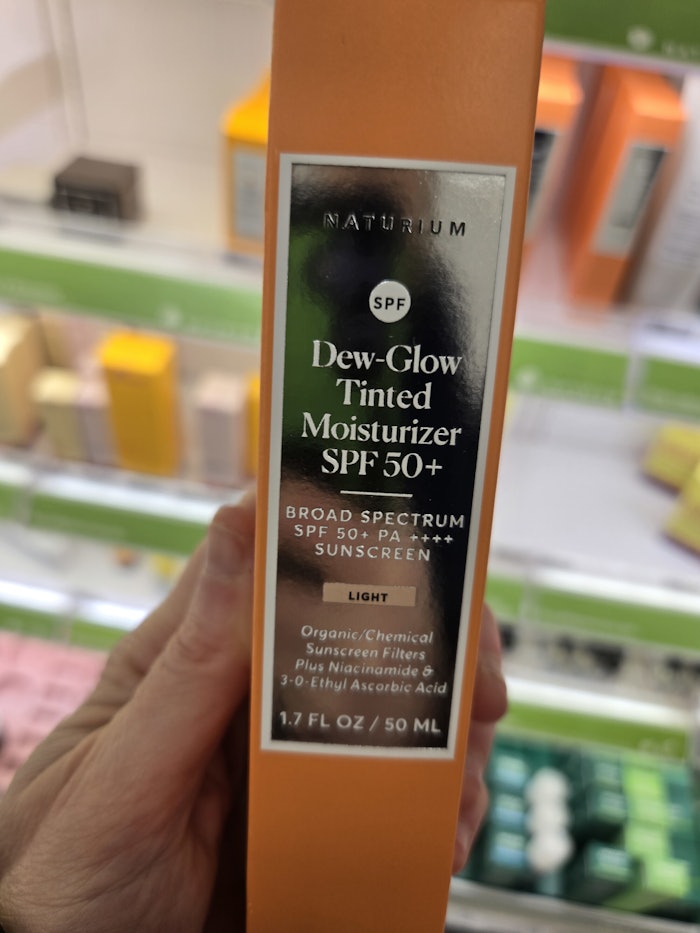
Consumers are drawn to tinted SPF products because they are multi-tasking and convenient, offering sun protection as well as cosmetic benefits such as light coverage and a more even skin tone. According to Market.us, the global market for tinted sunscreens is expected to grow to ~US $1.29 billion by 2034, expanding at a CAGR of 5.5% from 2025 to 2034. One notable opportunity the source highlights is the need for a broader range of shades to match a more diverse consumer base. Naturium's Dew-Glow Tinted Moisturizer SPF 50+, available in three shades, provides a good example.
This article is only available to registered users.
Log In to View the Full Article
Consumers are drawn to tinted SPF products because they are multi-tasking and convenient, offering sun protection as well as cosmetic benefits such as light coverage and a more even skin tone. According to Market.us, the global market for tinted sunscreens is expected to grow to ~US $1.29 billion by 2034, expanding at a CAGR of 5.5% from 2025 to 2034. One notable opportunity the source highlights is the need for a broader range of shades to match a more diverse consumer base. Naturium's Dew-Glow Tinted Moisturizer SPF 50+, available in three shades, provides a good example.
Naturium Dew-Glow Tinted Moisturizer SPF 50+
Naturium's Dew-Glow Tinted Moisturizer SPF 50+ is a multifunctional skin care product that combines sun protection, hydration and a subtle tint for a natural, radiant finish. It offers broad-spectrum SPF 50+ protection using organic/chemical sunscreen filters, including homosalate, octisalate and avobenzone.
The formula is enriched with niacinamide, known for its ability to improve skin texture, minimize the appearance of pores and enhance overall skin tone. Additionally, it contains ethylated ascorbic acid, a stable derivative of vitamin C, which helps to brighten the complexion and provides antioxidant benefits to combat environmental stressors.
Other notable ingredients include squalane, a lightweight hydrator that mimics the skin's natural oils, and sodium hyaluronate, a form of hyaluronic acid that deeply hydrates and plumps the skin.
The tinted moisturizer is designed to provide sheer, flexible coverage that adapts to various skin tones, available in three shades: light, medium and deep. Its lightweight, non-greasy texture reportedly leaves a dewy, glowing finish, making it ideal for no-makeup days or as a base under makeup.
Additional claims include:
- cruelty-free
- vegan
- fragrance-free
- paraben-free and
- gluten-free.
According to the company, the product is dermatologist tested to ensure it is suitable for sensitive, dry, combination and aging skin types. It is also aligned with clean beauty standards.
Ingredients: Naturium Dew-Glow Tinted Moisturizer SPF 50+

Active ingredients: Homosalate 10.0%, Octisalate 5.0% and Avobenzone 3.0%
Inactive Ingredients: Aqua/Water/Eau, Butyloctyl Salicylate, C12-15 Alkyl Benzoate, Calcium Sodium Borosilicate, Glycerin, Glyceryl Stearate, Ethylhexyl Methoxycrylene, VP/Eicosene Copolymer, Stearyl Dimethicone, Argania Spinosa Kernel Oil, Tocopheryl Acetate, 1,2-Hexanediol, Niacinamide, Sodium Stearoyl Glutamate, Tocopherol, Cetearyl Olivate, Bisabolol, 3-O-Ethyl Ascorbic Acid, Sodium Hyaluronate, Squalane, Ammonium Acryloyldimethyltaurate/VP Copolymer, Hydroxyacetophenone, Silica, Octadecene, Sorbitan Olivate, Sorbitan Oleate, Caprylyl/Capryl Glucoside, Xanthan Gum, Sodium Acrylate/Sodium Acryloyldimethyl Taurate Copolymer, Trisodium Ethylenediamine Disuccinate, Polyisobutene, Citric Acid, Sodium Hydroxide, Iron Oxides (CI 77491), Iron Oxides (CI 77492), Iron Oxides (CI 77499).
Ingredients reported as shown on the company website as of Nov. 6, 2025.
User Feedback: Naturium Dew-Glow Tinted Moisturizer SPF 50+
Following are example user reviews (edited for style), selected for their anecdotal insights on product form and function.
- The perfect tint. I love the way that it makes my skin feel and the shine that it gives my skin.
- I love the look and the feel of it. It leaves a beautiful finish and it lasts. No eye sting.
- The tint is flexible and perfect for my medium deep melanin skin. It is shiny, as with most other sunscreen products, and does not have a huge color payoff.
- A two-in-one step moisturizer; I love this on my no makeup days because it gives my skin just enough coverage and of course it’s SPF 50 ++++, a bonus.
- It looks natural and smooths out my imperfections.
- Lightweight and goes on smoothly, and the color is not chalky or too much.
Formulating Multi-tasking Tinted SPF Products
Johnson previously wrote, in her C&T column, that since many consumers use foundation as a base product in their daytime regimen, it is convenient to provide SPF protection as well to serve a dual-function. To achieve such, she pointed to titanium dioxide.
"Titanium dioxide is a universal personal care ingredient in that it can be used as a colorant and a mineral UV protector or sunscreen filter in the same product," she explained. Per Johnson, color cosmetics including SPF can incorporate solely mineral sunscreen products, e.g., zinc oxide or titanium dioxide, or may use chemical sunscreens.
"It may be an easier approach to utilize mineral sunscreen actives since they color a base formula white, inherently leaving the formulator with a neutral base color to work from to create various skin hues," she noted. "Chemical sunscreen filters are typically radiant yellow in color and can create an additional variable when attempting to calculate the required ratio of black, yellow and red iron oxide to create the desired end color blend."
In terms of additional benefits, Johnson highlighted, "Most color cosmetic products are applied in the morning, worn throughout the day and potentially re-applied late into the evening. This is an optimal timeline to add moisturizing and antioxidant ingredients with multiple skin care benefits.
"Hyaluronic acid, vitamin C, oil-soluble vitamin C derivatives such as tetrahexyldecyl ascorbate, niacinamide, alpha hydoxy acids including glycolic acid and lactic acid, and beta hydroxy acids like salicylic acid are among the many options in this category."
Something to note, however, per Johnson, is that including these types of skin benefit ingredients adds extra variables that may affect formula pH or viscosity. "For example, ascorbic acid, glycolic acid and salicylic acid decrease the pH of the overall formula, requiring a strong base to bring the pH to cosmetic requirements above a level of 3.5."
In addition, niacinamide at higher use levels (1%-5%) will increase the pH of the product, and if the product has a pH of higher than 6.5-7.0, this might not be optimal for preservation. Instead it would require the addition of an acid to bring the pH back into range.
"With these types of pH fluctuations, viscosity may increase or decrease. Active ingredients may also increase iron oxide degradation or change the original desired color," she cautioned.
These are just a few considerations when working with a hybrid product.