A new study published in Frontiers in Marine Science demonstrated how jellyfish bycatch can be upcycled into high-quality collagen for the cosmetics industry. The research provides an interdisciplinary framework for a circular bioeconomy.
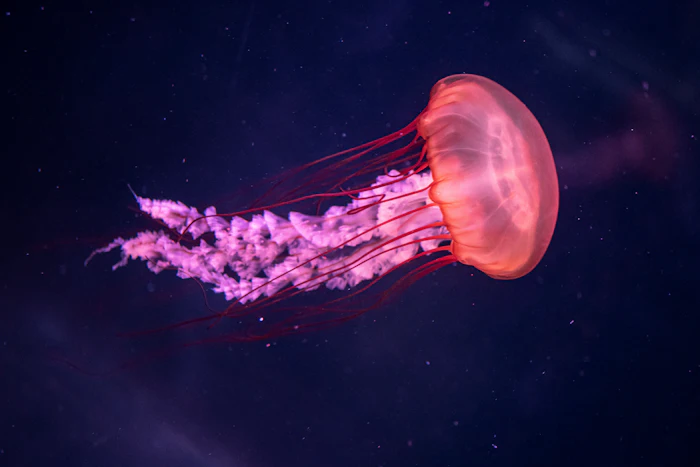
Jellyfish bycatch is the accidental capture or entanglement of jellyfish in commercial fishing gear. Traditionally, this biomass is treated as waste, but previous research has shown that certain jellyfish contain high collagen contents with nutritional and functional properties. Specifically, Rhizostoma pulmo, Cotylorhiza tuberculata and Rhopilema nomadica have been identified as species of interest because of their nutraceutical properties.
For this study, researchers at the Institute of Environment and Marine Science Research at the Catholic University of Valencia monitored jellyfish bycatch from four small-scale fishing guilds in the Spanish Mediterranean and collected collagen from the biomass. The researchers also surveyed fishers’ opinions on the issue of jellyfish bycatch.
According to the fishers’ perception assessment, 81.3% of participants said they believed that accidental catches could be used as a potential resource if properly upcycled. Further, 93.8% expressed willingness to participate in pilot initiatives focused on jellyfish biomass valorization.
When compared to the acid-soluble collagen content extracted from hand-net-collected jellyfish, bycatch specimens had a similar yield and quality, demonstrating that incidental capture did not compromise collagen recovery. Further, collagen collected from the Rhizostoma pulmo species showed several attributes similar to that of commercially available collagens.
“This study demonstrates that jellyfish bycatch from small-scale fisheries can be effectively valorized, providing a sustainable source of native collagen while advancing circular bioeconomy practices,” the researchers stated in their conclusion. “This collagen and its hydrolyzed products could be further explored for value-added applications in cosmetics, nutraceuticals, biomedicine and other biotechnological sectors.”
Looking to the future, the research team expressed interest in more long-term studies on jellyfish bycatch patterns and further progress in optimizing collagen extraction methods.