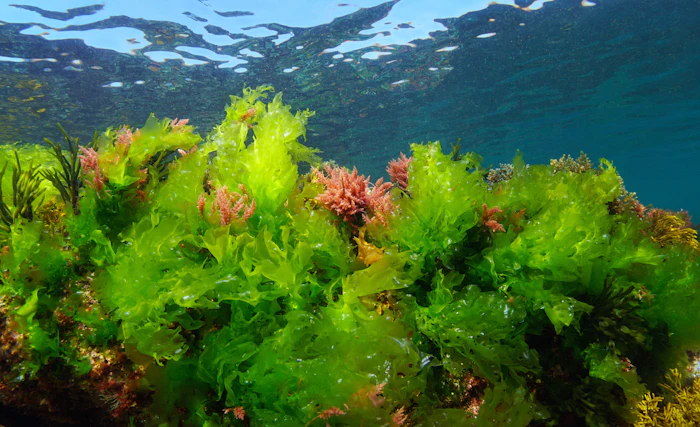
A new study published in Nature analyzed the potential cosmetic benefits of extracts from a species of sea lettuce, Ulva rigida. The study found that the sample extracts contained phenolics and flavonoids, which contribute to anti-aging, and the extracts exhibited anti-aging effects in various testing methods.
Green macroalgae, commonly known as sea lettuce, are gaining momentum in cosmetic applications due to their rich biochemical compositions. According to the study, Ulva rigida is widely distributed in coastal marine environments and has a rapid growth rate, making it a prime candidate for large-scale biomass production. The researchers aimed to address how the biochemical composition of this species can address specific anti-aging effects at the genetic level.
The researchers used three extraction methods to obtain samples: juice squeezing, boiling and maceration using 95% ethanol. The samples then underwent a phytochemical analysis as well as several in-vitro tests for anti-aging activities.
According to the results of the study, the macerated extracts effectively inhibited anti-melanogenesis activity and tyrosinase activity while promoting collagen biosynthesis. Further, all of the extract samples were able to stimulate SIRT1, a key anti-aging gene. The researchers believe that the anti-aging effects of the extract are largely due to the presence of phenolics, flavonoids and quercetin. These compounds exhibit antioxidant activity, which aids in age-related dermatological ailments.
To test safety, all of the extract samples were tested at a concentration of 1.0 mg/m: and found to be non-cytotoxic to normal human skin fibroblasts. The researchers do mention that higher concentrations can likely cause cell damage, resulting in cytotoxic effects.
“This study significantly advances the existing literature on Ulva rigida by transitioning from general phytochemical screenings to precise molecular characterization and novel biological applications,” the researchers stated in their conclusion. “Given their potent effects and non-cytotoxic nature on human skin cells, the findings suggest that UR extracts are a promising natural source for developing new skincare, cosmeceutical and pharmaceutical applications.”