This report counts down the ten most-read articles and reports from Cosmetics & Toiletries (C&T) over the past year (through Dec. 23, 2025). As we explore the content that resonated with readers, we also offer insights about why it may have drawn interest — see if you agree.
Editor's note: We've omitted our "top trends" reports from industry events and awards from this list. These have also drawn significant interest for an obvious reason: to keep on top of industry events and trends. Drawing further conclusions is challenging since the reports cover a broad range of topics and we aren't mind readers. At least not yet.
#10 – Polar vs. Nonpolar Oils
In this archived article from 2008, Tony O’Lenick asked industry expert Valerio Vergani of Akott Italia to describe the difference between a polar and a nonpolar oil. In it, Vergani discusses hydrophilicity and hydrophobicity, solubility, polarity, emulsifiers, aesthetics and more. (See the full article for details).
This speaks to an interest in formulating fundamentals, either from novice formulators seeking a deeper education, or from seasoned experts wanting a refresh. In the interest of transparency, we also note that O'Lenick often refers students to his articles, which certainly drives further engagement. (Thank you, Tony.)
#9 – 4 U.S. Bills Propose Ban on 18 Cosmetic Ingredients, Fill the MoCRA 'Gap'
This report describes U.S. regulatory efforts to restrict the use of specific chemicals in cosmetics and personal care products sold in the United States. Known collectively as the “Safer Beauty Bill Package,” the measures focus on eliminating ingredients linked to health and environmental concerns (e.g., phthalates, formaldehyde, parabens and others).
Reports like these give readers a sense of what ingredients cause consumer alarm, and highlight legislative changes that could directly impact ingredient selection and formulation practices. To play the industry "game," you have to know the rules — so following regulatory updates makes sense.
As an aside, regulatory reports consistently rise to the top of C&T reader traffic, demonstrating the drive to ensure compliance and consumer safety in product development. These reports also flag global ingredient bans or restrictions that might "catch on" locally, regardless of their risk or hazard basis.
#8 – Safety Alert: Sunscreen 'Doping' and Foam Formats Raise Red Flags
Another top-read regulatory story highlighted headlines and warnings over "hidden" (undeclared) sunscreen actives, as well as the legal gray zone of mousse-format sunscreens, prompting calls for clearer labeling and format approval.
C&T readers were highly interested in sunscreen-related reports this year as warnings, recalls and testing missteps have made headlines around the globe. This underscores the readers' drive to ensure they innovate responsibly, protect consumer safety, meet regulatory standards — and don't make the same mistakes.
In relation, the U.S. Food and Drug Administration (FDA) recently proposed adding bemotrizinol to the approved list of sunscreens in the U.S. For decades, formulators and product developers have waited for a new sunscreen to be added to their toolkits, so it's no wonder why sunscreen news grabs reader attention.
#7 – Treating Wrinkles with Dimethylaminoethanol, Retinol and Mineral Salts
Another archived C&T article that attracted readers was from 2013. Here, C. Bertin, C. Robert, M. Jousselin and N. Issachar from Johnson & Johnson, and E. Camel of the Institut d’Expertise Clinique, described a study to determine if the appearance of facial wrinkles could be improved by combining dimethylaminoethanol (DMAE), retinol and mineral salts. Ultimately, both clinical assessment and video analysis showed a significant improvement.
Retinol is another topic frequently stirring C&T reader interest. It has been the gold standard for anti-aging products for decades but consumers demand gentler and more natural alternatives, especially to mitigate the irritation potential of retinol.
Visitor traffic to this article suggests: 1) formulators are still on the quest to perfect anti-aging treatments; 2) they are interested in ways to combine ingredients for greater efficacy, potentially through synergies; and 3) they are focused on mitigating retinol's irritation potential.
#6 – J&J’s Baby Powder Legal Battle Persists with $10 B Settlement at Stake
Johnson & Johnson and talc rulings have been a continuing saga. In this report from February, we provided updates on current lawsuits that allege J&J's talc-based baby powder causes ovarian cancer. However, we also highlighted Reuters' insight that the "true test" would be the Feb. 25, 2025, ruling on the company's third attempt to settle through bankruptcy. (It wasn't approved, by the way).
Reader interest in this article would seem to align with that of the other regulatory stories — the focus on innovating responsibly, protecting consumer safety and avoiding the same mistakes — with a few additions.
1) Scientific curiosity: Readers may wonder if a connection has been made between asbestos in talc and ovarian cancer, since the evidence has been conflicting. Also, they may be watching to see how regulators are defining talc and what tests can be used to confirm its presence.
2) Business impact: Readers are also following the significant financial impact of these rulings on the business and watching to see how a major corporation handles it (e.g., filing for bankruptcy, creating a subsidiary, etc.).
3) Human curiosity: And not to make light of a serious issue, but the ongoing cases and reports of these lawsuits have become somewhat of an industry "mini-series." And for all of us "binge watchers," we need to see the next episode.
#5 – Microalgal Bio-retinoid: A Retinol Alternative to Gently Rewind Signs of Photoaging
This feature article, published in our February issue, by Alexandre Lapeyre, Jordi Ayats and Noemi Garcia-Delgado, of Algaktiv, compares the efficacy of a novel bio-retinoid derived from microalga with that of retinol and bakuchiol to reverse signs of photoaging in vitro. Its efficacy, safety and skin-soothing effects vs. retinol and bakuchiol are also explored in clinical trials.
Again, anti-aging is a formulator's evergreen quest, and the development of safer and natural alternatives to retinol is continuous. This ingredient is not only an alternative to retinol, but also microalgae-derived — a buzzing area of innovation in recent years. No doubt, readers were curious to see just how well the microalgae alternative compared to the gold standard, especially considering all the marketing boxes it checks.
#4 – Top Derms Agree: These Skin Care Ingredients Work Best
Last summer, C&T highlighted a study from Northwestern Medicine in which a host of nationwide experts identified the best topical skin care ingredients for given skin conditions. The review focused on recommendations by cosmetic dermatologists and narrowed down a list of 318 to just 23.
For formulators, ingredients are always of interest from a functional standpoint. The fact that this study also highlighted the "best" as determined by dermatologists provides an opportunity to align formulas with doctor recommendations — it also points to the industry responding to rising consumer interest in dermocosmetics and science-backed beauty.
#3 – Kenya Bans 400+ Soaps and Skin Brighteners
It is interesting to see this regulatory article from 2022 fall within the top three articles for 2025. In fact, it has ranked within the top 10-15 articles on C&T for the past three years.
As stated in the report, the banned products contained mercury and hydroquinone compounds. According to the Kenya Bureau of Standards (KEBS), these can only be used with a physician's oversight.
So, why the interest? First of all, any time we see the word ban in a headline, it draws our attention; plus 400+ is a significant number. In addition, it is critical for formulators to know which ingredients are banned in the region for which they are formulating. But why this specific region?
It's an emerging hotspot. Market Data Forecast projects a 6.85% CAGR from 2025-2033 for the overall African beauty market, in which Kenya is the regional hub or "gateway" to East African trade for multinational and local indie beauty brands. In fact, it has attracted The Estee Lauder Cos. and Fenty Beauty, while also nurturing indies like Uncover Skincare and Jani Beauty.
What's more, Kenya has a growing beauty consumer base, especially its younger demographic, demanding natural and specialized products. This will continue to solidify Kenya as a key player in the African cosmetics market.
#2 – 'Breakthrough' Bacteria Boost: L'Oréal Files Patent on Crystallized Live Probiotic Anti-aging Skin Care Formula
Our second-most popular article in 2025 by Kacey Culliney explores L'Oréal's development of a topical skin care formula containing a crystallized live probiotic to reverse signs of skin aging. The innovation acts via microbiome modulation – an exciting and notable advancement in skin care, experts stated in the report.
Three major factors have likely driven readers to this piece: 1) interest in how crystallization impacts the delivery of the live probiotic; 2) curiosity about the ability to modulate the skin microbiome for anti-aging effects; and 3) research to see what the international beauty giant L'Oréal is up to.
The popularity of this article suggests product developers are still quite interested in leveraging the skin microbiome for beauty benefits — but also that they need new solutions (i.e., crystallization) to achieve such.
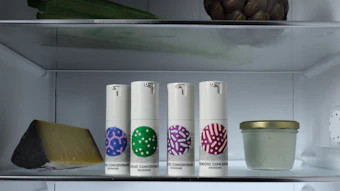
#1 – Why The Ordinary Launched its GF 15% Solution with a Side of Science
Finally, the number one C&T article in 2025 described the launch of The Ordinary's GF 15% Solution in January. The company rolled out the product in an unprecedented way: with a website dedicated to cosmetic research explaining the benefits and misconceptions of the ingredients featured in the product.
The goal was to break through knowledge barriers, Rita Silva, senior manager of global scientific communications and brand engagement for The Ordinary, explained in the interview; for example, that growth factors — including those in the product — warrant a higher price point because they are newer ingredients. Per Silva, this is not always the case.
While the article's focus on The Ordinary and its latest launch (at that time) likely drew reader interest, as well as exclusive insights from Silva, we like to think it was more of a curiosity about how buzzy brands are embracing scientific communication to cut through misconceptions and misinformation — something the industry still desperately needs.
We look forward to seeing how these reader dynamics will unfold in the coming year.