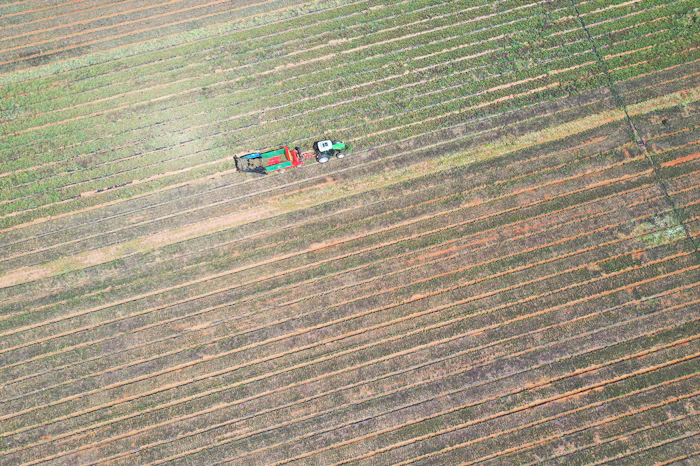
As the fragrance and flavor industries increasingly demand transparency and environmental accountability, the traditional, fragmented naturals supply chain is being challenged by a new, integrated agroindustrial model. Zalabí, an essential oil producer located in the semi-arid Zalabí Valley of Southern Spain, is taking on this structural reset. By shifting from a transactional model to one defined by direct agronomic control, automated in-house distillation and lot-level traceability, Zalabí seeks to shift production toward a modern risk-management strategy.
Zalabí leverages its unique Mediterranean terroir—characterized by Sierra Nevada snowmelt aquifers and extreme thermal shifts—to deliver expressive, technically reliable oils like Spanish red thyme, marjoram and sage. From the operationalization of circularity through biomass valorization to a horizontal collaboration framework that aligns with UEBT principles, Zalabí offers one possible roadmap for a technically modern and regulatory-ready Mediterranean production origin.
This article is only available to registered users.
Log In to View the Full Article
As the fragrance and flavor industries increasingly demand transparency and environmental accountability, the traditional, fragmented naturals supply chain is being challenged by a new, integrated agroindustrial model. Zalabí, an essential oil producer located in the semi-arid Zalabí Valley of Southern Spain, is taking on this structural reset. By shifting from a transactional model to one defined by direct agronomic control, automated in-house distillation and lot-level traceability, Zalabí seeks to shift production toward a modern risk-management strategy.
Zalabí leverages its unique Mediterranean terroir—characterized by Sierra Nevada snowmelt aquifers and extreme thermal shifts—to deliver expressive, technically reliable oils like Spanish red thyme, marjoram and sage. From the operationalization of circularity through biomass valorization to a horizontal collaboration framework that aligns with UEBT principles, Zalabí offers one possible roadmap for a technically modern and regulatory-ready Mediterranean production origin.
Iberian Aromatic Essentials for Fine Fragrance and Flavor
 “The Zalabí Valley, located beneath the Sierra Nevada in Southern Spain, offers a distinctive Mediterranean terroir defined by contrast: high solar radiation, mineral soils, cold winters and significant day-to-night temperature variation,” says Ramon Fernandez, managing director of Zalabí. Zalabí
“The Zalabí Valley, located beneath the Sierra Nevada in Southern Spain, offers a distinctive Mediterranean terroir defined by contrast: high solar radiation, mineral soils, cold winters and significant day-to-night temperature variation,” says Ramon Fernandez, managing director of Zalabí. “The region is semi-arid and historically cultivated through controlled irrigation systems that create localized agricultural microclimates within a dry landscape. These natural stress conditions influence aromatic intensity and chemical expression.”
He adds, “Irrigation and distillation water originate from Sierra Nevada snowmelt aquifers, characterized by high purity and low mineral interference—an important factor in steam distillation quality. We cultivate across multiple microzones within the valley, including both irrigated and dryland plots. This geographical diversity allows us to balance seasonal variation rather than depend on a single location.”
Zalabí replaces variable outcomes with a precision-based approach to batch building, Fernandez argues. Every harvest is analyzed in the company’s in-house laboratory, where lots are constructed according to specific technical and olfactory standards. Fernandez believes this methodology ensures consistent quality and allows for custom alignment with specific client requirements.
“Distillation operates under automated process control, ensuring stable steam parameters and reproducible extraction curves,” he explains. “This precision protects aromatic clarity and minimizes degradation. For perfumers and flavorists, this means oils that are expressive, technically reliable and scalable—while maintaining a clear sense of origin.”
Spanish Red Thyme (Thymus zygis)
 As an emblematic endemic species of southeastern Spain, Thymus zygis is positioned as a signature material for high-end perfumery.Zalabi
As an emblematic endemic species of southeastern Spain, Thymus zygis is positioned as a signature material for high-end perfumery.
- Agronomic profile: Naturally occurring in dry, high-radiation landscapes, the species is highly sensitive to temperature fluctuations and water balance.
- Production innovation: Historically difficult to harvest, current production utilizes controlled mechanization and optimized field management to ensure efficiency and quality.
- Market positioning: Produced under organic certification, this material is primarily targeted at fine fragrance and premium perfumery.
Spanish Marjoram (Thymus mastichina)
 A native Iberian species, Thymus mastichina offers a distinct regional character that differentiates it from other marjoram varieties.Zalabi
A native Iberian species, Thymus mastichina offers a distinct regional character that differentiates it from other marjoram varieties.
- Olfactive profile: Characterized by a camphoraceous-fresh and highly aromatic profile, it provides more structure than standard varieties.
- Applications: The balance of freshness and structural integrity makes it ideal for functional formulations, fragrances and flavors requiring a natural lift without excessive harshness.
- Sourcing context: Organically produced, the oil reflects the specific dry-climate aromatic intensity typical of southern Spain.
Spanish Sage (Salvia lavandulifolia)
 Unlike many Salvia varieties, Salvia lavandulifolia features a softer aromatic structure with lower thujone levels.Zalabi
Historically associated with the Iberian Peninsula, this species offers a refined alternative to common sage.
- Chemical profile: Unlike many Salvia varieties, Salvia lavandulifolia features a softer aromatic structure with lower thujone levels.
- Quality development: Grown in semi-arid Mediterranean conditions, the plant develops a concentrated yet balanced profile.
- Versatility: Its refined nature makes it suitable for both complex perfumery compositions and precision flavor applications.
Terroir and Tech: Mastering the Aromatic Intensity of the Zalabí Valley
 By leveraging the unique, high-stress terroir of the semi-arid Zalabí Valley and a circular operational framework, the company is looking to move beyond essential oil production toward a role as a structurally compliant, technically modern and commercially dependable Mediterranean origin.Zalabí
Recently, Perfumer & Flavorist+ spoke with Fernandez about how the company is replacing transactional sourcing with a seed-to-drum system defined by direct agronomic control and automated in-house distillation. By leveraging the unique, high-stress terroir of the semi-arid Zalabí Valley and a circular operational framework, the company is looking to move beyond essential oil production toward a role as a structurally compliant, technically modern and commercially dependable Mediterranean origin.
P&F+: Zalabi represents a shift toward a traceable, circular agroindustrial model. What does that look like operationally—and how does it differ from the traditional Spanish essential oil supply chain?
Fernandez: At Zalabí, traceability and circularity are … structural design decisions. From the outset, we integrated cultivation, distillation and commercialization into one coordinated system, ensuring traceability from seed to drum. Operationally, this means:
- Direct agronomic control over our core hectares
- Integrated in-house distillation in a facility designed to industrial-grade standards for durability, hygiene and process stability
- Automated process control ensuring stable steam parameters and reproducible results
- In-house laboratory analysis and batch-level quality control
- Lot-level traceability throughout the entire process
- Organic certification covering both cultivation and distillation
Circularity, for us, is measurable and operational. Everything that enters the distillery remains within a controlled cycle:
- Post-distillation biomass is fully valorized—processed into controlled fuel or returned to the fields to improve soil structure and moisture retention
- Steam is generated through a biomass boiler equipped with high-efficiency particulate filtration, significantly reducing emissions
- Electrical operations and irrigation are powered by on-site solar energy
- Rainwater is recovered and reused
- Hydrosols are reintegrated into agricultural or operational use
Traditional fragmented models often separate cultivation, distillation and commercialization. Resource management, emissions control and documentation standards vary, and traceability weakens as intermediaries increase.
Zalabí was designed to remove that fragmentation. Beyond our own hectares, we operate under a horizontal collaboration framework with growers and partner distillers. Rather than purely transactional purchasing, we align agronomic practices, documentation standards and production planning in advance. These collaborations are structured under the framework and principles of UEBT, reinforcing biodiversity protection, ethical sourcing and transparent value distribution across the chain. We did not reinvent steam distillation. We rebuilt it to a higher structural standard.
 "Spain’s essential oils sector is entering a necessary phase of professionalization," says Fernandez. "One of the first visible drivers has been increased fiscal enforcement and documentation scrutiny. As transparency increases, real production costs become visible, and this is gradually reshaping the competitive landscape."Zalabi
P&F+: Spain’s essential oils sector is entering a period of structural change. How is Zalabi positioning itself amid this reset?
Fernandez: Spain’s essential oils sector is entering a necessary phase of professionalization. One of the first visible drivers has been increased fiscal enforcement and documentation scrutiny. As transparency increases, real production costs become visible, and this is gradually reshaping the competitive landscape.
Operating under full fiscal, environmental and labor compliance defines a different structural model than informal or fragmented approaches. Zalabí positioned itself early for this environment. We chose to modernize ahead of regulatory requirements rather than wait for them to become mandatory. This includes:
- Full fiscal and labor compliance
- Organic and COSMOS certification
- Infrastructure structured to meet food, feed, halal and kosher standards
- Alignment with UEBT principles
- Carbon footprint measurement ahead of regulatory requirements
We redesigned our biomass steam system to reduce emissions and valorize residues ahead of regulatory requirements. Distillation operates under automated process control to ensure stability and reproducibility. In the field, we have progressively mechanized and optimized harvesting and cultivation processes to improve efficiency while preserving agronomic integrity. For us, structural change is not only about regulation—it is about mindset.
Professionalization must also be economically viable across the value chain. That is why we promote a horizontal collaboration framework with growers and partner distillers. Production planning, documentation standards and agronomic practices are aligned in advance, reducing volatility and strengthening long-term continuity.
In recent years, independent producers have voluntarily aligned with this framework. Modernization, in our view, is not an aesthetic upgrade. It is a risk-management strategy. By structuring compliance, traceability and technical control into the core of our operations, we reduce regulatory exposure, supply-chain friction and long-term volatility.
We operate as a structurally compliant, technically modern and supply-chain coherent Mediterranean origin—prepared not only for current expectations, but for the standards ahead.