Beauty's ingredient palette reinvention is in full force.
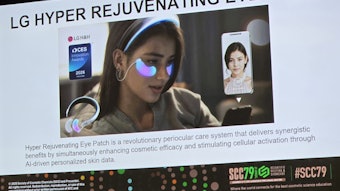
The industry is currently undergoing a transition from traditional botanical extraction to a high-precision era of biological design. For decades, R&D relied on serendipity—screening plant extracts in hopes of finding a molecule that might influence skin behavior. Today, that iterative extract-down philosophy is being replaced by a pathway-up strategy. By leveraging AI, genomics and biotechnology, scientists no longer have to wait for nature to provide a solution; they identify a specific biological pathway, such as cellular longevity or senolytic rejuvenation, and work backward to engineer the exact molecule required to modulate it. This shift moves beauty into the realm of cellular programming, where topicals like Debut’s DermCeutical EDLT or Mibelle’s SenoCellTec are designed to mimic medical-grade results, targeting gene expression and zombie cells to offer pain-free alternatives to in-office procedures.
Simultaneously, there is a decoupling of the beauty supply chain from the volatility of agriculture and the environmental stigma of petroleum and palm oil. Through creation-based models, companies like Savor and NoPalm Ingredients are utilizing carbon-capture technology and fermentation to transform waste and emissions into high-performance, circular lipids. This represents a critical pivot for procurement and R&D teams: by adopting drop-in lab-grown replacements, brands can ensure supply chain resilience while drastically reducing their carbon footprints. As biotech-derived fats and oils achieve performance parity with traditional materials, the industry is moving toward a sustainable, resilient future that is no longer bound by what can be harvested from a forest, but by what can be designed in a lab.
Furthermore, the new playbook is finally delivering on the promise of structural inclusivity by solving the biomechanical gaps in multi-ethnic hair and skin care. Rather than settling for universal formulas that often fail to perform on diverse textures and tones, R&D is now focused on achieving performance parity through advanced dispersion and bio-intelligent shields. Technologies like Shin-Etsu’s modified silicone dispersants are eliminating the white cast in mineral sunscreens for deeper skin tones, while Provital’s 3D matrix technology provides mechanical strengthening specifically tailored to the tensile needs of textured hair. By prioritizing internal biomechanics over surface-level aesthetics, brands can create products that are both functionally superior and culturally fluent.