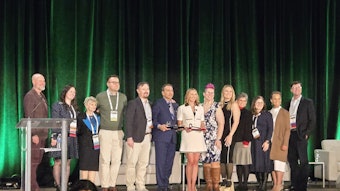
For much of its history, the flavor industry was built around a single, highly specialized role: the flavorist as a bench chemist. Working largely behind the Charlie Packwood, managing director, global specialty ingredients, Aston ChambersCourtesy of Charlie Packwood
This article is only available to registered users.
Log In to View the Full Article
For much of its history, the flavor industry was built around a single, highly specialized role: the flavorist as a bench chemist. Working largely behind theCharlie Packwood, managing director, global specialty ingredients, Aston ChambersCourtesy of Charlie Packwood
Today, that picture no longer holds. The modern flavorist operates at the intersection of science, data, regulation, manufacturing and market insight. What was once a solitary craft has evolved into a multidisciplinary profession that touches almost every part of the value chain. This shift reflects broader changes in consumer expectations, technological capability and regulatory complexity, all of which have reshaped how flavors are conceived, developed and delivered.
Foundations of the Craft
Historically, flavorists focused on formulation and sensory optimization. Using approved aroma chemicals, essential oils and natural extracts, they responded to customer briefs through extensive experimentation. Tools such as gas chromatography–mass spectrometry (GC-MS), HPLC, pH meters and titration methods helped identify and quantify volatile compounds, but progress relied heavily on trial and error.
Sensory evaluation was central. Flavorists trained their palates over many years, often memorizing hundreds of aroma materials by smell, taste and chemical structure. A traditional training pathway involved learning 500 to 600 core materials, followed by long apprenticeships under senior flavorists. Repeated tasting sessions, often involving internal panels, were used to fine-tune flavor balance and reach customer approval.
While this approach built extraordinary technical intuition, it was also slow and constrained. Consumer insight was limited to small panels, data was fragmented and projects could take months or even years to complete. As consumer preferences became more complex and markets more global, these limitations became increasingly apparent.
Expanding Beyond the Lab
One of the most significant changes in the flavorist’s role has been the expansion into manufacturing and scale-up. A formulation that performs well at bench scale must behave consistently in pilot and full-scale production, often across multiple facilities and regions. Today’s flavorists are deeply involved in this transition, working closely with process engineers and production teams to ensure stability, consistency and efficiency.
Factors such as base composition, heat treatment, pressure, equipment and processing conditions all influence flavor performance. A change in fat content, vitamin fortification or processing parameters can significantly alter flavor perception, requiring rapid reformulation. In emerging categories such as plant-based proteins or fortified beverages, flavorists must also design masking strategies and robust delivery systems to manage off-notes and ingredient interactions.
This involvement has made flavorists critical contributors on the production floor, where they validate formulations, support pilot runs and define specifications compatible with automated blending systems. The goal is no longer just creative success, but repeatability and speed to market.
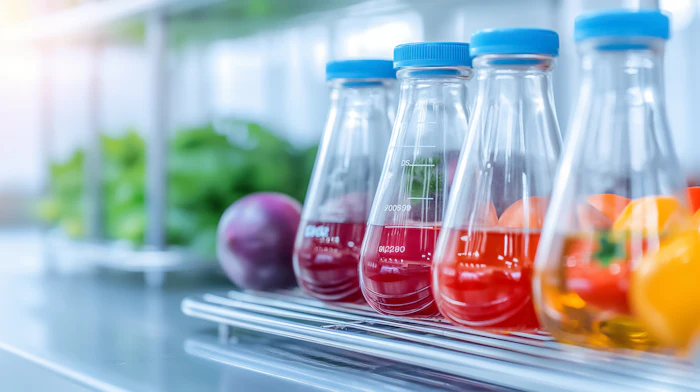
 The modern flavorist operates at the intersection of science, data, regulation, manufacturing and market insight.NanzXy at Adobe Stock
Commercial and Customer Engagement
Alongside technical expansion, the flavorist’s commercial role has grown considerably. Where sales teams once acted as the sole interface with customers, flavorists are now frequently involved directly in client meetings, tastings and technical discussions. This direct engagement allows for clearer translation of customer needs into actionable formulations and reduces misalignment during development.
Flavorists today are expected to explain sensory concepts in accessible language, contribute to concept development, and support marketing teams with trend insight and positioning. They collaborate on claims such as “natural,” respond to niche briefs and adapt flavors for regional preferences while maintaining global consistency for multinational brands.
This shift requires flavorists to understand branding, packaging, consumer research and value propositions, adding a commercial dimension that was historically absent from the role.
Deeper Technical Capabilities
Modern flavor creation increasingly begins at the source. Flavorists now work closely with extraction specialists, analytical teams and sourcing partners to understand how raw materials are produced and how extraction methods influence sensory outcomes. Techniques such as steam distillation, solvent extraction, cold pressing, supercritical CO₂ extraction, enzymatic processing and precision fermentation all yield different aroma profiles.
Understanding these methods allows flavorists to optimize formulations for taste, cost and sustainability. It also enables more informed decisions when working with new botanicals, upcycled ingredients or biotech-derived flavor materials. The ability to characterize off-notes, manage co-extracted compounds and tailor formulations accordingly has become a core technical skill.
Quality, Compliance, and Regulation
Quality assurance and regulatory compliance now sit at the heart of the flavorist’s responsibilities. Modern formulations must comply with complex global frameworks, including EU Regulation 1334/2008, FEMA GRAS requirements in the US and additional standards across Asia and other regions.
Flavorists are involved in reviewing analytical data for purity, allergens, residual solvents and microbial content. They work with QA teams to define internal specifications, design stability testing protocols and ensure batch-to-batch consistency. Documentation has become a critical part of the role, with technical dossiers detailing ingredient sources, quantities and safety data required for every formulation.
Clean-label and natural claims add further complexity. Strict definitions now govern what can be labelled as “natural,” requiring meticulous documentation of ingredient origins and processing methods. Sustainability regulations are also emerging, pushing flavorists to consider carbon footprint, solvent use and environmental impact alongside sensory performance.
Data and Digital Transformation
Perhaps the most transformative change in the profession has been the integration of data and digital tools. Flavorists now draw on large-scale consumer Digital transformation technologies can help augment a flavorist's work. savittree at Adobe Stock
These datasets increasingly feed into predictive models and AI-driven platforms. In some cases, millions of flavor combinations can be evaluated digitally, dramatically reducing reliance on traditional panel testing. Development cycles that once took months can now be compressed into weeks, with significant reductions in cost and risk.
Automation is also reshaping laboratory workflows. Robotic compounding systems can prepare hundreds of samples with precision and repeatability, freeing flavorists to focus on interpretation, creativity and strategic decision-making rather than manual preparation.
Crucially, industry practitioners emphasize that these technologies augment rather than replace the flavorist. Human sensory expertise, creativity and judgement remain central, but are now supported by tools that expand what is possible.
Knowledge Sharing and Global Alignment
As flavor companies operate on a global scale, knowledge transfer has become formalized. Internal flavor libraries, standardized sensory lexicons and global training programs allow flavorists to build on collective expertise rather than starting from scratch.
Leading companies invest heavily in flavorist academies and structured training programs that combine raw material mastery with regulatory knowledge, market insight and technological literacy. This ensures consistency across regions and accelerates development by leveraging institutional memory.
The Future Flavorist
Looking ahead, the flavorist of the future will be defined by integration. Strong foundations in chemistry, sensory science and flavor biology remain essential, but they are no longer sufficient on their own. Digital literacy, data analysis skills, regulatory acumen and commercial awareness are now equally important.
Future flavorists will need to interpret complex datasets, collaborate across functions and geographies, and engage confidently with customers. They will operate within narratives of health, sustainability and personalization, requiring an understanding of nutrition science, environmental impact and consumer storytelling.
The role has evolved from a narrow technical craft into a strategic, cross-functional profession. As technology accelerates and regulations tighten, the flavorist’s ability to adapt, communicate and innovate will be more critical than ever. What remains constant is the core mission: to create sensory experiences that resonate with consumers, grounded in science and shaped by a rapidly changing world.