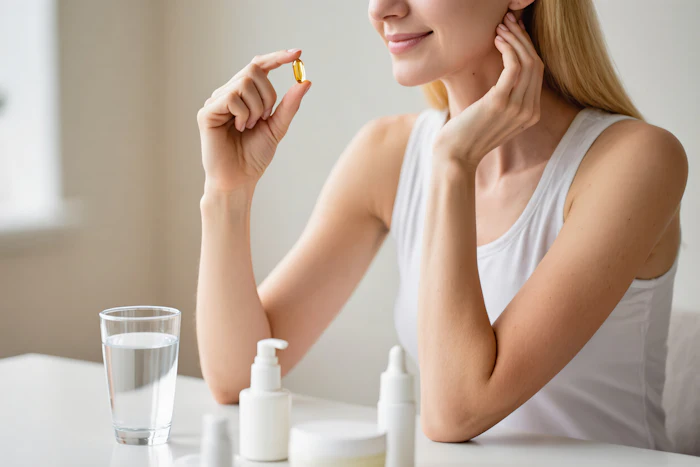
A new study from the Journal of Cosmetic Dermatology has demonstrated that synbiotic supplements, when taken orally, can improve wrinkle severity, skin elasticity and firmness, enhancing several parameters of photoaging. These results were obtained from a randomized, double-blind, placebo-controlled study of 36 participants.
Synbiotics are defined as supplements composed of probiotics and prebiotics that can work synergistically to benefit the host. The study evaluated a supplement containing a mixture of Bacillus-based probiotics, Konjac glucomannan (KGM) and astaxanthin (ASX).
Over eight weeks, 36 participants were randomized to receive either the antioxidant-rich synbiotic supplement or a placebo. The participants had three visits throughout the study: baseline, week four and week eight. During these visits, facial measurements were taken, including hydration, elasticity and pigmentation.
According to the study’s results, the treatment group showed a significant reduction in wrinkle severity (-5.28%) after eight weeks. Further, cheek elasticity increased significantly at week four (22%). The researchers believe that the study both affirmed previous work on supplement ingredients individually and showed their synergistic effects when used in tandem. Future studies are needed with expanded populations as well as investigation of combination therapies of both supplements and topical products.
“In conclusion, our clinical trial findings collectively suggest that an antioxidant-rich synbiotic intervention supports skin health by increasing skin facial elasticity and firmness and reducing wrinkle severity,” the study concludes. “The trial findings are significant for the skincare industry, suggesting that this intervention may provide an effective oral supplementation solution for improving cosmetic appearance and managing the signs of aging.”