Log In
Register
Facebook icon
LinkedIn icon
Instagram icon
Testing
Animal Alternatives
Efficacy
Method/Process
Microbiology
Saftey/Stability
Sensory
Sun Protection
Tech/Equipment/Services
Method/Process
Tech/Equipment/Services
[interview] How High-speed AFM Revolutionizes Precision Efficacy Testing: Cosmetic Victories Winner Profile
"Basically, an extremely small needle will glide on top of the sample, collecting topographic data in order to create a nanoscale 3D map of a single cell."
Actives
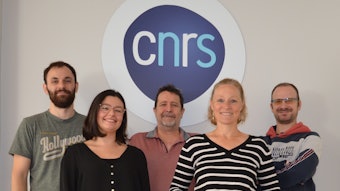
[interview] How Protein Instability Serves as a Biomarker of Aging — Cosmetic Victories Profile with IBGC/CNRS
Hair Care
Formulating Forum: Antioxidant Strategies for Balancing Acne-prone Skin
Latest
Event Coverage
Urgent Action Demanded: Ahead of CPR Revisions, MEPs Rally to Secure EU’s Animal Testing Ban for Cosmetics
The organization is concerned that a misalignment between the CPR and REACH regulations is weakening the cosmetics animal testing ban.
Actives
Does Your Product Belong Among the
C&T Allē Award
Elites? Enter the 2026 Program to Find Out
The
C&T Allē Awards
have a long history of recognizing excellence across the cosmetic landscape. Does your innovation have what it takes to join them? Enter now to find out.
Event Coverage
Rising to the Occasion: What it Means to Win a
C&T Allē Award
— Earn Your Standing Ovation in 2026
"We are profoundly grateful to the
C&T
team for acknowledging our efforts, which motivates us to persist in pushing boundaries and revolutionizing the cosmetics industry."
Sponsored
Optimizing Texture & Stability with JD Jojoba Esters – Get a Free Sample
Refine skin feel, structure, and hydration with JD Jojoba Esters. Access the technical sheet and request a free sample to explore the full formulation potential.
Skin Care
[interview] Empowering Personalized Care with Instant Microbiome Test + Derm-trained AI Advisor — Byome Labs Cosmetic Victories Profile
Personalized beauty continues to grow as innovations emerge to make it possible. For example, Byome Labs, a 2025 Cosmetic Victories finalist, developed a point-of-sale skin microbiome test with derm-trained AI to make product suggestions. Learn more here.
Actives
Croda Highlights New Findings in Indian-heritage Consumers for its Ameyezing 4.0 Under-eye Brightener
Visible improvements were reported in 100% of participants after 56 days, with excellent tolerance
Method/Process
[interview] Stanford University Explores How Cosmetics Influence Sensory Activation and Perception — Cosmetic Victories Profile
Stanford University, a finalist in the 2025 Cosmetic Victories competition, partnered with L’Oréal to study how cosmetics activate sensory neurons and shape perception. Here, Stanford graduate researcher Ross Bennett-Kennett, Ph.D., explains.
Method/Process
Beyond Claims: Leveraging Life Cycle Assessment for Strategic Advantage
With 80% of a product’s environmental impact influenced by decisions made at the design stage, life cycle analysis can provide valuable data to guide formulators in selecting materials that align with sustainability goals and support claim substantiation.
Method/Process
Bio + Chemo Guidance Uncover New Benefits in Known Naturals:
Murraya Koenigii
Extract Case Study
Murraya koenigii
extracts derived via various techniques were compared. One developed through chem- and bio-guidance paired with a natural deep eutectic technology uncovered lesser-known efficacies, leading to a natural active to boost elastin synthesis.
Tech/Equipment
Powering Beauty Innovation: Enter Your Digital Tech Solutions in the
2026 C&T Allē Awards
The 2026
C&T Allē Awards
will spotlight groundbreaking digital tech that's transforming beauty — from consumer apps to industry platforms. If your innovation is revolutionizing how beauty is created or experienced, submit now!
Event Coverage
Testing Innovators: Submit Now to Take Center Stage at the
2026 C&T Allē Awards
Do your methods and devices put cosmetic innovations to the test? The
Cosmetics & Toiletries
2026
Allē Awards
want to recognize you - enter now.




!['We believe [Byome Derma] will redefine how products are tested, recommended and marketed, moving the industry away from intuition or influence, toward evidence-based personalization.' Pictured: Byome Labs Team](https://img.cosmeticsandtoiletries.com/mindful/allured/workspaces/default/uploads/2025/08/byome-labs-group-photo.AKivj2669s.jpg?auto=format%2Ccompress&crop=focalpoint&fit=crop&fp-x=0.49&fp-y=0.5&fp-z=1&h=191&q=70&w=340)