Log In
Register
Facebook icon
LinkedIn icon
Instagram icon
Cosmetic Ingredients
Actives
Balancing/Soothing
Cleansing
Conditioning
Colorant
Moisturizing
Natural/Sustainable
Preservation
Rheology/Thickener
Sensory
Cosmetic Ingredients
Actives
Croda Beauty's Phytessence Osmanthus Delivers After-sun Soothing
The technology is ideal for supporting antioxidant, calming, soothing and anti-redness claims in after sun, body care, face and neck skin care, and sun protection products.
Formulating Aids
Ajinomoto Launches Amihope SB-103 Biodegradable, Blurring Microbead Alternative
Anti-aging/Face
Beiersdorf Pairs Glycation Inhibitor with CoQ10 in its Latest Nivea Q10 Launch
Latest
Sponsored
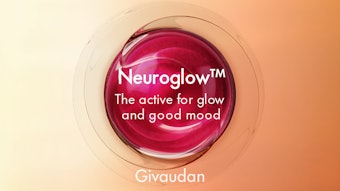
Neuroglow,™ the Active that Captures the Molecular Power of the Sun
Givaudan Active Beauty unveils Neuroglow™, a powerful active ingredient designed to safely replicate all the positive effects of the sun. The result? A healthy glow and enhanced wellbeing all year round.
Companies
EcoBeautyScore Consortium Calls for Public Review of Methods, Scoring System by May 9
The EcoBeautyScore (EBS) Consortium is seeking public comments through May 9, 2024, to finalize its methods and scoring system that will provide beauty consumers with clear, transparent and comparable environmental impact information about products.
Video
[video] Upcycled Answer to Consumers 'Pining' for Healthy Hair
"Glossy" and "smooth" are key traits of healthy hair, per consumers. In this sponsored video, Eva Bönzli, Ph.D., of Mibelle Biochemistry, describes how the company's latest launch, upcycled from pine cones, achieves these benefits. Register now to watch.
Formulating Aids
STUDY: NEW TECHNOLOGY DRAMATICALLY ENHANCES ACTIVE INGREDIENT DELIVERY INTO SKIN
A new study shows a new water technology again delivering Niacinamide deeper into the skin. A previous study showed Niacinamide with Hydrosome H2O penetrating 2-3 times deeper into skin samples vs. Niacinamide and deionized water.
Preservation
Sharon Personal Care Introduces AquaVita, Vitamin-based Multifunctional Preservation Platform
The range is based on niacinamide (vitamin B3), enhanced to turn it into a mild, green, safe and sustainable antimicrobial preservation solution, per the company.
Event Coverage
9 Top Trends + 30 Beauty Insights from in-cosmetics Global 2024
Nearly 200 new launches were on display at in-cosmetics Global, held April 16-18, 2024, in Paris. Here, we've captured some of the top trends we spotted — but this is merely a sampling.
Actives
Evolved by Nature to Debut Two Bioactive Skin Care Ingredients at NYSCC Suppliers' Day
The ingredients, Activated Silk 33B (INCI: Not Provided) and Activated Silk 27P (INCI: Not Provided), will be showcased by Barentz, the biotech company's North American distribution partner.
Companies
Inolex Issued European Patent for Multifunctionals, Announces Spectrastat CHA Chelating Agent
Inolex's latest ingredient, Spectrastat CHA is a 100% natural, non-palm derived chelating agent in powder form joining the line of Spectrastat preservation products.
Actives
TRI-K Industries Inc. Introduces Amino Acid-based Multifunctional, Hair Repair Ingredient
TRICare CG is derived from amino acids and fatty acids, has superior purity and is solvent-free.
Actives
Neuroglow,™ the Active that Captures the Molecular Power of the Sun
Givaudan Active Beauty unveils Neuroglow™, a powerful active ingredient designed to safely replicate all the positive effects of the sun. The result? A healthy glow and enhanced wellbeing all year round.
Actives
Gattefossé's Eye Embellishing Lipophillic Active: Eyeglorious
Eyeglorius is an organic solution capable of treating signs of fatigue while opening up possibilities for skin care and makeup formulations.