This article provides an overview of 2025's key cosmetic regulatory developments in the UK and EU. Highlights include updates on SPF tests, EU cosmetic regulation review, micropollutants, siloxanes, TPO bans, microplastics, UK REACH and packaging EPR.
This article is only available to registered users.
Log In to View the Full Article
This article provides an overview of 2025's key cosmetic regulatory developments in the UK and EU. Highlights include updates on SPF tests, EU cosmetic regulation review, micropollutants, siloxanes, TPO bans, microplastics, UK REACH and packaging EPR.
The year 2025 sped by, so as a review, I’d like to provide a round-up of some of the cosmetic regulatory activities that happened or are in the process of happening in the UK and European Union (EU).
ISO Sun Test Methods
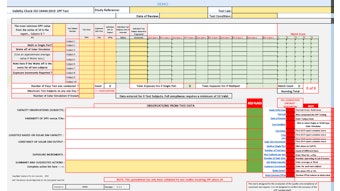
Before delving into the regulatory recap and given the focus of my last article on global test methods for Sun Protection Factor (SPF) efficacy, I’d first like to highlight a related series of papers that has been published on this subject. The papers are publicly accessible and they provide a comparison and statistical analysis, by leading experts in sun protection, of five SPF test methods.
The articles worth noting include the following.
- Are There Alternatives to the Traditional In vivo SPF Test (ISO 24444)? Comparison and Statistical Analysis of 5 Proposed Methods1
- Test Design and Results of a Method Performance Characterization Study for SPF and UVA-PF Testing2
- The Variability of In vivo Sunscreen Sun Protection Factor Values3
- Performance Assessment of the Double Plate Method (ISO23675) in ALT-SPF Consortium: A Highly Reproducible and Accurate In vitro Method to Determine SPF4
- Performance of Hybrid Diffuse Reflectance Spectroscopy (HDRS- ISO 23698) Methodology for Assessment of Sunscreen Protection in the ALT-SPF Consortium Validation Study5
- The ALT-SPF Ring Study - Correlation In silico Versus In vivo SPF ISO24444 and In vitro UVA-PF ISO244436
- Characterization of LED-Based Hybrid Diffuse Reflectance Spectroscopy Method for Determination of SPF and UVA-PF in Blinded Multi-Centre Study (ALT-SPF)7
- The ALT-SPF Ring Study – In vitro Determination of the SPF and UVA-PF by the Fused Method8
Review of the EU Cosmetic Products Regulation
At the start of the year, the European Commission initiated a process to review the EU Cosmetic Products Regulation 1223/2009 (CPR). The first step of this was a Call for Evidence, intended to determine whether there is a need to re-open the CPR for complete revision. The commission is looking at how the CPR is applied, whether it has delivered on its objectives and whether it remains fit for purpose in the context of the green and digital transitions.
It is also considering if the CPR is able to deliver the agenda of the new commission on competitiveness, both internal and external, of EU businesses, while continuing to deliver on the objectives of the regulation on product safety. All aspects of the regulation are covered under the evaluation.
The Cosmetic, Toiletry and Perfumery Association (CTPA) and Cosmetics Europe, the European personal care association, contributed to the Call for Evidence, as did many international cosmetics trade associations. The Call for Evidence was followed, in July 2025, by a public consultation and a targeted consultation, consisting of interviews with selected stakeholders.
Following this process, the commission will move to the adoption and proposal of the results of the evaluation process, which is likely to happen in the second quarter of 2026, with the legislative process lasting until later in 2027-28.
This is an important action. Since the 2021-23 review of the CPR under the European Green Deal and Chemicals Strategy for Sustainability (CSS), which is no longer being taken forward, this is the first real chance to implement significant change to the CPR and ensure key industry asks are taken into consideration.
EU Urban Wastewater Treatment Directive: Micropollutants
One of the most impactful pieces of legislation for the cosmetics industry entered into force on Jan. 1, 2025: the revised EU Urban Wastewater Treatment Directive (UWWTD) (2024/3019/EC).9 The directive introduces an Extended Producer Responsibility (EPR) system for the removal of micropollutants in urban wastewater that require quaternary treatment (a treatment stage in addition to the standard three-treatment process).
EU Member States must transpose the directive into national law by July 31, 2027, and obligated producers (those that place relevant products on the market, including cosmetic products), must be subject to the EPR by Dec. 31, 2028.
For the UWWTD, the definition of micropollutant means a substance as defined in Article 3(1) of Regulation 2006/1907/EC (EU REACH, Registration, Evaluation and Authorization of Chemicals Regulation), including its breakdown products, that is usually present in the aquatic environment, urban wastewater or sludge, and that can be considered hazardous to the environment or human health on the basis of the relevant criteria set out in Parts 3 and 4 of Annex I to Regulation 2008/1272/EC (EU CLP, Classification, Labelling and Packaging Regulation), even in low concentrations.
The directive specifically targets the pharmaceuticals and cosmetics sectors, therefore producers placing cosmetic products on the EU market will be subject to EPR fees.
Cosmetics Europe has significantly advocated to the commission, and individual Member States’ authorities, on this point in particular. While the industry welcomes an evidence-based approach to addressing micropollutants in urban wastewater that are not removed during the water treatment process, and that cause harm to the environment, any action taken must be proportionate, fair, efficient and able to deliver the intended outcome. The European cosmetics industry continues to challenge the commission on the inequitable implementation of the UWWTD.
EU on Siloxanes, PBT and vPvB
A number of ongoing issues currently surround siloxanes, from both a possible human health and potential environmental impact perspective.
Cyclic siloxanes: While little has changed in regulatory terms for the cyclic siloxanes D4 (octamethylcyclotetrasiloxane), D5 (decamethylcyclopentasiloxane) and D6 (dodecamethylcyclohexasiloxane) since my last update in 2023, we do have some implementation dates. The current regulatory status for the EU and UK is shared in Table 1.
In 2023, the European Commission issued a proposal to add D4, D5 and D6 to the Stockholm Convention as Persistent Organic Pollutants (POP). In July 2025, the EU Commission decided to close its proposal for POP nomination of D4, D5 and D6.
Linear siloxanes: Focus has turned to linear siloxanes at an EU level. It has been confirmed that L2 (hexamethyldisiloxane; CAS 107-46-0) and H-L3 (heptamethyltrisiloxane; CAS 1873-88-7) do not meet the Persistent, Bio-accumulative and Toxic/very Persistent and very Bio-accumulative (PBT/vPvB) criteria, so the proposals for Substances of Very High Concern (SVHC) have been withdrawn.
L3 (octamethyltrisiloxane; CAS 107-51-7), L4 (decamethyltetrasiloxane; CAS 141-62-8) and M3T (tris(trimethylsiloxy)methylsilane; CAS 17928-28-8) have been deemed as vPvB and added to the candidate list as SVHC in June 2025.
The dossier submission proposing L5 (dodecamethylpentasiloxane; CAS 141-63-9) as SVHC is expected in February 2026. L6 (tetradecamethylhexasiloxane; CAS 107-52-8) is undergoing substance evaluation as suspected PBT/vPvB.
PBT and vPvB are new harmonized hazard classes introduced under the EU CLP Regulation. Under EU REACH, it is understood that Emissions Characterization Assessments within the Chemical Safety Reports (CSRs) need to be updated by June 2027 with appropriate safe use instructions. Under CLP, safety data sheets are to be updated by the end of 2026 to identify PBT/vPvB substances, if they are present at a concentration of 0.1% or greater. In addition, extended safety data sheets will include guidance on safe use.
The updates to the Emissions Characterization Assessments are likely to have a significant impact on the ability to use the vPvB-identified substances (L3, L4 and M3T) in cosmetic products. It is CTPA’s understanding that direct intentional use of these substances in personal care applications may be unlikely to satisfy the assessment, and if this is confirmed to be the case by the REACH registrants, such uses would no longer be supported in REACH CSRs from mid-2027 onward. It is important for companies to discuss the potential impact on their products with their suppliers of linear siloxanes.
EU on TPO in Nail Products
Trimethylbenzoyl diphenylphosphine oxide (TPO) is used in limited concentrations for nail modeling products. TPO has been reclassified as a CMR 1B substance under the EU CLP Regulation, meaning that the cosmetics industry needed to submit additional information to the authorities to continue using it in cosmetic products.
While the EU Commission’s independent expert scientific panel, the Scientific Committee on Consumer Safety (SCCS), conducted a detailed safety review of TPO and concluded that its indicated use in cosmetics is safe, as part of Article 13 of the EU Cosmetic Products Regulation, other criteria needed to be met. This includes providing evidence that there are no suitable alternative ingredients to TPO available, and that TPO is used safely in food.
While the safety of TPO could be proven, the difficulty of gathering additional information inhibited the cosmetics industry from seeking an exemption from the authorities to continue using TPO in cosmetics. Consequently, TPO has been banned in the EU as of Sept. 1, 2025.
Media buzz around interpretation of off-shelf dates for banned ingredients in salon use: The ban on TPO resulted in a flurry of media activity at the start of September 2025 in the UK and EU. This was due, in part, to the interpretation by some EU Member State authorities, and subsequent guidance from the Commission, that the phrase making available/off shelf refers to the use in salons of products containing ingredients that are being banned. Therefore, this interpretation means that the salon use of products containing banned ingredients shall be prohibited as of the application date.
The CTPA has a different interpretation of the UK and EU Cosmetics Regulations in that, although the salon can no longer buy any more of this product from the distributor after the off-shelf deadline, salons are still able to use it. This interpretation is based on the following:
- Article 2 (f) of the Cosmetics Regulation defines the “end user” as either a consumer or professional using the cosmetic product. After the “making available” date, products are not withdrawn from consumers so they should not be withdrawn from professional end users either.
- The EU Cosmetic Products Regulation defines “making available on the market” as a supply operation for further distribution, consumption or use. This clearly indicates that the use is not regulated, but the supply for that purpose is.
- The EU Blue Guide, which is not directly applicable to our products but is a good reference point, does establish that the supply includes the “offer to supply” and supposes an agreement and transfer of ownership, possession or other right.
- The EU Blue Guide also covers the definition of use: “Use” refers to the intended purpose of the product as defined by the manufacturer under conditions which can be reasonably foreseen. Usually, this is the end use of the product.
The CTPA has discussed this interpretation with Trading Standards in the UK, which is aligned with the above interpretation. In Great Britain (GB), the ban on TPO is expected to apply in early 2027. Therefore, the CTPA is planning to publish an Assured Advice as part of its Primary Authority Coordinated Partnership to support members with this interpretation in GB.
ECHA Guidance on EU Microplastics Restriction Reporting Requirements
In April 2025, the European Chemicals Agency (ECHA) published guidance10 to further explain the reporting requirements under the EU REACH restriction on microplastics.
The reporting requirements apply to certain uses of synthetic polymer microparticles (SPM) subject to a derogation. The reporting requirements concern estimated annual emissions of SPM to the environment, and apply to manufacturers, industrial downstream users and suppliers placing SPM on the market for consumer and professional uses for the first time. The information will be submitted annually to the ECHA.
The purpose of the reporting requirements is to contribute to the ability to monitor the effectiveness of the instructions for use and disposal (IFUD) and improve the evidence base for the risk management of the uses exempted from the prohibition of placing on the market.
UK REACH Regulation
The CTPA has been working with the Department for the Environment, Food and Rural Affairs (Defra) on the implementation of the UK REACH framework for a number of years – and in particular, regarding the registration of chemicals that were registered under EU REACH prior to Brexit. This work is also carried out in collaboration with the UK Chemical Industries Association (CIA) and other sister chemicals trade associations.
There is an opportunity to seek greater regulatory cooperation on chemicals with the EU, therefore we have been advocating for the UK and EU authorities to implement formal and structured regulatory cooperation on chemicals as per the terms outlined in the Chemicals Annex of the UK/EU Trade and Cooperation Agreement (TCA). The effective implementation of the Chemicals Annex within the TCA is therefore one of the main opportunities for the chemicals sector to benefit from constructive regulatory cooperation between the two jurisdictions.
There are ongoing discussions about regulatory cooperation and regulatory alignment. Regulatory cooperation and enhanced information sharing can facilitate collaboration within the regulatory frameworks, encourage the sharing of some information and safety assessments between regulators, and could potentially enable UK REACH to be less costly and burdensome for UK companies.
Regulatory alignment between the UK and the EU means the same regulatory framework, but this does not mean friction-free trade, which is only available to full members of the EU or members of the Single Market through the European Economic Area. Even if the UK voluntarily aligns with EU chemicals regulation, there will still be significant barriers, costs and bureaucracy for UK exports and imports of chemicals to and from the EU. Voluntary regulatory alignment of the UK with the EU would reassure global companies that the UK will follow EU rules on chemicals, but the UK would have no say or voice on these rules while also not achieving friction-free trade with the EU.
The CTPA has also been requesting that Defra extend the deadlines for registering chemicals under UK REACH that were already registered under EU REACH. Currently, this registration will be required in the UK according to the Alternative Transitional Registration model (ATRm). The existing deadlines are October 2026, October 2028 and October 2030 for different tonnage bands.
In July 2025, Defra launched a public consultation with a proposal to extend the UK REACH transitional registration submission deadlines. Under the consultation, the proposed new deadlines are:
- Option 1: October 2029, October 2030, October 2031
- Option 2: April 2029, April 2031, April 2033
- Option 3: April 2029, April 2030, April 2031
The CTPA and UK cosmetics industry identified Option 2 as the most preferred option for extending registration deadlines under UK REACH and communicated this in the consultation response. The longer deadlines of option 2 best account for the current uncertainties on the future obligations. This is especially important for Downstream Users (DUs), who have become importers and will be required to familiarize themselves with the new obligations under UK REACH, which they did not have prior to the UK Exit.
The CTPA also welcomed the information in the consultation document that the ATRm currently under development is intended to significantly reduce the burden on industry compared with existing UK REACH registration requirements. Once a simplified ATRm is in place, companies will need enough time to gain an understanding of exactly which obligations will be in place for industry.
The CTPA is waiting for the consultation response to be published.
UK: Extended Producer Responsibility for Packaging
The requirements for Extended Producer Responsibility for packaging (pEPR) continued apace in 2025. Under pEPR, producers will incur higher costs for less sustainable packaging, incentivizing producers to use less packaging and avoid materials that are difficult to recycle. Producers will also be expected to meet new recycling targets and there will be mandatory, harmonized, recyclability labelling to make it simple for consumers to dispose of their waste responsibly.
The main Statutory Instrument for UK EPR, the Producer Responsibility Obligations (Packaging and Packaging Waste) Regulations 2024,11 entered into force on Jan. 1, 2025.
Under EPR, the following packaging activities apply:
- Supplying own-brand packaged goods to the UK market. A brand includes a logo, trademark or any distinctive mark.
- Placing goods into packaging.
- Importing products in packaging (unless importing them on behalf of another organization).
- Owning an online marketplace. An online marketplace is a website that has been set up to allow non-UK organizations to sell their goods online.
- Hiring or loaning out reusable packaging (this only needs to be reported the first time it is supplied).
- Supplying empty packaging. If an organization supplies unbranded empty packaging, such as cardboard boxes or bubble wrap, it may need to act if it supplies the packaging to a business that is not classed as a large organization. Unbranded packaging is generally the responsibility of the company that packed or imported it.
Defra published an online obligation checker12 to assist organizations in understanding whether they need to act under EPR.
Payments for EPR will commence from 2025. Packaging that is more difficult to recycle will incur higher fees. These higher fees will be introduced from 2026-2027. Producers must use the Recyclability Assessment Methodology (RAM) to assess their packaging, and some packaging may qualify for modulated fees. The RAM will determine the recyclability of the packaging, resulting in a red, amber or green output, which will inform the level of fee modulation payable for that material.
The 2026-2027 modulated fees were due to be introduced based on RAM assessments from October 2025. This was a very short deadline for producers to apply the new RAM to their packaging – something the CTPA highlighted to the authorities. The good news is that while the legal deadline for submitting RAM data for the period of January to June 2025 remained as Oct. 1, 2025, enforcement action will not be taken provided that classifications are submitted by April 1, 2026.
Another aspect of pEPR is mandatory, harmonized recyclability labeling for all primary and shipment packaging. The implementation of this has been postponed until April 2027.
Conclusions
There was plenty to keep the industry occupied in 2025 – I hope you all had a successful year. I've enjoyed sharing the news and perspectives from the UK and EU with you, and I look forward to doing it all again this year.
References
- Pissavini, M., Chave, J. and Lane, M. (2025) Are there alternatives to the traditional in-vivo SPF test (ISO 24444)? Comparison and statistical analysis of 5 proposed methods. Intl J Cos Sci (IJCS). Available at: https://onlinelibrary.wiley.com/doi/epdf/10.1111/ics.70026
- Colson, B., Vollhardt, J., ... Uhlig, S., et al. (2025, Feb 20). Test design and results of a method performance characterization study for SPF and UVA-PF testing. IJCS. Available at at: https://onlinelibrary.wiley.com/doi/epdf/10.1111/ics.70019
- Cole, C., Colson, B. and Uhlig, S. 2025). The variability of in vivo sunscreen sun protection factor values. IJCS. Available at: https://onlinelibrary.wiley.com/doi/epdf/10.1111/ics.70000
- Pouradier, F., Miksa, S., ... Pissavini, M., et al. (2025, Jan 31). Performance assessment of the Double Plate method (ISO23675) in ALT-SPF Consortium: A highly reproducible and accurate in vitro method to determine SPF. IJCS. Available at: https://onlinelibrary.wiley.com/doi/epdf/10.1111/ics.13088
- Ruvolo, E., Cole, C., ... Colson, B., et al. (2025, Jan 31). Performance of hybrid diffuse reflectance spectroscopy (HDRS- ISO 23698) methodology for assessment of sunscreen protection in the ALT-SPF Consortium validation study. IJCS. Available at: https://onlinelibrary.wiley.com/doi/epdf/10.1111/ics.13089
- Kunze, G., Sohn, M., ... Herzog, B., et al. (2025, Feb 5). The ALT-SPF ring study - Correlation in silico versus in vivo SPF ISO24444 and in vitro UVA-PF ISO24443. IJCS. Available at: https://onlinelibrary.wiley.com/doi/epdf/10.1111/ics.13086
- Reble, C., Bayer, M., ... Bielfeldt, S., et al. (2025, Feb 10). Characterization of LED-based hybrid diffuse reflectance spectroscopy method for determination of SPF and UVA-PF in blinded multi-centre study (ALT-SPF). IJCS. Available at: https://onlinelibrary.wiley.com/doi/epdf/10.1111/ics.70007
- Acker, S., Büchse, A., ... Herzog, et al. (2025, Feb 6). The ALT-SPF ring study – in vitro determination of the SPF & UVA-PF by the fused method. IJCS. Available at: https://onlinelibrary.wiley.com/doi/epdf/10.1111/ics.70015
- Official Journal of the European Union. (2024). Directive (EU) 2024/3019 of the European Parliament and of the Council of 27 November 2024 concerning urban wastewater treatment (recast). European Union. Available at: https://eur-lex.europa.eu/legal-content/EN/TXT/?uri=OJ:L_202403019
- ECHA. (2025). ECHA ready to receive reports on microplastics emissions. Available at https://echa.europa.eu/-/echa-ready-to-receive-reports-on-microplastics-emissions
- Defra. (2024). The Producer Responsibility Obligations (Packaging and Packaging Waste) Regulations. Available at: https://www.legislation.gov.uk/uksi/2024/1332/introduction/made
- Defra. (2022, updated 2023). Find out if you need to report packaging data. Available at: https://www.gov.uk/guidance/check-if-you-need-to-report-packaging-data