Log In/Register
Facebook icon
LinkedIn icon
Instagram icon
Testing
Animal Alternatives
Efficacy
Method/Process
Microbiology
Saftey/Stability
Sensory
Sun Protection
Tech/Equipment/Services
Sensory
Event Coverage
Which Cosmetic Devices, Tech and Test Methods/Tools Will Stand Up to the 2026
C&T Allē Awards
Challenge?
Whether it’s enhancing sustainability, improving skin care accessibility or refining product testing, these finalists are shaping a smarter, more inclusive, and forward-thinking future for the industry.
Featured
Actives
Does Your Product Belong Among the
C&T Allē Award
Elites? Enter the 2026 Program to Find Out
The
C&T Allē Awards
have a long history of recognizing excellence across the cosmetic landscape. Does your innovation have what it takes to join them? Enter now to find out.
Sponsored
Skinifying Oral Care: The Microbiome Science
Join BLIS Technologies to unpack the strain science behind microbiome-friendly oral care: how targeted antimicrobial peptides modulate the ecosystem rather than strip it, how to formulate with live probiotics in real-world formats, and how to map claims that keep cosmetic products compliant.
Read the latest issue
September 2026
Top Headlines
Sponsored
Augmented Longevity: Reprogramming the Skinspan Where Science, Technology and AI Redefine Ageing.
Method/Process
[interview] Stanford University Explores How Cosmetics Influence Sensory Activation and Perception — Cosmetic Victories Profile
Event Coverage
Testing Innovators: Submit Now to Take Center Stage at the
2026 C&T Allē Awards
Tech/Equipment/Services
Testing Trending Hair Care and Skinification Claims
Latest
Method/Process
Testing Tactics: How Sensory Testing Bridges the Gap Between Technology and Consumer Experience
This article delves into the role of sensory testing in the development of cosmetics for skin and hair. Its applications, methodologies and unique place in the innovation toolbox are highlighted, along with expert insights and journal article examples.
Efficacy
Isomalto-oligosaccharides Naturally Balance ‘Stiffness’ with Flexibility for Hair Styling Benefits
This article describes enzymatically controlled naturally derived isomalto-oligosaccharides. It demonstrates how they balance stiffness and flexibility to maintain hair styles, as well as reduce the need for synthetic setting polymers.
Method/Process
Skinobs' V2.0 Simplifies and Accelerates Preclinical and Clinical Beauty Testing
Skinobs offers two platforms dedicated to preclinical assays (in-silico, in-tubo, in-vitro or ex-vivo) and clinical evaluation (in-vivo on humans) to reportedly optimize product development in terms of performance, cost, speed and innovation.
Sponsored
Augmented Longevity: Reprogramming the Skinspan Where Science, Technology and AI Redefine Ageing.
During this global webinar, Safic-Alcan will bring together market, scientific and technical perspectives to decode the concept of augmented longevity.
Rheology/Thickener
How Natural Butylene Glycol Advances Market and Rheology Dynamics
Demand for sustainable ingredients in cosmetics and personal care is well-known. Here, a sustainable natural butylene glycol is described to advance this trend and its effects on viscosity and elasticity are assessed in five test formulas.
Method/Process
Test Model Developed to Predict Skin Permeability of Compounds
A test model published in the
Journal of Chromatography A
uses retention on octadecyl, cholesterol-bonded and immobilized artificial membrane columns to accurately predict the skin permeability of compounds.
Magazine
The Emotion Paradox in Product Testing: A Commentary
A real challenge in the assessment of consumer emotional responses has been the need for validated but meaningful measures. Commentary outlined are benefits and drawbacks of various methods and asks the larger question of precisely what’s being measured.
Sensory
Wellness by Design: Positive Comparison Patterns to Engage Latin American Consumers Through Fragrance
A well-crafted fragrance that aligns with sociocultural values can inspire positive emotions in consumers. To achieve this, Positive Comparison Patterns (PCPs) in neuroscience are introduced here and used to elicit positive scent experiences in Latin American women.
Sensory
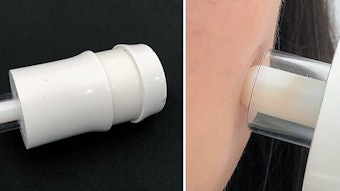
Shiseido Develops Friction and Contact Force Tactile Evaluation Devices
The devices are designed to help researchers study skin texture and perceived characteristics with high accuracy.
Sensory
[video] Cosmetics R&D Vlog: How Fragrance Inspires Emotion and Wellness
Perfume can tap into deep consumer emotions to elicit happiness or tranquility and help them through today’s COVID-19 reality. Daniela Garcia, ésika Executive Brand Director for Belcorp Latin America, explains how, with this look at the company's recent research.
Event Coverage
[updated] Virtual Roundtable: Inclusive Design for Universal Beauty
Gabriela Daniels of the London College of Fashion will participate in a virtual roundtable chat on inclusive design for universal beauty during
Beauty Accelerate Virtual
.
Method/Process
Gattefossé Reveals Effects of Sunscreen, Moisturizer, Film Former Layering
Gattefossé analyzed the efficacy and sensory effects of sunscreens applied to skin on top of other products. Results suggest film formers are a key ingredient.