In the European Union, assuring the safety of cosmetic ingredients is based on a dual approach established in the regulatory frameworks, and in relation to the old Cosmetics Directive 76/768/EEC, no fundamental changes to these principles were introduced with the new Cosmetics Regulation (Regulation (EC) No 1223/2009). Accordingly, most ingredients can be freely used. The cosmetic product's manufacturer is responsible for the product’s safety and must address the ingredients individually within the product’s safety assessments. However, certain ingredients are restricted for use by either being inhibited or being imposed with certain conditions. The specifics are regulated in the various annexes of the cosmetic frameworks and the evaluation of the ingredients prior to the entry is performed by the Scientific Committee on Consumer Safety (SCCS), a scientific committee of the EU Commission. The safety assessment performed in this context and the criteria for the inclusion in one of the frameworks’ annexes are based on the principles and practice of the risk assessment process described in the “Notes of Guidance for Testing of Cosmetic Ingredients and Their Safety Evaluation by the SCCS.” The guidance document is also directed to public authorities and the cosmetic industry with the goal to harmonize the compliance with the cosmetic legal frameworks’ requirements among all parties involved. A new version of the document, i.e., the 7th edition, was released in April 2011.
When a mandate is issued for an ingredient assessment, a comprehensive process is initiated which is described on the website of the EU Commission’s Directorate General for Health and Consumers (DG SANCO). The SCCS’ engagement leads to the adoption of an opinion and depending on its conclusion, a new entry in the cosmetic frameworks’ annexes may result and be published as technical adaptation in the Official Journal of the European Union. Several opinions were recently published by the SCCS, either in a version open for comments or as final adopted opinions. Additionally, numerous mandates for new scientific opinions have been posted, with a specification of the assessment criteria and goals. The application areas mostly in focus with the new and ongoing ingredient assessments of hair dyes, preservatives and UV filters.
Hair Dyes
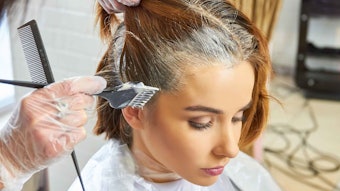
Eight opinions on hair dye components have been issued in 2011 including: HC blue No. 14, toluene-2,5-diamine and its sulfate, hydroxyethyl-2-nitro-P-toluidine, 4-amino-2-nitrodiphenylamine-2’-carboxylic acid, basic red 51, basic red 76, acid orange 7 and HC yellow No. 13. Two of the eight opinions, HC blue No. 14 and hydroxyethyl-2-nitro-P-toluidine, are still open for comment until Sept. 2, 2011. Total hair dye opinions have numbered more than 120 since “Assessment Strategies on Hair Dyes,” a discussion paper on the potential of hair dyes to cause bladder cancer, was published in 2002 by the Scientific Committee on Cosmetic Products and Non-Food Products (SCCNFP), the SCCS’s predecessor committee. Additionally, 26 open requests exist for this application area. As a consequence of the assessment processes, numerous adaptations to technical progress of the Cosmetics Directives’ annexes and numerous total bans of substances have been released. In view of these results, the new Cosmetics Regulation brought a fundamental change in the regulatory approach for hair dye ingredients phrased in the new definition of colorants in Article 2, which includes hair colorants and also the precursors of oxidative hair dyes. Consequently, as of July 2013, when these ingredients are used in consumer and professional products, they need to be listed in Annex IV, the positive list of colorants allowed in cosmetic products.
Preservatives
The total number of preservatives under scrutiny is naturally smaller than the number of hair colorants. Four opinions have been published thus far in 2011, either in a complemented or a revised version. These include ethyl lauroyl arginate HCl, which was designated safe within the conditions set (no change to earlier opinion); triclosan, which was found not safe for use in all cosmetics at the conditions defined (no change to the opinion from 2009); chloroacetamide, which was found not safe under current conditions and a new review of parabens. Of these opinions, the one for ethyl lauroyl arginate HCl is still open for comments.
The opinion from March 2011 on parabens revises one adopted in December 2010. This was the consequence of new data on dermal absorption, which the SCCS received during the commenting period of four weeks after the December 2010 publication. However, these test results did not change the SCCS’ conclusions from December. Accordingly, additional human data are still needed for a secure scientific opinion, and the concentration of butylparaben and propylparaben in cosmetic products, according to the SCCS, should be reduced to 0.19%. This conclusion implies a considerable reduction compared to the concentration of 0.4% (single ester) specified in the annexes of the cosmetics frameworks. With regard to methylparaben and ethylparaben, the authorized concentrations can be considered safe and remain unchanged. Additionally, the SCCS concludes that the human risk cannot be evaluated for isopropylparaben, isobutylparaben and phenylparaben because limited to no information was submitted for their safety evaluation. Consequently, the use of these substances is potentially at risk. Finally, the SCCS draws attention to benzylparaben and pentylparaben because of indications that they might be used in cosmetic products for “other purposes.” As none of them is listed in Annex VI of the Cosmetics Directive, the SCCS suspects effects on consumer safety.
Meanwhile Denmark has banned propylparabens and butylparabens in cosmetic products for children under three, which implies a marketing ban for the EU member state territory according to Article 12 of the Cosmetics Directive. This ban went into effect on March 15, 2011, and the EU Commission requested the SCCS to clarify if the safety concerns raised in the justification for the Danish ban are scientifically valued. However, when a draft legislation proposition to the French National Assembly in May 2011 requested to generally prohibit parabens, phthalates and alkylphenols, concerns on infringement with European Union law were raised and persecuted by European industry associations.
In addition to the opinions, four open mandates for preservatives have been published in 2011, including: benzoisothiazolinone, climbazole, methenamine 3-chloroallylochloride and zinc pyrithione.
UV Filters
The SCCS has published one opinion so far in 2011 on UV filters, which found that based on data available, the safety of bis(butylbenzoate) diaminotriazine aminopropyltrisiloxane could not be assessed.
Also, the SCCS has published four new mandates for the UV filters zinc oxide, ETH50, titanium dioxide and FAT 75’808 (HAA299, C-1332). The reviews for titanium dioxide and zinc oxide are both related to nanomaterial issues and are addressing the safety in use of the ingredients as UV filters in a maximum concentration of 25% based on new information obtained. Also targeted will be the option to differentiate in the regulatory provisions between materials in their nano form and their non-nano form while questioning how this differentiation could potentially be made.
In cosmetic products, zinc oxide is used for various ingredient functions such as bulking, skin protection, UV absorption and as an authorized colorant (CI 77947). Its use a as UV filter in sunscreen products at a maximum level of 25% had already been targeted in earlier activities. Resulting main concerns were related to the risk assessment of micronized zinc oxide, which had demonstrated photo-DNA damaging potential in cultured mammalian cells. Therefore, the SCCS had requested a repeated safety dossier on micronized and nano-sized zinc oxide. A clarification was adopted in 2009 that considered the use of zinc oxide in its non-nano form to be safe. As a consequence, micronized zinc oxide was approved for use as UV filter, e.g. in Germany, with the prerequisite of a yearly renewal of the approval. Meanwhile, new information became available providing for an overall safety assessment, including the micronized and the nano form.
Other Ingredients
In 2011, the SCCS also published its opinion that N-Methyl-2-Pyrrolidone (NMP), which was found to be within the new CMR12 substance regulations and not safe for use in cosmetics. In addition, the committee published mandates on the following other ingredients: soytrimonium chloride, kojic acid, vitamin k1 oxide, polidocanol, trisodium nitrilotriacetate, dichloromethane, hydrolyzed wheat proteins and peanut oil.
!['The most polluting industries, pharmaceuticals and cosmetics, will be required to pay at least [80%] of the cost for micropollutant removal...'](https://img.cosmeticsandtoiletries.com/files/base/allured/all/image/2024/01/scientist_water_monitor_sample_pollutionAdobeStock_297782139.65ba74e958d97.png?auto=format%2Ccompress&fit=crop&h=191&q=70&rect=0%2C151%2C2179%2C1227&w=340)




!['I think the biggest game-changer about [MoCRA's] ... requirement for GMPs is how it changes what it means to be adulterated,' Brandi Reinbold, senior manager of global certification for NSF International, said in this sponsored videocast. Register now to watch and learn more. It's free.](https://img.cosmeticsandtoiletries.com/files/base/allured/all/image/2023/11/NSF_Intl_Thumbnail.6554efdc29816.png?auto=format%2Ccompress&fit=crop&h=191&q=70&rect=275%2C70%2C1328%2C748&w=340)

