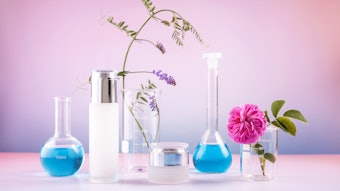
An emollient is a material that soothes and softens the skin; most emollients used in personal care are lipids or silicones. Similarly, a humectant is a substance that helps retain moisture in skin. A humectant often is a molecule with several hydrophilic groups; most often these hydrophilic groups are hydroxyl groups but they can also be amines or carboxyl groups.
Humectants have an affinity for molecules of water; therefore, they are hydrating agents since they attract moisture to the skin. Moisturizers hydrate the skin. Simple moisturizers include sorbitol, sucrose, glucose and other sugars and their derivatives. Lanolin, a fatty substance from wool, moisturizes and hydrates. The different mechanisms by which skin is hydrated and softened can be used to maximize the benefits to the skin.