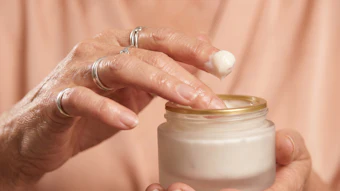
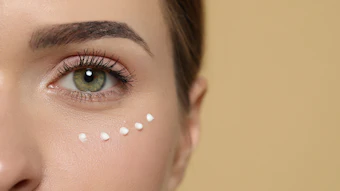
Moisturization is an essential part of skin care. Almost every chemical measured in my cosmetic life has demonstrated moisturizing benefits to human skin. Maybe I was lucky—perhaps I chose good moisturizing molecules to measure; however, I have often said that if I were to grind up a computer disc, even that would moisturize my skin. From this, one could conclude that moisturizing human skin would and should be easy.
This became a problem to select benchmark chemicals as positive and negative controls for skin moisturization. The problem arose when selecting a negative control, as it seems that everything moisturizes the human skin. The only thing needing moisturization was human skin itself; therefore, I chose untreated skin as a negative control and glycerin as a positive control. I applied a product and expressed the result of that as a relative performance moisturization (RPM), where untreated skin had value of 0% and glycerin-treated skin a value of 100%. After six hours, the worst moisturizer of all chemicals tested turned out to be water.
Water and glycerin are interesting molecules when discussing skin moisturization. There is a large content of water within the human body that stays inside the body thanks to an efficient barrier called the stratum corneum. But the barrier itself dries out towards the surface since the external environment is significantly less moist than the internal human body. The barrier is moisturized via the production of the natural moisturizing factor (NMF), which is a mixture of amino acids, urea, lactate and other polar hygroscopic molecules.
One of the most hygroscopic molecules is glycerin but it is not a part of the NMF. It is a raw material applied in large quantities via cosmetic products to give skin back its youthful appearance and to allow it to maintain flexibility. It must be applied from the exterior since there is no natural glycerin present within the skin—at least, that is what was first thought. Then it was realized that the phospholipids present in the cell membranes of actively proliferating keratinocytes are broken down during the transformation of these cells, resulting in terminally differentiated keratinocytes and glycerin. This glycerin will penetrate into cells and act as a skin moisturizer. But what regulates the uptake of glycerin into cells?
Aquaporins is a word that is underlined with red squiggles in my Word documents. Software engineer Bill Gates probably does not know what it means and he is not alone, since most consumers are in the dark about aquaporins. It might even be new for you readers but you are excused. In the second edition of Dry Skin and Moisturizers–Chemistry and Function by Marie Lodén and Howard Maibach, published in 2006, there are only two references in the index to aquaporin-3, the epidermal water/glycerol transporter. In a very recent article in the Journal of Investigative Dermatology by Mariko Hara-Chikuma and Alan S. Verkman, titled "Roles of Aquaporin-3 in the Epidermis," aquaporin-3 (AQP-3) is reviewed and readers learn that it is involved in skin hydration, wound healing and skin tumorigenesis.
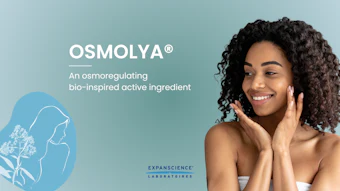
By comparing the skin hydration levels of normal mice and AQP-3 knockout mice, it is revealed that the skin of mice lacking AQP-3 is dry and not elastic. Interestingly, if you measure the level of glycerin, these levels are significantly reduced in the absence of AQP-3. In short, AQP-3 is "good for you" and there has been an emergence of new cosmetic ingredients that stimulate AQP-3 expression, which (should) result in more skin hydration.
In the described study, it was observed that wounds in AQP-3 deficient mice healed significantly slower due to the role of AQP-3 in the proliferation of keratinocytes during wound healing; however, its involvement in skin tumorigenesis raised eyebrows. It was also shown that AQP-3 was strongly over-expressed in basal cells in human skin squamous cell carcinomas. Moreover, AQP-3 knockout mice do not develop skin tumors following exposure to a tumor initiator and phorbol ester promoter, a well-established multistage carcinogenesis model.
Subsequently, in May 2008, Alan Verkman published “A Cautionary Note on Cosmetics Containing Ingredients that Increase Aquaporin-3 Expression” in Experimental Dermatology in which he states, “Though the available data show prevention of skin tumorigenesis with AQP-3 deletion, it is not unreasonable to postulate an increased propensity for tumor formation when AQP-3 expression is upregulated. Further studies are thus indicated in testing the relation between epidermal AQP-3 upregulation and skin tumorigenesis as well as epidemiological evaluation of the incidence of squamous cell carcinomas and other skin cancers in subjects using cosmetics containing AQP-3 expression-enhancing ingredients.”
While Verkman is correct, the issue here surrounds the famous question: Which came first, the chicken or the egg? If there is more AQP-3 in basal squamous cell carcinoma, it does not automatically mean that increased AQP-3 levels lead to basal squamous cell carcinoma; i.e., every cow is an animal, but not every animal is a cow. Just as squamous cell carcinoma is associated with increased AQP-3 it does not automatically mean that increased AQP-3 leads to more squamous cell carcinoma—it could, but as Verkman says, more investigation is needed. He adds, “Perhaps, cosmetic testing in animals, which has fallen into disfavor among cosmetic companies and regulatory agencies, should be reinstituted at least in selected cases such as this.”
Although this idea is quite controversial, it may be better than launching a product and promoting it as a moisturizer that allows the body to produce approximately 50% less AQP-3. Making a claim that skin is more resistant against cancer is clearly medical. Let’s do the science properly and completely before we come up with new claims and completely confuse ourselves, our regulatory bodies and our consumers.
Prof. Johann W. Wiechers, PhD
Technical Advisor, Allured Publishing
Independent Consultant for Cosmetic Science, JW Solutions
[email protected]