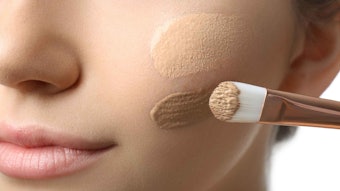
White and fair skin is viewed as a symbol of beauty by Chinese, Japanese and Koreans for geographical, racial, cultural and traditional reasons. In China, there is an old saying that, "A white complexion is powerful enough to conceal thousands of faults." Observing the Chinese cosmetic market today shows that products with skin-whitening claims are the most popular. In fact, according to AC Nielsen data, whitening products make up nearly 30% of the total skin care market in China.1
The market for such products continues to grow at a fast rate and consequently, skin whitening has become one of the hottest areas of focus among R&D in Chinese cosmetic enterprises. Meanwhile, statistics have shown that products with traditional Chinese medicine (TCM) claims account for a large share of the skin whitening product market—nearly 33% in 2011, which has risen year after year. This article reviews the historic application of TCM in whitening cosmetics.
TCM for Skin Whitening
Approximately 1,974 prescriptions are recorded in more than 38 historic medical references from the Eastern Jin Dynasty (AD 317-420) through the Qing Dynasty (AD 1644-1911) of China. Of these prescriptions, 465 are related to skin whitening or lightening, accounting for nearly a quarter of the total.2 Further, research by scholars on the medical monographs Qian Jin Fang found there are 15 types of TCM usually applied in skin whitening,3 of which the skin whitening effects have been proven by modern scientific research.4 These include: Angelicae dahurica, Atractylodes macrocephala Koidz., Dictamnus dasycarpus Turcz., Ampelopsis japonica (Thunb.) Makino, Aconitum coreanum (Levl.) Raipaics, Poria cocos (Schw.) Wolf, Vigna cylindrica Skeels, Beauveria bassiana (Bals.) Vaillant, Santalum album L., Gallus domesticus Brisson and Benincasa hispida (Thunb.) Cogn. This indicates that China has a long history of using TCM to solve the problem of skin whitening, and there is scientific evidence of its efficacy.
A recipe using seven whitening herbs called “Qi Bai Fang” is one of the most famous skin whitening or skin care formulae recorded in existing ancient Chinese medical classics. It is named after the first Chinese characters of the six TCM ingredients used in the formula that begin with the character Bai, and the last Chinese character of Gallus domesticus brisson, which is also Bai. This formula was recorded in the book Yu Yuan Yao Fang5 as a prescription to treat freckles and whiten facial skin. Based on royal prescriptions of the Song, Jin and Yuan Dynasties, this book was the first to compile more than 1,000 royal medical prescriptions made available to commoners, and it was block-printed in AD 1257. A large portion of the prescriptions in the book relate to human health and beauty and are as authoritative as they were originally for royal use.
TCM in Use
Practically, the manufacturing process of Qi Bai Fang is as follows: peel the root of Poria cocos (Schw.) wolf and use raw Aconitum coreanum (Levl.) Raipaics. Remove the leaves and soils of Asarum Heterotropoides Fr.var.mandshuricum Kitag and grind all the ingredients in the formula together until they become fine powder. Reconcile the powder with Gallus domesticus Brisson, i.e., egg white, and make stick-like objects, called “Tingzi,” similar to a human’s little finger in size. Dry the frames in shade and put them in storage afterward.
The application procedure is: grind the Tingzi with tepid rice water, i.e., the water drained after rinsing the rice, until pulp juice is obtained. Following facial cleansing each night, apply the juice onto the face before sleep. It is noteworthy that the proportions of each TCM ingredient in Chinese classic prescriptions are not unchangeable. The fact is that in ancient China, where cosmetics were not yet industrially produced on a large scale and their commercialization rates were extremely low, prescriptions were individualized based on doctors’ judgments most of the time. Factors taken into consideration included the individual’s health condition and lifestyle, and seasons as well as the natural environment when and where the preparation is applied. The increase or decrease in dose differs from individual to individual. In this sense, the so-called formulae recorded in Chinese medical classics such as the Qi Bai Fang can only be considered as the basis for general types of prescriptions.
Records show that in ancient China, rice water was used directly to wash the face so as to moisten and whiten the skin.6 It is important to note that Angelica dahurica, which was commonly used for skin whitening by the ancient Chinese, is prohibited today from use in cosmetics due to its potential to cause photosensitivity that may result in phototoxic dermatitis.7 Also, Aconitum coreanum (Levl.) Raipaics is prohibited due to the hypaconitine it contains.8
Summary
For thousands of years, white and fair skin has been considered symbols of beauty by East Asian women and today, skin whitening cosmetics continue to grow in popularity. Among the prescriptions for beautification purposes recorded in historic medical references, more than 25% are for skin-whitening and skin-lightening benefits. Through the analysis of the most well-known formula Qi Bai Fang, this article provides an introduction of the properties of TCM ingredients with skin-whitening efficacy, their prescription rationale and their various forms.
References
Send e-mail to [email protected].
1. X Zhang, A lighter shade of pale, China Daily, available at www.chinadaily.com.cn/usa/weekly/2011-09/23/content_13775846.htm (Accessed Aug 16, 2012
2. XP Ren, Establishment of the database on ancient TCM beauty prescriptions and analysis, J Traditional Chinese Medicine Literature 25(2) (2007)
3. JL Xu, Exploration on the application of Qu Gan Zeng Fang, Shaanxi Traditional Chinese Medicine 24(1)(2003)
4. XW Zou and ZS Jiang, Advances in studies on botanical inhibitors of tyrosinase, Traditional Chinese Medicine 35(6) (2004)
5. GZ Xu, Yu yuan yao fang (prescriptions of royal drug museum) [1271-1368 A.D.], Beijing: People's Medical Publishing House (1992)
6.Y Li, ed, Ancient Chinese make-up formulations, Beijing: China Press of Traditional Chinese Medicine (2008)
7. LK Zhang, J Zhu and WZ Shi, Analysis on skin allergy caused by topical traditional Chinese medicine, Heibei Traditional Chinese Medicine 33 (11)1736-1739 (2011)
8. FY Wang et al, eds, A practical Chinese-English dictionary of traditional Chinese material medica, Hunan: Hunan Science and Technology Press (2005)