Log In/Register
Facebook icon
LinkedIn icon
Instagram icon
Testing
Animal Alternatives
Efficacy
Method/Process
Microbiology
Saftey/Stability
Sensory
Sun Protection
Tech/Equipment/Services
Testing
Cosmetic Ingredients
Editor’s Note: Slow it Down
Featured
Tech/Equipment/Production
Advancing Hyper-Personalized Cosmetics: A Dual Approach Combining Regulatory Methodology and Live A/B Performance Testing
A made-to-order, direct-to-consumer (DTC) model enables cosmetic brands to manage complex regulatory compliance for millions of personalized formulas while leveraging live consumer data to de-risk physical product renovations.
Sponsored
Skinifying Oral Care: The Microbiome Science
Join BLIS Technologies to unpack the strain science behind microbiome-friendly oral care: how targeted antimicrobial peptides modulate the ecosystem rather than strip it, how to formulate with live probiotics in real-world formats, and how to map claims that keep cosmetic products compliant.
Read the latest issue
September 2026
Top Headlines
Event Coverage
Spotlight on Beauty Innovation: Celebrating the 2026
C&T
Allē Awards
Safety/Stability
Establishing a Clear Framework for Safety and Claims in Personal Care Products
Tech/Equipment/Production
Why Cosmetic Batches Lose Consistency During Scale-Up
Sponsored
Augmented Longevity: Reprogramming the Skinspan Where Science, Technology and AI Redefine Ageing.
Latest
Sun Care
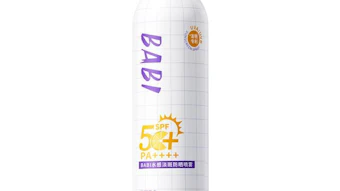
China Leads the Global Sunscreen Category: BABI’s Proprietary Technology Redefines Full-Chain Protection Standards
Discover BABI's revolutionary sunscreen spray 3.0 with full-chain protection technology. Combining UV protection, brightening, and soothing care in one formula.
Animal Alternatives
European Commission To Accelerate Transition Away from Animal Testing in Chemical Safety Assessments
“Today is a good day for animals and shows that Europe cares,” said Jessika Roswall, Commissioner for Environment, Water Resilience and a Competitive Circular Economy.
Anti-aging/Face
Haut.AI CEO on AI, Skin Intelligence, and the Next Phase of Skincare Personalization
From SkinGPT simulations to AI-driven clinical studies, Haut.AI’s CEO explains how generative AI is redefining how ingredient efficacy is demonstrated and experienced.
Sponsored
SILAB focuses on the study of crops to strengthen its botanical supplies
In 2023, SILAB invested in an Agronomic Studies and Research Center, with the aim of studying certain crops to ensure even more the security, traceability and durability of its botanical supplies. Discover its main missions!
Safety/Stability
Is Your NPD Testing Keeping Pace With Cosmetic Innovation?
Ben Elmadi, Technical Manager – Cosmetics, at MSL Solution Providers explains why brands should re-evaluate their approach to NPD testing.
Method/Process
The Predictive Formulation Era Arrives as L’Oréal Brings Nvidia Alchemi AI into the Lab
The approach allows researchers to test thousands of formulation variables simultaneously, accelerating discovery cycles by up to 100x.
Ingredients
NSF Launches New Certification for Personal Care Products
Certification is available globally for manufacturers and brands seeking independent verification of product quality and ingredient safety.
Methods/Tools
How In silico Innovation is Transforming Cosmetic Ingredient Discovery and Development
This article delves into in silico methods including AI and machine learning for cosmetic ingredient discovery and development. It covers virtual screening, QSAR analyses and molecule repurposing, and gives a case study in progress for psoriasis peptides.
Method/Process
Advances in Beauty and Personal Care Testing: Novel In vitro Models, Multi-Test Combos, ‘Evidence Packages’ and Real-World Exposure
Advances in analytics and in vitro models are revolutionizing R&D in cosmetics and personal care. This article explores trends, cutting-edge research and expert insights on how these technologies are shaping the future of ethical, efficient testing.
Method/Process
Shiseido Develops AI-Based System to Assess Ingredient Biodegradability, Safety Information
This development reflects the company’s goals to integrate digital transformation with research expertise.
Event Coverage
Which Cosmetic Devices, Tech and Test Methods/Tools Will Stand Up to the 2026
C&T Allē Awards
Challenge?
Whether it’s enhancing sustainability, improving skin care accessibility or refining product testing, these finalists are shaping a smarter, more inclusive, and forward-thinking future for the industry.
Balancing/Soothing
Sea Buckthorn to Calm Oxi-Inflammatory Assault in Sensitive Skin
A sea buckthorn leaf extract was developed to calm the oxi-inflammatory environment induced by exposome assaults, to protect epidermal lipids and to soothe sensitive skin. A model mimicking lipoperoxidation in the epidermis was used to assess its effects.