Log In/Register
Facebook icon
LinkedIn icon
Instagram icon
Research
Literature/Data
Tech Transfer
Methods/Tools
Consumers/Market
Research
Cosmetic Ingredients
Editor’s Note: Slow it Down
Featured
Tech/Equipment/Production
Advancing Hyper-Personalized Cosmetics: A Dual Approach Combining Regulatory Methodology and Live A/B Performance Testing
A made-to-order, direct-to-consumer (DTC) model enables cosmetic brands to manage complex regulatory compliance for millions of personalized formulas while leveraging live consumer data to de-risk physical product renovations.
Sponsored
Skinifying Oral Care: The Microbiome Science
Join BLIS Technologies to unpack the strain science behind microbiome-friendly oral care: how targeted antimicrobial peptides modulate the ecosystem rather than strip it, how to formulate with live probiotics in real-world formats, and how to map claims that keep cosmetic products compliant.
Read the latest issue
September 2026
Top Headlines
Actives
Faster, Better Healing: Galactomannans from
Ceratonia siliqua
as a Novel Solution for Wounded Skin
Sponsored
Skinifying Oral Care: The Microbiome Science
News
One in Three U.S. Women Are Already Using AI for Skincare and Bodycare Advice, New Survey Finds
Companies
Estée Lauder Companies, University of Leeds Partner to Advance Complexion Shade Matching Tech
Latest
Companies
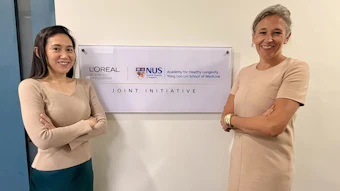
L’Oréal Groupe, NUS Academy for Healthy Longevity Announce Multi-Year Research Partnership
The partnership will combine L’Oréal’s expertise in skin and hair science with NUS Medicine’s leadership in geoscience and healthy longevity medicine.
Sponsored
Augmented Longevity: Reprogramming the Skinspan Where Science, Technology and AI Redefine Ageing.
During this global webinar, Safic-Alcan will bring together market, scientific and technical perspectives to decode the concept of augmented longevity.
News
Introducing the 2027
Cosmetics & Toiletries
Editorial Themes
Learn more about the topics to be covered in next year's issues.
Formulating Aids
Scientists Patent Technology for Encapsulating Probiotics in Cosmetics
The encapsulation technology was granted patent protection by the Polish Patent Office with five more patents in progress.
Event Coverage
Spotlight on Beauty Innovation: Celebrating the 2026
C&T
Allē Awards
Comments and photos from the winners of this year's Allē Awards.
Cosmetic Ingredients
Editor's Note: Respect the Chemistry
Specialized
How K-Beauty Advances Skin Care Through Next-Generation Delivery Systems and the Continuous Reinvention of Proven Actives
Current advances are driven by three distinct technologies: liposomes, exosomes and spicules.
Literature/Data
Brewing Up Biotech: Tea Catechins and Their Anti-Aging Impact
Tea catechins are gaining recognition in the cosmetic and pharmaceutical industries for their potential to mitigate photoaging, support skin homeostasis, and reduce hair loss.
Literature/Data
Spotlight on Pet Grooming: An Integrated Approach Towards Pet-Centric Products
Effective pet-centric product design requires an integrated approach that combines veterinary dermatology with "flow, friction, and foam" sciences.
Methods/Tools
UCLA Researchers Develop Mineral Sunscreen to Reduce White Cast
Using a patented high-temperature flame process, the researchers produced larger particles shaped like tetrapods.
Anti-aging/Face
The Intercellular Matrix and Skin Nutrient Optimization
Natural/Sustainable
SILAB focuses on the study of crops to strengthen its botanical supplies
In 2023, SILAB invested in an Agronomic Studies and Research Center, with the aim of studying certain crops to ensure even more the security, traceability and durability of its botanical supplies. Discover its main missions!