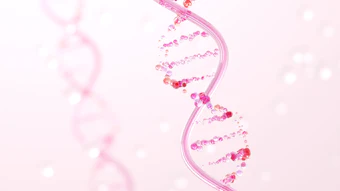
Solar radiation such as UVA and UVB induces physiological damage in the skin. Photoaging is a classic example of UV-induced wrinkle formation and thinning of the skin. This phenotype change reflects a deeper impact at the molecular level, in particular on the DNA double helix present in each cell nucleus. The cumulative effect of repeated damage strongly contributes to the development of DNA mutations and down-regulates proteins essential to maintain normal skin turnover.
Prominent among UV-induced lesions on DNA are cyclobutane pyrimidine dimers (CPDs) formed between adjacent pyrimidines on the same DNA strand exposed to UVB (280–320 nm) irradiation. Pyrimidine dimers alter the biological function of DNA and are a major cause of lethal, transformational and tumorigenic4 events induced by UV exposure. UV-induced CPDs may be repaired by enzymatic processes, or by a light-dependent reaction mediated by electron transfer. Importantly, the repairing mechanism decreases with aging, contributing to increased mutational risk.
Furthermore, studies in cell lines and in animals have demonstrated a link between DNA damage and erythema formation. Mediators of inflammation such as NF-kB, IL-6, IL-10 and TNF-α were induced by CPDs, and the reduction of these inflammatory mediators was stimulated by mechanisms that increase CPD repair. In vivo studies on animals such as knockout and transgenic mice further proved that when enzymes essential to DNA repair were over-expressed or deleted, a clear correlation with the onset of UV-induced skin erythema was evidenced.