The following excerpt is adapted with permission from an article by Kelly Dobos of Kao Corp., titled, "How Do Skin Moisturizers Work," which was featured on the Chemist's Corner. The article discusses how moisturizers work on skin with respect to the three main ingredient categories: humectants, emollients and occlusive agents.
Human skin has many important functions, including the prevention of water loss. Dry skin, or xerosis, is a common problem that many consumers seek to treat with cosmetic moisturizers. Whether for the face, hands, feet, or entire body, moisturizer formulations are an important part of any cosmetic chemist’s tool kit.
Skin Structure
First, let’s talk a little about the structure of human skin. The upper layer of the skin, the epidermis, is further subdivided into four distinct layers. These layers from bottom to top are the Stratum basale, the Stratum spinosum, Stratum granulosum, and the Stratum corneum. There presence of a fifth layer, the Stratum lucidum, can be seen in thicker areas of the epidermis like the soles of your feet.
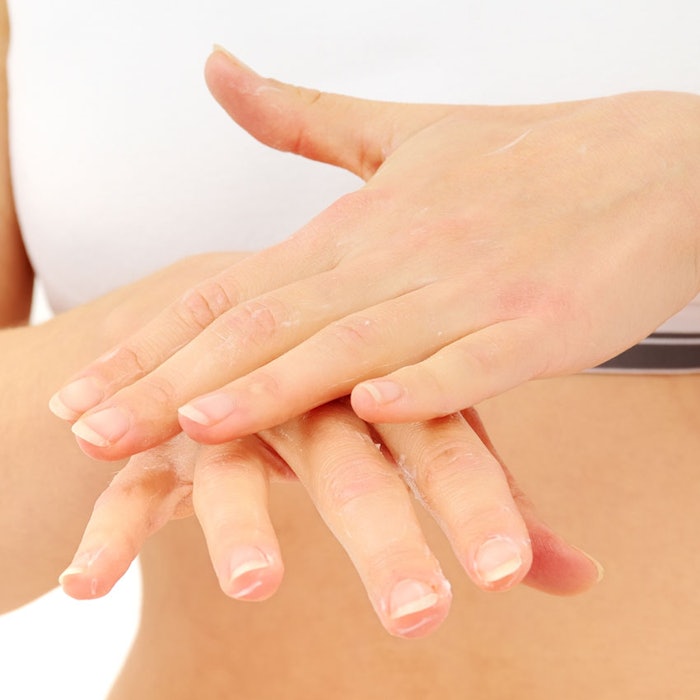
Keratinocytes, the main type of cells in the epidermis, migrate up from the dermis and undergo many changes to become a flat, keratin rich corneocyte before being shed. During this progression through the layers of the epidermis, lipids are released into the spaces between cells, and the skin’s own natural moisturizing factor (NMF) is generated. These lipids form a barrier to water loss and help retain the skin’s NMF. Disruption of this lipid matrix and subsequent loss of hydration can lead to dry, flaky skin.1, 2 Cosmetic moisturizers are used to help repair the lipid barrier and restore hydration.
How cosmetic moisturizers work
Although there are some more specialized approaches, like the use of alpha-hydroxy acids or quaternary conditioning agents, most cosmetic moisturizers improve the condition of dry skin by utilizing one of three major ingredient types including: humectants, emollients and occlusive agents.
Humectants
Humectants include ingredients like glycerin, urea, and pyrrolidone carboxylic acid (PCA). Humectants work by attracting water from the dermis below and helping to keep that water bound in the Stratum corneum. Glycerin is used frequently because of its low cost and high efficacy, but a tacky feel on the skin is one of the drawbacks of formulating with high levels of humectants. When optimizing skin formulations, cosmetic chemists try to reduce these negative properties of humectants.
Occlusive Agents
Occlusive agents increase moisture levels by providing a physical barrier to epidermal water loss. Ingredients with occlusive properties include petrolatum, waxes, oils and silicones. Some occlusive agents like petrolatum can impart a heavy feel, so they are often combined with other ingredients such as emollients to improve consumer appeal.
Emollients
Emollients provide some occlusivity and improve the appearance of the skin by smoothing flaky skin cells. There are many different types of emollient esters and oils available to a formulation chemist.3, 4 Emollients generally are grouped by their ability to spread on the skin. By combining emollients with the different spread rates, a cosmetic formulator can tailor the skin feel of a moisturizer. The formulator can test for these differences by using different emollients in a standard base lotion. Additionally, emollient lipids similar to those naturally found in the skin may also increase the rate of barrier repair.5
Putting it together
Each of these ingredient types has a different mechanism of action, and most cosmetic moisturizers will use a combination of these ingredients to create a synergistic effect and mitigate certain aesthetic or financial drawbacks. Product claims and skin feel are also considerations to be aware of, so do not be afraid to experiment with options when creating a moisturizer. For tips on creating successful skin formulations, see the previous article on HLB formulating.
References
1. CR Harding, The Stratum Corneum: Structure and Function in Health and Disease, Dermatologic Therapy, 17 6–15 (2004)
2. RR Wickett and MO Visscher, Structure and Function of the Epidermal Barrier, American Journal of Infection Control, 34(10) S98–S110 (2006)
3. TC Flynn, J Petros, RE Clark and GE Viehman, Dry Skin and Moisturizers, Clinics in Dermatology,19 387–392 (2001)
4. AV Rawlings, DA Canestrari, B Dobkowski, Moisturizer Technology versus Clinical Performance, Dermatologic Therapy 17 49–56 (2004)
5. M Mao-Qiang, BE Brown, S Wu-Pong, KR Feinglod and PM Elias, Exogenous Non-physiologic vs. Physiological Lipids. Divergent Mechanisms for Correction of Permeability Barrier Dysfunction, Archives of Dermatology 131 809–816 (1995)