Color is a visual sensation that results from the splitting of white light into its component wavelengths. Wavelengths are measured in nanometers (nm). Table 1 shows the different colors and their corresponding frequencies and wavelengths.
The splitting of white light into its components to produce color can be achieved with a variety of materials such as a prism, as shown in Figure 1. In a prism, blue light is refracted more than the red light because the refractive index of the glass is a function of the wavelength of the light.
Spectral color is the amount of light in each wavelength that is contained within white light. This is determined instrumentally by splitting light with a prism. This was first accomplished by Sir Isaac Newton in 1666. This is something that is constant, and it can be measured and quantified with electronic equipment such as a spectrophotometer.
Perceived color is the color that can be ascertained by the human eye and brain. There can be limitations to this, as the human eye contain three types of cones, each responsible for evaluating the visual stimuli for red (R), green (G) and blue (B) similar to the tiny chromaphores in older television picture tubes. These approximate 7 million cones are responsible for daylight vision. Additionally, there are around 120 million rods in the human eye responsible for night vision. The ability to visually evaluate the sensations of color varies from person to person, man to woman, young to old. Any abnormality in the rods or cones or the optic nerve that transmits the stimulus or message from the eye to the brain will impact perceived color, which is sometimes called “color blindness.”
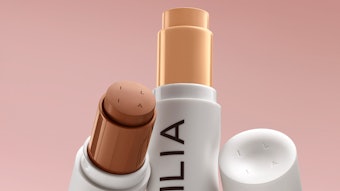
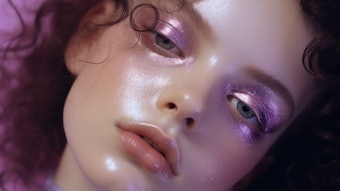
Color is an important part of the cosmetic industry. Mankind has used colors on the skin since ancient times. The Ancient Egyptians wore distinct eye makeup, rouge and perfumed oils that softened the skin and prevented sunburn and wind damage. Not only did the men and women of Egypt wear makeup, but the statues of their gods and goddesses also were adorned with all these different types of cosmetics. The higher the status of the person, the more clothes and makeup they wore.
Queen Elizabeth I of England used white lead on her face, and the ladies of her court colored their lips with red mercuric sulfide. For many years, rouge was used to color both the lips and the cheeks, depending on the fashion of the times. The people who wore these colors did not know what harm the materials caused, but the status perceived by this color use was important.
“Color cosmetics are an integral part of the cosmetics business and are designed to enhance the beauty of an individual. If one looks good, there is a good chance that they will feel better about themselves. That is what formulators in the color cosmetics and beauty business tend to strive for through art, science and creativity," added Morante. He explained, "Color is used in virtually every industry in a very wide variety of applications. In nature, color is diverse, can be found naturally and synthetically and encompasses every possible range of wavelengths in the visible light spectrum. The colorants used in cosmetics can also be of natural or synthetic origin.”