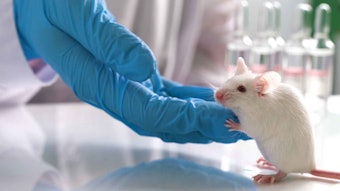
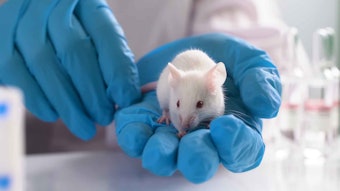
In 2004, as a part of the Cosmetics Directive, the European Commission established a timeline for the phasing out of animal testing in Europe by 2013. While some alternative methods have been validated, devising comparable animal replacement tests is a continual challenge. As a specific example, to test for the sensitization potential of topical products, the local lymph node assay (LLNA) often is used. This method assesses whether a test material topically applied on an animal induces the proliferation of lymphocytes.
However, progress is emerging in this area. The Hurel Corp. has developed a microfluidic, non-animal alternative to the LLNA and it has partnered with L’Oréal to make this approach a reality—in the form of a chip. Martin Yarmush, MD, PhD, is the force behind the application of microfluidics in a chip format. Known as the Allergy Test on a Chip, the technology is being developed by Hurel, with a projected completion date of mid 2011.
The Basic Components
According to Yarmush, “The chip mimicks the essential elements of the LLNA assay.” He explained that in the LLNA, a chemical is rubbed in or near the ear of an animal such as a mouse. Then, the local lymph node is excised and the T cells are measured to determine if they have been activated.
To mimick this assay, the chip that Yarmush and a team of researchers created consists of three main compartments involving two different tissues. The first compartment of the chip is an artificial skin provided by L’Oréal. The second compartment includes microfluidic channels, and the third is a lymph node compartment made up of lymphocytes such as T cells or B cells. To replicate the LLNA’s mechanism of action, cells must migrate from the artificial skin to the lymph node compartment when activated by a sensitizer. “We used dendritic cells to migrate from the skin to the lymph node [compartment],” explained Yarmush.
“These cells sit either within the artificial skin or right underneath the skin. The [potential] sensitizer diffuses through it, and if it is an activator, it will turn on the dendritic cells, which will migrate down to the lymph node compartment.”
The company has been working on the technology for 13 months. It has established the artificial skin and microfluidic compartments of the chip and is now working on the lymph node compartment.
The Role of Microfluidics
The microfluidic channels in the chip employ an activity called chemotaxis. Yarmush explained that chemokines are placed at one end of the microfluidic channels and that the dendritic cells are attracted to these materials if they have a receptor that binds to them.
“We set up a chemical gradient that allows the cells to migrate, and we want to point them in the right direction, which is toward the T cell compartment,” said Yarmush.
The microfluidic channels therefore become a chemokine gradient, and if the cells sense the chemokine, they migrate to the higher concentration, which is near the lymph node.
Testing and Beyond
If a chemical is a potent sensitizer, T cells will proliferate in its presence and this mechanism is employed in the LLNA model. Determining the sensitization of a chemical in the LLNA can involve three different testing methods, according to Yarmush: “You can pick up the number of T cells, you can look at surface markers on the T cells, or you can look at what the T cells are secreting.” These same approaches can be used with the chip, and the company is exploring which method is best to determine sensitization.
Additional applications for the technology are under investigation. Yarmush explained, “The chip can be applied to any barrier tissue with the local lymph environment.” For example, the technology can be used to test drugs for the gastrointestinal tract, the eyes, the lungs and the urinary tract. Through a different partnership, the microfluidic technology is currently being used with hepatocytes (liver cells) to determine drug clearance and drug metabolism.
The technology is of a modular design so that with the same microfluidic channels and lymph node compartment, different cell types can be exchanged to perform different tests. Using skin as the barrier tissue, the chip can also be used to test the toxicity of cosmetic products such as hair dyes.
Regardless of use, Yarmush finds that the microfluidic chip may provide a number of benefits to users. “You can test a number of chemicals, possibly hundreds, on the same chip rather than only one on a mouse,” said Yarmush. Companies that utilize the chip will also be able to market the fact that they do not test on animals.
Finally, the test may be more accurate, as it employs substrates closer to human skin. Yarmush concluded, “Everybody is hoping that what they do as an alternative will not just save animals, but will be as accurate, or more accurate, than the current tests.”