This month’s survey of recent patent and research literature describes money-making ideas for personal care product development, including whitening with vitamin C and Opuntia ficus indica, a pulverulent for hair shaping and shine, an amino functional silicone treatment to use post-relaxing, and instant/gradual self tanning, among others.
Skin and Skin Care
Exudates removal and improved feel: Kimberly-Clark Worldwide Inc. has disclosed a formulation that may be applied to skin and/or used in combination with a personal care product to improve absorbance and leakage control of the personal care product, and to promote a more positive feel and comfort through improved skin cleanliness and health.1 A gel containing dimethicone was used to enhance removal of an exudate, i.e. menses, from the skin.
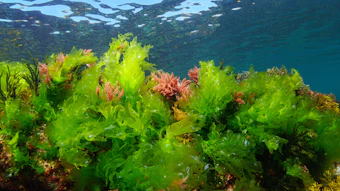
Promoting ascorbic acid in skin lighteners: Rohto Pharmaceutical Co., Ltd., has developed brown algae extracts to promote the uptake of ascorbic acid and skin lightening compositions containing the brown algae extracts and ascorbic acids.2 Specifically, the lightening composition disclosed contained Laminaria ochroleuca (laminaine marine) extract and ascorbic acid and its derivatives and salts. L. ochroleuca was found to promote the expression of the sodium-dependent vitamin C transporter- 1 gene (SVCT-1) in normal human epidermal keratinocytes. When added to a three-dimensional cultured human skin model, the brown algae significantly inhibited the production of melanin in the presence of ascorbic acid.
Vitamin C, Opuntia ficus-indica for whitening: The Face Shop Korea Co., Ltd., has disclosed a composition for removing the horny layer and lightening the skin that contains Opuntia ficus-indica flower extract and vitamin C stabilized by cationic and anionic substances.3 Combining vitamin C with cationic and anionic substances reportedly stabilized the vitamin C to protect it from oxidation caused by air, heat and water, thus maximizing its whitening effects. The Opuntia ficus-indica flower extract was found to promote the activities of chymotrypsin and trypsin related to desmosome decomposition, thereby promoting the turnover of skin keratin. Thus, the horny layer was removed without irritation, and the dark skin was whitened.
Hyaluronic acid dermal fillers: Allemann et al. have reviewed injectable hyaluronic acid gel preparations a,b for the treatment of facial wrinkles and folds.4 Soft tissue augmentation with temporary dermal fillers is a growing field, supported by the ongoing development of technologies and the biocompatibility of the products marketed. Longer-lasting, less immunogenic and more convenient hyaluronic acid (HA) fillers reportedly encompass a large share of the temporary dermal filler market. Since the approval of the first HA filler, at least 10 HA fillers have been approved by the US Food and Drug Administration (FDA).
The gel preparations used for the described studya,b were bacterium-derived, non-animal, stabilized HA. They are reportedly smooth, malleable gels with a homologous consistency that use a technology termed hylacrosstechnology. These materials have a high concentration of cross-linked HAs, which accounts for their longevity. While oneb gel typically is used for volumizing and correcting deeper folds, the othera is employed for contouring and volumizing medium depth facial wrinkles and lip augmentation. Various studies have found HA filler products to be superior in terms of duration, volume and patient satisfaction, when compared with collagen fillers.
Hair and Hair Care
Pulverulent for hair shaping and shine: Henkel AG & Co., KGaA, has published on the use of pulverulent compositions containing particulate hydrophobized metal oxide for the shaping and lustering of keratin fibers.5 The compositions comprise a maximum of 20% w/w water, a liquid phase of 40–95% w/w oil, and a solid phase of hydrophobic metal oxides. Particles for the solid phase were selected from titania, alumina, silica and phylosilicates, and were hydrophobized with compounds from the group of trialkylsilyls, perfluoroalkylsilyls, polyperfluoroalkylene oxides, polysiloxanes, perfluoroalkyl phosphates and perfluoroalkyl phosphate ethers. Film-forming polymers were then added. An example of a cream-in-powder preparation is shown in Formula 1.
Lasting hair spray with a film-forming polymer: Beiersdorf AG has patented a long-lasting hair spray formulated with a film-forming copolymer.6 The polymer is prepared from vinylpyrrolidone, tert-butylacrylate, methacrylic acid, dimethylaminopropylmethacrylamide and methacryloylaminopropyldimethylethyl ammonium ethylsulfate. It is neutralized with an acid and an additive to improve the drying properties of the polymer film. The result is a linear vinylpyrrolidone-tert-butylacrylate-methacrylic acid-dimethylaminopropylmethacrylamide-methacryloylaminopropyldimethylethyl ammonium ethylsulfate copolymer neutralized with phosphoric acid, which is formulated into the hair spray at 3% w/w. Additional ingredients in the formula included 62% w/w ethanol and 35% w/w propane/butane.
Amino functional silicone treatment for post-relaxing: Unilever has disclosed a sodium hydroxide hair relaxing composition and kit including emulsified particles of an amino functional silicone with the following general formula:7
Si(CH3)3-O-[Si(CH3)2-O-]x- [Si(CH3)(R-NH-CH2CH2NH2)-O-]y - Si(CH3)3
In the amino functional silicone formula, x + y is a number from approximately 50–500; R is an alkylene group with 2–5 carbon atoms; and the amino functional silicone has a mole % amine functionality of at least 1 mol % and a non-amino functionalized silicone.
Hair swatches were treated three times with the relaxer formulation, rinsed, shampooed with a neutralizing shampoo, rinsed and dried. One set had no further treatment, while the remaining sets of swatches were treated with the post treatment shown in Formula 2. The conditioner treatment was found to enhance the hair’s protection against broken fibers and split ends.
O/W hair styling composition: Shiseido Co., Ltd., has disclosed an o/w emulsion hair styling preparation that exhibits spreadability, a nontacky feel and styling properties without feeling squeaky.8 The o/w hair styling preparation comprises: 0.1–10% w/w of a specific long-chain acylsulfonic acid salt anionic surfactant such as sodium N-stearoyl-N-methyltaurate; 0.1–20% higher aliphatic alcohol; one or more of 0.5–50% w/w waxes, 0.1–8% w/w hair styling resins, and 0.1–8% w/w powder components such as silica, water and an optional liquid oil. An example of a hair styling composition is shown in Formula 3.
Hair conditioning with branched fatty acids: Kao Corp. has disclosed shampoos with branched fatty acids for improved hair conditioning properties.9 The shampoos contain polyoxyethylene sulfate salt anionic surfactants, cationic cross-linked vinyl copolymers and branched fatty acids or their salts. The branched fatty acids have the formula:
MeCHR1(CH2)nCO2H
where R1 = Me, Et; and n = 3-36. An example of a hair conditioning shampoo is shown in Formula 4. Application of the shampoo resulted in no tangling upon washing, and no stickiness and good smoothness after drying.
Durable hair styling composition: L’Oréal has patented a cosmetic composition containing a vinylformamide/vinylformamine copolymer and an ionic or nonionic polymer for the treatment of hair.10 In addition to the polymer and copolymer, the composition also contained 5% anionic and nonionic surfactant. These compositions were used to obtain particularly durable hairstyles. The composition of a hair styling cream is shown in Formula 5.
Oxidative hair dye composition: L’Oréal also discloses an oxidative hair dye composition formulated with 3-amino-2-methylamino-6-methoxypyridine or one of its additive salts with an acid, one or more oxidation dyes and one or more polyols.11 An example is shown in Formula 6.
Nonsticky hair styling preparations: Shiseido Co., Ltd., has disclosed nonsticky, emulsified hair styling preparations with good spreadability, a smooth texture and no squeaky feel.12 The preparations contained cationic surfactants; higher aliphatic alcohols; 0.5–25% waxes; water; 0.1–8% film forming polymers and/or 0.1–3% powders; and optional oils. The hair styling preparation disclosed was formulated with methylpolysiloxane, microcrystalline wax, mineral oil, hydrogenated polyisobutene, pentaerythrityl tetra-2-ethylhexanoate, PEG 60-glyceryl isostearate, glyceryl stearate, cetanol, stearyl alcohol, tocopherol, fragrance, water, propylene glycol, stearyltrimethylammonium chloride, kaolin, triethanolamine, and polyvinylpyrrolidone-vinyl acetate copolymer.
Makeup
Encapsulated coloring agents: Unilever PLC has disclosed the use of encapsulated coloring agents to impart a healthy appearance to skin.13 The composition was formed using a 0.1–20% w/w composition of beads, 1–80% of the first coloring agent incorporated within a matrix of the beads, and a cosmetically acceptable carrier. The beads were coated to exhibit an exterior color other than that of the first coloring agent. The company found that the most efficacious encapsulation system incorporated hydrophilic polysaccharides, cellulose, hydroxypropyl cellulose and mannitol, combined with the pigments titanium dioxide and red iron oxide.
Lip composition: L’Oréal has patented a cosmetic composition for the lips with a fatty phase containing an organopolysiloxane elastomer and at least one pasty hydrocarbon compound.14 An example of a lipstick is shown in Formula 7. Instant/gradual self tanner: Unilever has patented a self tanning composition formulated to impart a glow/shiny effect on skin.15 The composition includes a sunless tanning agent and coated beads containing a tan-colored pigment. Distributed within the bead coating is a colorant to impart color to the beads other than tan. The disclosed invention thus imparts an immediate tan on skin via the disintegrated beads and the sunless tanning agent acts more slowly, eventually replacing the pigment effect. The coating with colorant renders the formula more esthetically pleasing color such as white, preventing the formula from appearing tan undesirably.
Grease-proof lip composition: Shiseido Co., Ltd., has disclosed grease-proof cosmetics containing interference color-producing platy composite powders and spherical composite powders that have a refractive index of 1.40–1.60 and are coated with components having a refractive index of 2.00–2.90.16 The cosmetics can be used in various applications, such as lipsticks, eye shadows, mascaras and foundations, without base makeup to obscure wrinkles. Red interference color-producing spherical composite powders with an average particle size of 6 mum were prepared by coating spherical silicone dioxide powders with an average particle size of 5 mum and a refractive index of 1.46 with rutile-type titanium dioxide with a refractive index of 2.5–2.7 using titanium tetrachloride. These composite powders were combined with: mica (and) titanium dioxidec, silicone-treated titanium dioxide, silicone-treated red iron oxide, silicone-treated yellow iron oxide, Japan Blue 1 aluminum lake, polyethylene wax, microcrystalline wax, paraffin, diisostearyl malate, heavy liquid isoparaffin and dimethicone, and were mixed upon heating and cooled to create a lipstick that showed moderate pearlescence and a good grease-proof effect.
Interesting Compositions and Ingredients
Stable o/w emulsions with good feel: Hoyu Co., Ltd., has disclosed o/w emulsions with excellent appearance, stability and applicability, such as hair creams, hand creams and face creams, that contain 15–40% w/w nonpolar oils selected from: dimethylpolysiloxane, decamethylcyclopentasiloxane, dodecamethylcyclohexasiloxane, and C < 30 isoparaffins.17 These nonpolar oils were combined with 1–10% w/w polyoxyethylene dialkyl ethers with the following formula:
R1(OCH2CH2)nOR2
where R1,2 = C10-22 saturated or unsaturated linear or branched hydrocarbyl and n = 20-100. To complete the composition, the nonpolar oils and ethers are combined with polar oils selected from amino-modified silicones and higher fatty acid esters and water. An example of a hair cream is shown in Formula 8. The preparation showed no phase separation after one month at 50°C and gave a moist and smooth feel to the hair.
Moisturizing treatment for barrier improvement: Evonik Degussa Corp. has disclosed a moisturizing liquid liner for barrier layer improvement comprising a hydrophobic moiety and an emulsifier.18 Further, a substrate comprising a barrier layer and the moisturizing liquid liner is described. The substrate may be incorporated into an article. An example is shown in Formula 9. Nitrile gloves treated with this composition provided an increase in hand moisturization as compared with untreated gloves.
Reproduction of the article without expressed consent is strictly prohibited.
References
Send e-mail to [email protected].
1. US 2009 155,325, Formulation and products for promoting skin cleanliness and health, Kimberly-Clark Worldwide Inc, USA (Jun 18, 2009)
2. JP 2009 161,458, Ascorbic acid uptake-promoting agents containing brown algae extracts and compositions containing brown algae extracts and ascorbic acids, Rohto Pharmaceutical Co, Ltd, Japan (Jul 23, 2009)
3. KR 2009 78,082, Cosmetic composition containing vitamin C and extract of Opuntia ficus-indica flowers, The Face Shop Korea Co, Ltd, S. Korea (Jul 17, 2009)
4. IB Allemann et al, Hyaluronic acid gel (Juvederm) preparations in the treatment of facial wrinkles and folds, Clinical Interventions in Aging 3(4) 629—634 (2008)
5. WO 2009 90,114, Pulverulent compositions for the shaping and lustering of keratin fibers containing particulate hydrophobized metal oxide, Henkel AG & Co, KGaA, Germany (Jul 23, 2009)
6. EP 2,082,727, Hair spray with especially high longevity containing a film-forming copolymer, Beiersdorf AG, Germany (Jul 29, 2009)
7. WO 2009 92,750, Hair relaxing composition and kit including emulsified particles of amino functional silicone, Unilever PLC; Unilever N.V.; Hindustan Unilever Ltd, UK (Jul 30, 2009)
8. WO 2009 93,677, Emulsion-type hair-dressing preparation, Shiseido Co, Ltd, Japan (Jul 30, 2009)
9. JP 2009 173,586, Shampoos containing branched fatty acids with improved hair-conditioning properties, Kao Corp, Japan (Aug 6, 2009)
10. FR 2,926,989, Cosmetic composition containing a vinylformamide-vinylformamine copolymer and an ionic or nonionic polymer for the treatment of hair, L’Oréal, France (Aug 7, 2009)
11. FR 2,926,983, Oxidative hair dye composition including 3-amino-2-methylamino-6-methoxypyridine, another oxidation dye and a polyol, L’Oréal, France (Aug 7, 2009)
12. JP 2009 173,602, Nonsticky emulsified hair-styling preparations with good spreadability, smooth texture, and no squeaky feel, Shiseido Co, Ltd, Japan (Aug 6, 2009)
13. WO 2009 74,407, Encapsulated coloring agents to impart a healthy skin appearance. Unilever PLC; Unilever NV; Hindustan Unilever Ltd, UK 14. WO 2009 74,960, Cosmetic composition containing an organopolysiloxane elastomer and a paste-like compound, L’Oréal, France (Jun 18, 2009)
15. WO 2009 74,359, Self-tanning effects, Unilever PLC; Unilever NV; Hindustan Unilever Ltd, UK (Jun 18, 2009)
16. JP 2009 173,573, Grease-proof cosmetics containing interference color-producing platy composite powders and spherical composite powder, Shiseido Co, Ltd, Japan (Aug 6, 2009)
17. JP 2009 179,588, Oil-in-water emulsion cosmetics containing nonpolar oils with excellent appearance, stability, and applicability, Hoyu Co, Ltd, Japan (Aug 13, 2009)
18. US 2009 191,285, Moisturizing liquid liner for barrier layer, Evonik Degussa Corp, USA (Jul 30, 2009)