This month’s survey of recent patent and research literature describes moneymaking ideas for personal care product development; including collagen induction without the risk of hyperpigmentation; algae and peptides to lift loose skin; UV-shielding makeup sticks; and volumizing mascara, among other concepts.
Skin and Skin Care
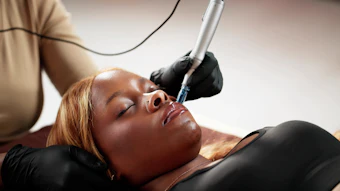
Collagen induction without the risk of hyperpigmentation: Aust et al. have published on whether minimally invasive skin rejuvenation, i.e., percutaneous collagen induction, can be performed without risk of hyperpigmentation.1 Photoaging generally is treated by ablative procedures that injure the epidermis and basal membrane, leading to fibrosis of the papillary dermis. Damaging the epidermis, however, can potentially cause significant adverse effects such as depigmentation. Alternatively, recent clinical trials have shown that percutaneous collagen induction therapy is safe for the treatment of wrinkles and scars and smoothing of skin without the risk of depigmentation.
The purpose of this study was to learn whether percutaneous collagen induction therapy presents an effective means for skin rejuvenation without the risk of depigmentation, as clinical data from Aust et al. had suggested. Fifty-six rats were assigned to three groups: group A (n = 24) received percutaneous collagen induction therapy plus skin care; group B (n = 24) received only skin care; and group C (n = 8) served as the control. The authors evaluated the effect of percutaneous collagen induction therapy on the epidermis, melanocytes and the pigmentation markers interleukin-10 and MSH. Percutaneous collagen induction therapy left the epidermis intact without damage to the stratum corneum, layers of the epidermis, or basal membrane. No signs of dermabrasive reduction of epidermal thickness were evident 24 hr after the procedure, and the number of melanocytes neither increased nor decreased in any of the groups.
DNA microarray experiments demonstrated that interleukin-10 was increased in percutaneous collagen induction therapy-treated skin after two weeks. Concerning the MSH gene, gene expression microarray analysis indicated a slight down-regulation both 24 hr and two weeks after percutaneous collagen induction therapy. The authors concluded that percutaneous collagen induction therapy thus offers a modality with which to rejuvenate and improve skin’s appearance and quality without risking depigmentation.
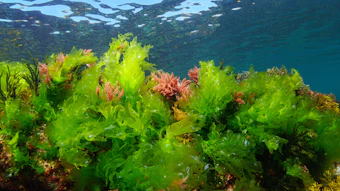
Algae, peptides to lift loose skin: Labo Cosprophar AG discloses a cosmetic composition with a lifting effect to add support to loose facial tissue.2 The composition contains the algae Ulva lactuca in association with at least one of the following peptides: a) a polypeptide having the sequence arginine-glycine-aspartic acid, and derivatives or salts of such; b) a tripeptide including the amino acids lysine-valine-lysine, and derivatives or salts of such; and c) a micelle of both a) and b). The composition also contains glyceryl stearate, cetyl alcohol, octyldecanol, cetyl stearyl isononanoate, triglyceride C8-10, dimethylpolysiloxane, polysorbate 80, malt extract, sweet almond biopolymer, vitamin C, vitamin E, antioxidants, preservatives and perfumes.
Styrene, unsaturated dicarboxylic acid to soothe skin: L’Oréal discloses a copolymer of styrene and an unsaturated dicarboxylic acid as a nontherapeutic soothing agent for cosmetics, or for pharmaceuticals to prevent and/or treat skin disorders related to skin irritation.3 The invention also indicated the composition for inclusion with cosmetics or pharmaceuticals likely to cause skin irritation. Thus, a cream containing a styrene copolymer 4% was developed.
O/W polyethylene glycol, nonionic surfactant creams: Shiseido Co., Ltd. discloses stable, nongreasy o/w emulsions containing polyethylene glycol and nonionic surfactants for cleansing creams and massage creams.4 The disclosed compositions contain: fatty acid soaps; polyethylene glycol with an average molecular weight between 2,000–25,000; nonionic surfactants, one with an HLB between 10–17 and another with an HLB between 2–10; and solid or semisolid oils. An example of a cleansing cream is shown in Formula 1.
Cosmetics to even out skin tone: Kosei Co., Ltd. discloses cosmetics containing block or graft copolymers, partially crosslinked organopolysiloxanes, and powders to even out and correct skin tone.5 Specifically, the skin tone- correcting cosmetics contain: block or graft copolymers whose aqueous solutions have a sol-gel transition temperature at > 0°C and < 37°C; partially crosslinked organopolysiloxanes and/or polyether-organopolysiloxanes; and powders having a refractive index of 1.3–1.7. The cosmetics may also contain carbohydrates, water-soluble polymers and/or silicone oils. The example cosmetic shown in Formula 2 exhibited a long-lasting, skin tone-evening effect with good spreadability and moisturization.
Hair and Hair Care
Adenosine-containing cosmetics: Shiseido Co., Ltd. discloses cosmetics containing adenosine that are stable even at low temperatures.6 These cosmetics comprise: 1–2% adenosine, 10–20% moisturizers, and 35–65% lower alcohols; they may further comprise cationic polymers and organic acids. An example of a hair tonic is shown in Formula 3.
Nonstaining, even-toned hair dyes: Kosei Co., Ltd. discloses hair-coloring agents containing alkyl acrylate-styrene copolymer, oils and dyes.7 The hair-coloring agents spread evenly and easily and provide uniform color to hair without damaging or staining skin or clothes. The disclosed hair-coloring agents contain volatile hydrocarbon oils; an alkyl acrylate-styrene copolymer that is incompatible with the hydrocarbon oils; a solid oil having a melting point of > 80°C; and a pigment and/or dye. An example is shown in Formula 4.
Copolymers for fragrance retention: Beiersdorf AG discloses preparations for hair treatments, especially shampoos and conditioning shampoos, containing ampholytic copolymers of quaternary amine and acrylic acid for perfume-retaining effects.8 The disclosed copolymer was composed of 50% quaternary amine and 50% acrylic acid units; an example of a conditioning shampoo is shown in Formula 5.
Carbonates for hair coloring: Kao Professional Salon Services discloses compositions containing carbonates to color keratin fibers, especially to brighten hair.9 The compositions are based on oxidative dye precursors and optionally contain (% w/w): coupling agents and at least one carbonate, 0.75% to 5.00%; at least one ubiquinone at 0.001% to 1.00%; at least one ammoniated silicone at 0.01% to 1.00%; and at least one chelating agent at a concentration of 0.25% to 5.00%.
Acrylic polymers, ceramides in reparative hair care: Pola Chemical Industries discloses reparative hair compositions including acrylic polymers and ceramides to improve hair protein elution.10 The described acrylic copolymers contain a biological component and a ceramide. An example of such a composition is shown in Formula 6. Methods for selecting cosmetic components also are disclosed, which include the evaluation of damage to hair by measuring hair protein elution via IR spectra.
Foam for hair gloss: Kao Corp. discloses foam-type hair cosmetic compositions containing fatty acid alkylalkanolamides and silicone derivatives.11 The described invention is said to provide a natural gloss to hair while exhibiting excellent low-temperature foaming properties and storage stability. The composition consists of: a) 0.1–3.0 % w/w of the fatty acid alkylalkanolamide—represented by a general formula: R1CON(R2)R3, wherein R1 = C5-23 fatty acid residue, R2 = C1-3 alkyl, and R3 = C2-4 alkanol—and b) 1.0% to 10.0% of a silicone derivative filled in a container with a propellant at 96/4–85/15. The composition may further contain polyoxyethylene sorbitan fatty acid esters and/or polyoxyethylene hydrogenated castor oil. An example is shown in Formula 7.
Linear higher alcohols for hair protection: Milbon Co., Ltd. discloses hair-protecting compositions containing linear higher alcohols, and a method for hair processing.12 The method relates to applying a protective composition before using a two-step hair deformation agent including a reducing agent and an oxidizing agent; e.g., a permanent wave-setting agent and hair-straightening agent. The disclosed hair-protecting composition contains a C12-14 linear higher alcohol, a C15-18 linear higher alcohol, and a C19-22 linear higher alcohol. An example of such a composition is shown in Formula 8.
Grafted amino acid polymers for keratin care: L’Oréal discloses a cosmetic treatment for keratin materials, particularly for hair, that contains a grafted amino acid polymer and an accompanying application method.13 The polymer is based on a backbone containing cationic amino acid monomer units and hydrophilic grafts covalently bonded to all or part of the backbone; said grafts contain at least two repeated hydrophilic monomer units having the composition: -CH2-CH2-O-. In the described invention, poly(L-lysine) was reacted with methoxy poly(ethylene glycol)nitrophenyl carbonate to obtain a poly(L-lysine)-polyethylene glycol graft copolymer. A sample hair lotion formulation containing 1% of the described polymer also is shown.
Makeup
Synthetic phlogopite primer for lipstick, gloss application: Kosei Co., Ltd. discloses cosmetic compositions with iron-containing synthetic phlogopite to apply as a primer to lips prior to application of lipsticks and glosses to improve the smoothness and color of lips.14 The described compositions contain 1–20% w/w of a synthetic phlogopite-containing iron with an average particle diameter of 3–20 µm. The compositions may further contain a spherical powder and/or highly viscous oily component. An example of a lip base is shown in Formula 9.
Glossy lip films: Kosei Co., Ltd. also has received a patent on lip cosmetics containing waxes, (di)glycerin isostearate and phenylpolysiloxanes.15 These stable lip cosmetics contain Fischer-Tropsch wax and multibranched isostearic acid esters and provide a glossy film. An example is shown in Formula 10.
UV-shielding makeup sticks: Shiseido Co., Ltd. discloses UV-shielding makeup sticks comprising resin powders and oils, with excellent hardness and bright colors.16 The makeup contains (% w/w): 0.1–20.0% spheroidal resin powders with a melting point > 200°C; 0.5–80.0% polar oils, preferably cinnamic acid derivatives; 0.1–20% oils that are solid in the range of ordinary temperatures to 50°C; and 0.001–5.0% fluorescent dyes. An example is shown in Formula 11.
Oily, volumizing eyelash composition: Kosei Co., Ltd. also has been issued a patent on oily cosmetic compositions with long-lasting coloring properties and volume-increasing effects for application to eyelashes.17 The disclosed composition contains: polyisobutene, black iron oxide-coated titanium mica, and titanium/titanium oxide sintered product and/or black iron oxide in addition to the black iron oxide-coated titanium mica). An example of a cream-type mascara composition is shown in Formula 12.
Interesting Formulations
Stable o/w emulsions containing collagen: Kosei Co., Ltd. discloses storage stable o/w emulsion cosmetics containing phospholipids, higher alcohols and collagen, and their manufacture.18 The disclosed cosmetics are manufactured by mixing oily phases containing phospholipids and C16-22 linear alcohols with aqueous phases containing collagen. An example is shown in Formula 13. Reproduction of all or part of this article strictly is prohibited.
References
Send e-mail to [email protected].
1. MC Aust et al, Percutaneous collagen induction: Minimally invasive skin rejuvenation without risk of hyperpigmentation—fact or fiction? Plastic and Reconstructive Surgery 122(5) 1553–1563 (2008) (in English)
2. CH 696,838, Cosmetic composition with lifting effect for support of loose cutaneous tissue, Labo Cosprophar AG, Switzerland (Dec 31, 2007)
3. FR 2,914,551, Use of a copolymer of styrene and unsaturated dicarboxylic acid as soothing agent for cosmetics or pharmaceuticals, L’Oréal, France (Oct 10, 2008)
4. JP 2008 247,756, Oil-in-water emulsions containing polyethylene glycol and nonionic surfactants, Shiseido Co., Ltd., Japan (Oct 16, 2008)
5. JP 2008 247,769, Skin unevenness-correcting cosmetics containing block or graft copolymers, partially crosslinked organopolysiloxanes, and powders, Kosei Co., Ltd., Japan (Oct 16, 2008)
6. JP 2008 247,752, Cosmetics containing adenosine, Shiseido Co., Ltd., Japan (Oct 16, 2008)
7. JP 2008 247,879, Hair-coloring agents containing alkyl acrylate-styrene copolymer, oils and dyes, Kosei Co., Ltd., Japan (Oct 16, 2008)
8. EP 1,980,293, Preparation for hair treatment containing an ampholytic copolymer for perfume-retaining effect, Beiersdorf AG, Germany (Oct 15, 2008)
9. EP 1,982,691, Composition comprising carbonate for coloring keratin fibers, Kao Professional Salon Services (KPSS) GmbH, Germany (Oct 22, 2008)
10. JP 2008 255,030, Hair compositions containing acrylic polymers and ceramides, and method for selection of hair compositions, Pola Chemical Industries, Inc., Japan (Oct 23, 2008)
11. JP 2008 255,053, Foam-type hair cosmetic compositions containing fatty acid alkylalkanolamides and silicone derivatives, Kao Corp., Japan (Oct 23, 2008)
12. JP 2008 255,070, Hair-protecting agents containing linear higher alcohols, and method for hair processing, Milbon Co., Ltd., Japan (Oct 23, 2008)
13. WO 2008 125,761, Method for the cosmetic treatment of keratin materials comprising grafted amino acid polymer, L’Oréal, France (Oct 23, 2008)
14. JP 2008 247,798, Lip base cosmetic compositions containing iron-containing synthetic phlogopite, Kosei Co., Ltd., Japan (Oct 16, 2008)
15. JP 2008 247,804, Lip cosmetics containing waxes, (di)glycerin isostearate and phenylpolysiloxanes, Kosei Co., Ltd., Japan (Oct 16, 2008)
16. JP 2008 247,844, Makeup sticks comprising resin powders and oils, Shiseido Co., Ltd., Japan (Oct 16, 2008)
17. JP 2008 247,862, Oily cosmetic compositions for eye lashes, Kosei Co., Ltd., Japan (Oct 16, 2008)
18. JP 2008 247,776, Storage stable oil-in-water emulsion cosmetics containing phospholipids, higher alcohols, and collagen, and their manufacture, Kosei Co., Ltd., Japan (Oct 16, 2008)