Chosen biweekly by Rachel Grabenhofer, editor, for their relevance to personal care, Patent Picks are taken from publicly available sources. This edition features recently issued patents relevant to ethnic hair and skin research and product development.
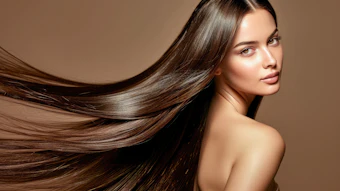
Permanent shaping of hair by non-chemical means
WIPO Patent Application WO/2010/096598
Publication date: Aug. 26, 2010
Assignee: (not provided)
The invention is in the field of hair styling. More particularly, it is in the field of permanent hair shaping by non-chemical means. The present invention is a hair shaping topical composition comprising one or more materials that emit or are induced to emit electromagnetic radiation at wavelengths that directly affect the disulfide (S-S) bonds in hair (a form of tertiary protein structure). However, the compositions and methods of the invention also affect secondary structure of hair proteins. The photon energies employed are well below the dissociation energy of a ground state disulfide bond. The intensity of the radiation is controlled and sufficient to break and/or weaken enough disulfide bonds, so that hair reshaping is enabled or facilitated.
The treatment may be effective on its own or as an adjunct. Such techniques are non-chemical. By "non-chemical," the inventors mean that there is no need for a user to apply a molecule that acts as a reagent or catalyst in respect of disulphide bond cleavage and reformation. Further, the authors mean that pure energy is supplied to the disulfide bonds in hair. In this way, all or most of the damage associated with chemical treatments is avoided. By supplying a radiation that is specific to and resonant with the disulfide bond, collateral damage is minimized. Also, as soon as the radiation is removed, the process of bond cleavage stops, unlike mixtures of reagents that cannot be separated, and the reaction runs until one or more reagents are exhausted.
The invention includes compositions that may be washed out of the hair after reshaping has occurred and compositions that are intended to remain in the hair for additional or extended benefits. A standard section of hair can be identified according to any set of criteria that may be of interest such as: mass of the section of hair, color, hair shape (straight or curly), ethnicity, condition (i.e. brittle or strong, limp or bouncy, dull or shiny, etc.) and so forth. Once a standard section of hair is defined, a defined amount of a composition containing a candidate material is applied to the standard section of hair and tension is applied. The tension is appropriate for the desired effect.
Transforming a submitted image of a person based on a condition of the person
US Patent 7792379
Publication date: Sept. 7, 2010
Assignee: Accenture Global Services GmbH (Germany)
The present patent describes apparatuses, computer media and methods for altering a submitted image of a person that can be associated with various data parameters including ethnic group, e.g. Caucasian of English extraction or Asian of Chinese extraction; health condition; age; weight; height; sex and dietary information. According to the patent, the submitted image is transformed in accordance with the associated data and processed to obtain cluster information; the transformation parameter is then determined from cluster information and applied to a portion of the submitted image to render a transformed image. In addition, a transformation parameter may include a texture alteration parameter, a hair descriptive parameter, or a reshaping parameter. An error measure may be determined that gauges a discrepancy between a transformed image and an actual image.
Amplification methods and compositions
US Patent 7790393
Publication date: Sept. 7, 2010
Assignee: Third Wave Technologies Inc.
With the completion of the nucleic acid sequencing of the human genome, the demand for fast, reliable, cost-effective and user-friendly tests for genomics research and related drug design efforts has greatly increased. A number of institutions are actively mining the available genetic sequence information to identify correlations between genes, gene expression and phenotypes (e.g., disease states, metabolic responses, and the like). These analyses include an attempt to characterize the effect of gene mutations and genetic and gene expression heterogeneity in individuals and populations.
However, despite the wealth of sequence information available, information on the frequency and clinical relevance of many polymorphisms and other variations has yet to be obtained and validated. The human genome sequence generated was based on DNA samples collected from five donors who identified themselves as Hispanic, Asian, Caucasian, or African-American. The small number of human samples used to generate the reference sequences does not reflect the genetic diversity among population groups and individuals, thus attempts to analyze individuals based on the genome sequence information often fail because the target sequence for many individuals differs from the reference sequence. Differences may be on an individual-by-individual basis, but many follow regional population patterns, e.g., many correlate highly to race, ethnicity, geographic local, age, environmental exposure, etc.
Thus, the present invention provides methods and routines for developing and optimizing nucleic acid detection assays for use in basic research, clinical research, and for the development of clinical detection assays. In particular, the present invention provides methods for designing oligonucleotide primers to be used in multiplex amplification reactions. The present invention also provides methods to optimize multiplex amplification reactions.
Methods of modulating the activity of the MC1 receptor and treatment of conditions related to this receptor
WIPO Patent Application WO/2010/096853
Publication date: Sept. 2, 2010
Assignee: Mimetica Pty., Ltd. (Australia)
The present invention provides compounds that are useful for binding and/or modulating the biological activity of the melanocortin-1 receptor (MC1R). Compounds of this invention can be used to treat diseases and/or conditions in which modulation of MC1R is beneficial. Such diseases and/or conditions include, but are not limited to: hyperpigmentation (including melasma), hypopigmentation (including vitiligo), melanoma, basal cell carcinoma, squamous cell carcinoma, erythropoietic protoporphyria, polymorphous light eruption, solar urticaria, photosensitivity, sunburn, inflammatory diseases, aberrant fibroblast activity and pain.
Sequence variants for inferring human pigmentation patterns
US Patent Application 20100216655
Publication date: Aug. 26, 2010
Inventors: Sulem, Patrick (Reykjavik, IS)
The present invention discloses variants that are predictive of human pigmentation patterns. The invention furthermore relates to variants that are useful for determining risk of skin cancer, including melanoma and basal cell carcinoma. The disclosed variants can be utilized for the determination of the natural pigmentation patterns of a human individual, and for determining a susceptibility to melanoma and basal cell carcinoma, from a sample of genetic material. Methods and kits including the variants described are useful in, e.g., forensic testing and diagnostic applications.
Skin analysis methods
WIPO Patent Application WO/2010/093503
Publication date: Aug.19, 2010
Assignee: MySkin Inc.
The present invention generally relates to a skin care device comprising an electromagnetic radiation source capable of directing incident electromagnetic radiation to a location on the skin of a user, a radiation detector for measuring various parameters of radiation re-emitted from the location, and a skin condition analysis module coupled to the detector. This analysis module is capable of generating a skin condition assessment in real-time, based partly on at least one of RGB analysis and diffused reflectance analysis of the radiation parameters. In accordance with the described embodiments of the present technique, the device provides a mirror or a reflecting surface for capturing an image of the consumer's desired body part. It then presents product recommendations to consumers by projecting product choices on the screen of the mirror. From these options, consumers may choose a product. In some embodiments, the skin condition analysis module may be adapted to include user information such as age, gender, ethnic group and the like, and such information may be used to build a user profile and analyze the consumer's skin condition.
Kits and methods for evaluating hair
US Patent 7749763
Publication date: July 6, 2010
Assignee: L'Oréal S.A.
The present invention generally relates to kits and methods for analyzing or evaluating hair, particularly for determining the amount of damage to hair, which involves placing hair into a solution comprising at least one metal ion so that an amount of the metal ion is attached to the hair, removing the hair from the solution, determining the amount of metal ion attached to the hair, and finally, determining the amount of damage to the hair based upon the amount of metal ion attached to the hair. Such kits and methods reportedly allow for rapid, quantitative analysis of hair, particularly determination of hair damage.
The patent discloses two particular studies of African-American hair from various donors. In the first , one lot of African-American hair was first relaxed with Mixani Medium/Normal Lye Relaxer, and then colored with three different dyeing products. These treatments were carried out two separate times by the same staff member, resulting in samples. The samples were analyzed using the nickel probe method and the difference between the untreated hair and relaxed hair was clearly seen for both groups. Also seen were the differences in nickel uptake related to the various dyes.
Method, system and computer program product for providing cosmetic application instructions using arc lines
US Patent Application 20100142755
Publication date: June 10, 2010
Assignee: Perfect Shape Cosmetics
According to this patent, many individuals do not know how to produce their optimal facial look. The "Perfect Shape" Makeover Process is designed to empower individuals to achieve this transformation. This system instructs the client how to use makeup to reshape each of his or her facial features to optimize their natural appearance. While various parameters are described, race and ethnic challenges that makeup can reportedly solve include when an individual's nose looks too small or large, or if their lips appear too thin or thick. According to the invention, individuals with very fair skin or flat appearing faces may need more detailed instructions on how to create sculpted features whereas others may need individualized steps to minimize overly prominent lips and noses, as well as different shades of highlights.