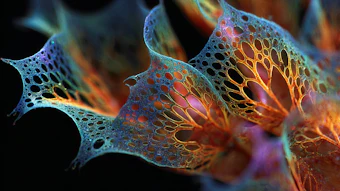
Among the several technologies being studied at Dow Corning for delivering or enhancing actives in final formulations (see sidebar) are silicone vesicles, which use an encapsulation technique. Silicone vesicles are microstructures formed via the assembly of individual surface-active silicone polymers. They can be viewed as analogs to liposomes, except their wall material is composed of polyether-modified dimethicone – a class of silicones formerly known by the INCI name dimethicone copolyol, but now known by more specific INCI names such as PEG-12 dimethicone.
This article describes Dow Corning’s silicone-based vesicles, methods to test them, and their potential to encapsulate oilsoluble or water-soluble actives.
Incorporation of water-incompatible substances into aqueous finished products is an important cosmetic formulation need. This need is often met by encapsulating the water-incompatible substances using amphiphilic colloidal systems in microemulsions or in liposomes.
There are important distinctions between microemulsion and liposome approaches. Microemulsions are thermodynamically stable systems and are relatively easy to prepare, but the microemulsion droplets rapidly change/re-equilibrate their phase once formulated into products and after application. The stability of a microemulsion can also be greatly influenced by the type and concentration of actives it encapsulates.