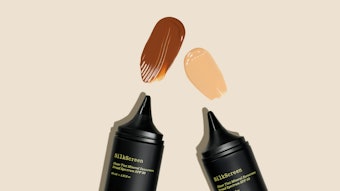
Sunscreens are designed to provide broad-spectrum protection to skin against the damaging effects of ultraviolet (UV) radiation. In doing so, they prevent sunburn and help to reduce the risk of skin cancer.1 Today’s consumers are increasingly concerned about the side effects of photoaging, e.g., fine lines, wrinkles, sagging, age spots, etc., which compromise skin’s youthful appearance.
Photoaging is believed to be triggered primarily by reactive oxygen species (ROS).2 ROS form within the epidermis and dermis when endogenous chromophores such as urocanic acid, nicotinamide adenine dinucleotide (NADH), melanin and collagen absorb UV radiation then dissipate the absorbed energy through pathways that sensitize the formation of ROS. Just a few of the ROS found in the skin include singlet oxygen (1O2), hydrogen peroxide (H2O2) and superoxide radical anions (O2-•). These ROS can react with lipid membranes, proteins, DNA and most other molecules in their paths. While intrinsic antioxidant mechanisms within the extracellular and intracellular spaces of the epidermis and dermis counteract some UV-induced ROS, these mechanisms can become overloaded easily, resulting in ROS-mediated cell damage.3, 4