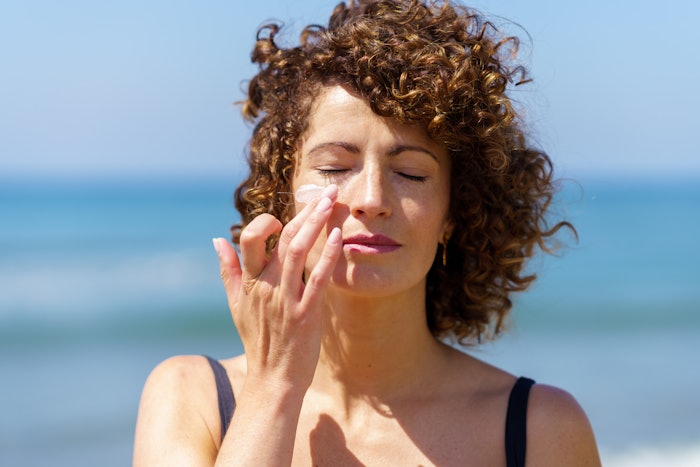
Editor's note: It is obvious that UVA and UVB radiation damage human skin. Therefore, the question of whether UV damage in skin can be adequately repaired remains to be answered, as this article from our archives explains.
This article is only available to registered users.
Log In to View the Full Article
Editor's note: It is obvious that UVA and UVB radiation damage human skin. Therefore, the question of whether UV damage in skin can be adequately repaired remains to be answered, as this article from our archives explains.
The importance of sun protection is known in today’s society better than it was in earlier decades. Specifically, the importance of protecting skin from both UVB radiation (290–320 nm), since it can cause severe sunburn damage and cancer, and UVA radiation (320–400 nm), which penetrates deeper into skin and produces reactive oxygen species (ROS) that can cause DNA, cell and tissue damage, is well-known. UVA is also noted to induce immune suppression, leading to the development of malignant melanoma and squamous tumors, along with photosensitivity, photodermatoses, photoallergies and the loss skin elasticity—which can lead to an increase in wrinkles.
In 1983, L. Kligman wrote about damage to the human dermis caused by chronic UV radiation.1 In this study, researchers exposed hairless mice to UV radiation and found that repair can occur if the skin is protected with sunscreens that provide UVB protection with an SPF of 6 and 15, in addition to UVA protection. Repair was found to occur in situ in severely damaged skin in the subepidermal reconstruction zones of new connective tissue, with parallel collagen bundles and a network of fine elastic fibers.
Gilchrest also provided a review of UV radiation damage and clinical repair.2 According to his review, skin loses elasticity and its metabolic activity slows with age. UV radiation exposure causes thickening of the epidermis and increased melanogenesis.
Further, massive deposition of abnormal elastic fibers (elastosis), collagen degeneration, and twisted dilated microvasculature can also occur. According to Gilchrest, the regular use of sunscreens does not provide full repair but with sun protecting agents, moisturizers and topical ingredients including retinols and alpha hydroxyl acids, some repair is possible; such as keratinocyte ultrastructural repair. Overall, his review illustrates the aging processes of UV-exposed skin and demonstrates that many of the unwanted changes can be improved with topical therapy. Further, work published by de Gruijl et al. describes the importance of repair to UV-induced DNA damage and skin carcinogenesis.3 Mutations in the genetic coding of protein in the Hedgehog pathway in basal cell carcinomas (BCCs) were found to lead to persistent disturbances that were passed along to daughter cells—and solar UVB radiation was a main cause of these mutations, contributing to skin carcinogenesis.
It is obvious that UVA and UVB radiation damage human skin. Therefore, the question of whether UV damaged skin can be adequately repaired remains to be answered.
Key Components for Sun Damage Prevention and Repair
Sunscreen components: Key to sun damage prevention are sunscreen actives that are generally classified as organic or inorganic UV filters. Organic UV filters strongly absorb radiation at specific wavelengths and are transparent to visible light.4, 5 There are many efficacious UV filters that can be incorporated into most sunscreen formulations. Popular UVB filters include homosalate, octisalate and octocrylene, while avobenzone is a popular UVA filter; titanium dioxide, zinc oxide and oxybenzone can provide both broad-spectrum UVB and UVA protection.
Additionally, a number of effective UV sunscreen actives are currently awaiting approval by the US Food and Drug Administration (FDA), such as drometrizole trisiloxane, octyl triazone, bemotrizinol and diethylamino hydroxybenzoyl hexyl benzoate. Of course, a single sunscreen active is not sufficient to cover the full spectrum of UV radiation, which is necessary to protect the skin.
Sunscreen and sun-exposed treatment formulas come in many forms but two-phase emulsions are the most popular delivery system. These emulsions can be classified as w/o or o/w, both having distinct merits such as versatility of aesthetics or performance efficacy of sunscreening agents. W/O emulsions deliver better water resistance and higher effective-yielding SPF. Conversely, o/w emulsions are more widely used due to their lower inherent cost (higher water content). Lately, more formulators are creating aerosol sunscreen sprays because they allow for quick, clean and easy application. No matter what type of formulation and applicator is used, however, the concern for adequate and effective application by the consumer remains.
Sun damage repair: Sun damage repair can be imparted via different mechanisms and in varying degrees. Botanicals are one example of functional ingredients that repair UV damage through antioxidant effects and the sequestering of ROS formation. Typical botanical extracts chosen are pomegranate, grape and berries such as açai. While these extracts possess antioxidant properties to neutralize ROS formation on UV-exposed skin, they would need to be used in active levels greater than 0.1% to provide their benefits topically.
Besides botanicals, peptides such as copper tripeptide-1 and palmitoyl penta- peptide-3 have been used to initiate skin repair mechanisms such as: stimulating collagen; promoting synthesis of elastin, proteoglycans, glycosaminoglycans and other components of the skin matrix; stimulating capillary formation and the ability to regulate the growth rate and migration of different types of cells; imparting anti-inflammatory action; and enhancing skin defense mechanisms such as promoting the release of oxidation-promoting iron into the tissues as well as detoxification. Other ingredients reported to provide repair from UV radiation damage are vitamin C and retinoids (e.g., retinol) in addition to both of their analogs.
Sunscreen and Sun Repair Patents
In relation to sun damage prevention before, during and after UV exposure, following are some recently issued patents relevant to this product category. Vitamin D for after-sun repair: Research behind this patent found that while the increased use of sunscreens limits damage to the DNA, it may promote cancer growth by preventing vitamin D synthesis in the skin.6 However, according to the invention, the beneficial effects of UV radiation can be obtained by incorporating vitamin D into topical after-sun treatment lotions and creams.
Vitamin D in an after-sun product is reportedly activated by the skin to form calcitriol for cancer prevention and to promote cellular growth and differentiation. Therefore, topical after-sun products with vitamin D may also be beneficial in preventing photoaging.
Creatine for skin preservation: The present invention relates to methods for protecting skin tissue against age-related damage or insults such as harmful UV radiation, stress and fatigue by preserving energy pools and protecting against free radical production and oxidative stress.7 These effects are achieved by topically applying a creatine compound or compounds that modulate one or more of the structural or functional components of the creatine kinase/phosphoro-creatine system sufficient to prevent, reduce or ameliorate skin damage or skin aging.
According to the inventors, the creatine kinase/creatine phosphate energy system is only one component of an elaborate energy-generating system found in tissue with high and fluctuating energy requirements. Specifically, the components of the creatine energy system include the enzyme creatine kinase, the substrates creatine and creatine phosphate, and the transporter of creatine. The reaction catalyzed by creatine kinase is illustrated by the equation: MgADP+PCr./MgATP.
Some of the functions associated with this system include efficient regeneration of energy in cells with fluctuating and high energy demands, energy transport to different parts of the cell, phosphoryl transfer activity, ion transport regulation, and involvement in signal transduction pathways.
The natural creatine compounds and different hydration or salt forms that can be used in the present method include: creatine, creatine phosphate and analogs of these compounds such as: creatine-pyruvate; creatine-ascorbate; cyclocreatine; 3 guanidinopropionic acid; guanidinoacetate; homocyclo-creatine; guanidino benzoates, which can act as substrates or substrate analogs for creatine kinase; molecules that mimic the biological activity of creatine; and molecules that modulate the creatine kinase system. These entities act as energy-generating systems and antioxidants to preserve the skin against damage caused by aging and secondary insults such as harmful sun radiation, stress and fatigue.
Natural sunscreen composition: Disclosed in this patent is a natural sunscreen composition formulated with extracts of Hedychium spicatum and/or Alpinia galangal, both of which contain active sunscreen agents.8 Processes for producing the same are also described. This sunscreen composition was devised to protect the skin from the harmful effects of both short wavelength UVB rays and long wavelength UVA rays.
Recent Commercial Launches
A number of recent products launched claim to prevent or repair sun damage. The following few were chosen to demonstrate claim positioning and how specific ingredients are incorporated to support these claims. In particular, these products will soothe irritated skin and hydrate it to support internal repair mechanisms. In this author’s opinion, most of the botanical additives are likely not present in sufficient quantities to elicit a cosmeceutical effect but are instead chosen based on antioxidant or skin-calming claims.
The information presented is taken from publicly available sources and is included for illustrative purposes only. The estimated ingredient ranges are provided as a starting point from which formulators can build their own unique formulas.
DermaSel Spa Totes Meer Maske After Sun-Repair (Dead Sea mask): This mask, shown in Figure 1, is formulated with an active ingredient complexa comprised of butylene glycol, acetyl tyrosine, proline, hydrogenated vegetable protein and adenosine triphosphate to support natural skin regeneration. The product contains lime tree blossom extract to soothe skin and olive oil to visibly smooth fine lines and wrinkles. A comprehensive list of the product’s ingredients and functions is shown in Table 1. If used on a regular basis, the creamy mask is said to fight against skin-damaging sun rays.
3Lab Perfect “C” Treatment Serum: This serum, shown in Figure 2, is said to tone and firm the skin while nourishing and repairing damaged skin cells. It is formulated with sodium ascorbyl phosphateb; ascorbyl glucoside, a vitamin C derivative said to extend the effectiveness of the serum; and apple stem cell technology to help promote healthy cells and delay the look of aging. In addition, a peptide is included to increase the production of collagen as well as a peptide complexc to help stimulate fibroblast production. Further, açai berry extract is employed for its antioxidant properties and astaxanthin to protect the skin from oxidative stress. A comprehensive list of the product’s ingredients and functions is shown in Table 2. The product is claimed to decrease the appearance of fine lines and wrinkles, minimize age spots and hyperpigmentation caused by sun damage, and improve the elasticity and luminosity of the skin.
H2O+ Spa Body Soother Solar Relief Gel: This gel, shown in Figure 3, contains a combination of aloe vera, hydrating marine extracts, sea fennel, wakame, nori, spirulina, vitamins A, C and E, and provitamin B to provide antioxidant, reparative, anti-aging, hydrating and cooling properties for skin that has been exposed to the sun. A comprehensive list of the product’s ingredients and functions is shown in Table 3.
DERMAdoctor Photodynamic Therapy Sunlight-Activated Laser Lotion SPF 30: This photo rejuvenating, solar-powered lotion, shown in Figure 4, reportedly captures UV light and transforms it into visible red light, a proven energy source for eliciting anti-aging effects on the skin. It is formulated with noni polyphenols and tricalcium to reportedly absorb and emit energy and encourage the production of collagen and elastin fibers. Vitamin D from shiitake mushroom is included for well-being, as well as the sunscreen booster benzylidene diemethoxydimethylindanone and pomegranate, ubiquinone, vitamin E, cucumber, green tea and white tea extracts to fight against free radical damage. A comprehensive list of the product’s ingredients, functions and functions is shown in Table 4.
The company claims the lotion leaves skin smoother, brighter and firmer. In addition, it is reported to reduce the appearance of fine lines and wrinkles; improve skin tone and texture; improve the appearance of redness, dryness, roughness, age spots, skin discoloration and pore size; and to even skin’s complexion. The lotion is said to be activated with normal daily activity and to keep working throughout the day.
Formulator Beware
Ingredients that protect skin from UV damage and promote the repair of UV-damaged skin are not difficult to use but the real issue is whether a sufficient amount of them is incorporated into the formulation. The sun repair category is ripe for clinical improvement as the personal care industry often includes ambiguous sun repair claims with products that may not meet consumer expectations. As an example, how does the consumer really judge whether a product in fact repairs sun damage? And most often, the benefits are transient and not permanent changes.
A significant amount of scientific work is being conducted on the damage inflicted to skin by UV radiation. Therefore, finding and using sufficient amounts of the appropriated actives to elicit a clinical response is possible. The future of this product niche will be in better supporting sun repair claims with long-lasting improvements to damaged skin.
Reproduction of the article without expressed consent is strictly prohibited.
References
Send e-mail to [email protected].
1. LH Kligman, FJ Akin and AM Kligman, Sunscreens promote repair of ultraviolet radiation-induced dermal damage, J Invest Dermatol 81 98–102 (1983)
2. BA Gilchrest, A review of skin ageing and its medical therapy, Br J Dermatol 135 6 867–875 (1996)
3. FR de Gruijl, HJ van Kranen and LHF Mullenders, UV-induced DNA damage, repair, mutations and oncogenic pathways in skin cancer, J Photochem Photobiol B: Biol 63 1–3 19–27 (2001)
4. NA Shaath, Sunscreens: Regulations and Commercial Development, 3rd ed, Boca Raton, FL, USA, Taylor & Francis Group (2005)
5. ZD Draelos, Cosmetic Dermatology: Product & Procedures, Chapter 19, Hoboken, NJ, USA: Wiley-Blackwell, (2009)
6. US Patent Application 20100093674, Skin cancer prevention method and product, JR Person (Apr 15, 2010)
7. US Patent Application 20100226870, Use of creatine or creatine compounds for skin preservation, R Kaddurah-Daouk (Sep 9, 2010)
8. US Patent Application 20080095721, Natural sunscreen compositions and processes for producing the same, SK Mitra et al (Sep 17, 2009)