Today, hair care formulators aiming to formulate for the natural market are in a quandary as the performance of modern products is driven more and more by the use of innovative new synthetic materials. The bench chemist witnesses the weekly arrival of new iterations as manufacturers graft one functionality onto another to try to outdo the competition. Cosmetic chemists cannot seem to get enough of different silicone copolymers, acrylate cross polymers, quaterniums, polyquaterniums and syndets—and whatever hybrids the organic chemists can create—since high performance is generally imagined to require high-tech ingredients.
However, some formulators march to the beat of a different drummer, guided by a more natural rhythm, so their ingredient choices may be more restricted. Of the raw materials essential for advanced hair formulas, the two major types that are problematic for natural recipes are polymers and surfactants. This is not because they do not exist in nature but because formulators constrain themselves within the boundaries of what is viewed as acceptable in formulas labeled as natural. Regardless of which certifying organization is used to guide formulating choices, performance should not be sacrificed for a natural certification. This dictum from marketing and management holds sway in most companies unless a product line raison d’etre overrides it.
Naturals Guidance
While the industry is not yet at the point where one certifying body has come to the forefront, there seems to be a consensus of do’s and don’ts among them. Lists of acceptable and unacceptable materials are generated based on safety and environmental concerns. In addition, certain chemical and physical processes may be given the imprimatur of that organization in order to display their logo. Under all natural and organic cosmetic standards, the agricultural practices of irradiation for sterilization and the use of sewage sludge fertilizer, or employment of genetically modified organisms, are as universally forbidden as they are with the original farm products. Further, some chemical processes including ethoxylation are universally restricted, while some processes such as hydrogenation and esterification are generally accepted.
Ecocert: Many formulators and raw material suppliers have jumped on the Ecocert bandwagon. This may be because Ecocert led the way initially, thus the volume of materials available to formulators under this certification standard is significantly larger than others. But even when Ecocert-approved cosmetics reach store shelves, many consumers, including those familiar with natural and organic certifications, will scratch their heads and wonder how many of the “chemical-sounding” ingredients listed on the label are natural. To paraphrase another cliché or platitude, natural is in the mind of the beholder. It’s all about perception; consumers are put off by chemical names, and INCI nomenclature does not always help in this respect—in some cases, baffling even chemists about what chemicals are actually contained in the product.
COSMOS: The Cosmetics Organic Standard (COSMOS)1 in Europe arose as a consensus among six national organizations, including Ecocert. This group published a final rule in January 2010 that accommodates different levels of ecotoxicology for different degrees of biodegradability—a fairly rational way to measure relative environmental risk. The greater the aquatic toxicity, up to a maximum, the more completely the compound must biodegrade. Conversely, the lower the toxicity, the less biodegradable the compound must be, within limits. Restricted compounds that persist in the environment, that are not biodegradable, or that are bioaccumulative, i.e., retained in an organism’s tissues, are prohibited.
NaTrue: NaTrue, another European natural products certifier, recently announced2 it will form a harmonized natural standard in collaboration with NSF International, brokered by the Quality Assurance International (QAI) organization.3 QAI has taken a lead in promoting the NSF/ANSI 305 standards that it administers and is proactive in providing education for these standards. NaTrue’s standard states that any detergent surfactants used must be completely biodegradable in accordance with the European Commission’s Regulation on Detergents; however, other materials were not specifically addressed as recently as early February 2011.4
USDA: In the United States, natural product guidance was recently complicated by the addition of the new US Department of Agriculture (USDA) category of “biopreferred,” i.e. biobased fabricated and formulated products. Such products are distinctly different from products certified as organic at one of the four levels by the National Organic Program (NOP). Both of these certifications were promulgated by the USDA. The latter, USDA Organic, was developed to certify agricultural products, clearly the domain of USDA, while the former was initially developed to drive federal procurement practices in a more sustainable direction. This more recent biopreferred standard now anoints a wide variety of consumer products, including personal care items such as hand cleansers, sanitizers, lip products and more recently, hair care, as presumably more sustainable for the environment.
To be designated as biobased, a consumer product must simply meet the requirement for what portion of its content is derived from a biological origin. Percentages for each consumer category varies extensively: carpets 7%, towels 12%, glass cleaners 49%, lip products 82%, shampoos 66%, conditioners 78%, etc.5 The jurisdiction here appears to span several agencies including the US Food and Drug Administration (FDA), the US Environmental Protection Agency, and the US Consumer Product Safety Commission. With this new biopreferred standard, the USDA likely does not imagine it could be opening another Pandora’s box as it did with the NOP certification since this standard was developed for farm and derivative food products and is therefore difficult to apply to personal care ingredients and products—hence the promulgation of the aforementioned NSF/ANSI 305 standards for personal care products containing organic ingredients.
The personal care industry is aching for ways to market its products as green—whether they are truly sustainable, milder to the skin, or simply derived from natural origins. Therefore, the new biopreferred standard presents marketers with a unique product positioning especially if there is a government agency that sanctions the claim because even with the continued antigovernment rhetoric in the media, consumers still trust government agencies as a credible arbiter of advertising claims.
At the Bench
From a pragmatic perspective, this column aims to address what materials consumers may accept and product developers can use to formulate natural hair care products. Most hair care products fit into what could be considered a holistic product paradigm, meaning the whole product itself delivers consumer benefits. This is different from the drug delivery paradigm for personal care formulas, wherein a defined set of actives such as sunscreens, antioxidants, anti-acne and anti-aging materials, etc., deliver the desired benefits. Antidandruff shampoos as well as, arguably, permanent waves or hair colorants also fall into this latter category. In this paradigm, the active ingredients perform a function and the surrounding product is an optimized vehicle or package that carries those goods to the “address” on the label—i.e., the skin, scalp or hair shaft—to deliver the desired benefits. The presumed benefits that accrue from the product feature, in this case the feature of being natural, are enhanced safety or mildness.
These two product development paradigms are, in a sense, arbitrary distinctions, with the lines blurred for many products but they do provide some direction as to the strategies for both goal-directed formulating on the front end and claim substantiation testing on the back end. By examining traditional hair care categories for their critical performance ingredients, formulators can determine what functionality is potentially available from the use of natural ingredients. Some benefits may be more difficult than others to provide through natural ingredients since they were designed into the synthetic molecules in a structure-function approach.
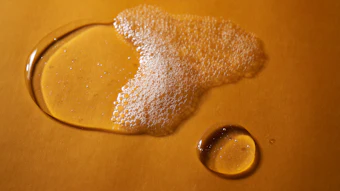
Shampoos: Shampoos, for all their ancillary benefits, are primarily meant to cleanse the hair. While the actual amount and type of surfactant necessary to promote the roll-up mechanism of soil and oil removal from fibers is quite minimal, the current consumer is looking for copious foam; in fact, it has been observed that many Asian consumers seek products whose foam density gives a “white glove” appearance on the hands during use. Therefore, the industry is compelled to come up with natural dense and high foamers. One type of natural surfactant found in a few plant varieties is the saponins, steroidal glycosides that readily generate foam in water. They work well for beverages where they are generally recognized as safe (GRAS) and impart copious foam to frothy drinks. However, in personal care, the do not impart a lather as rich as consumers expect from their shampoos at conventional use levels of less than 1%.
Of course, formulators could hark back to the old fashioned technology of liquid soaps by using unsaturated vegetable oil fatty acids, as some pioneers in natural products still do. Soaps made with oils from unsaturated fatty acids, such as olive, the traditional castile soap in Renaissaince Spain, or hemp oil, can remain clear in a concentrated solution. Mixed with coconut to enhance the lather, these liquid soaps do cleanse well but they experience solubility problems in hard water. One suggestion would be to add natural chelating agents such as phytate salts or inositol hexaphosphate to chelate with the divalent calcium and magnesium ions. However, pH effects may limit the usefulness of such techniques. Some such commercial agricultural sources include rice and soy.
If natural certification by bodies such as Ecocert is the standard followed, the surfactant choice becomes much wider, encompassing anionics such as acyl glutamates, acyl hydrolyzed protein salts and even alkyl sulfates and sulfosuccinates; amphoterics like the cocoamphoacetates; and nonionics in the alkyl glucoside family. Ranges of mild, high-foaming products can be formulated but the biggest concern is how to thicken these shampoos effectively and cheaply.
Formulators cannot get away with the conventional salt-thickening method used in many mass market, dollar-a-bottle shampoo variants but there are some natural polymers, such as xanthan gum, that can successfully be used. Work has also been done using magnesium sulfate (Epsom salts) in combination with fatty amphiphiles such as glyceryl laurate to thicken glutamate cleansers by building surfactant association structures akin to those using the cheaper monovalent salts.
Hair conditioners: Hair conditioners deliver the eponymous benefit of hair conditioning, but what exactly does this mean? Looking at how one actually tests hair conditioning—i.e., via tress testing and half-head salon testing—can provide formulators with answers. In answer to these tests, key conditioner benefits would therefore include reducing the force necessary to comb through wet and dry hair fibers as well as reducing the surface charge on hair fibers, in this case excess negative energy, to reduce electrostatic repulsion and the macroscopic appearance of fly-away. And what better way to impart these effects than applying a species that has both a positive charge and a long molecular chain of low intermolecular attractive forces, such as hydrocarbon or silicone polymers. In the conditioner arena, these would be cationic surfactants, exemplified by quaternary ammonium salts or quats, but these are severely restricted by most private natural certifiers.
However, formulators can look to amino acid derivatives as a way out of this dilemma. Two examples are PCA ethyl cocoyl arginate and brassicyl isoleucinate esylate, which can provide hair conditioning. Like their parent compounds, i.e. proteins and amino acids, they are naturally amphoteric. Thus, the pH of the system governs their functionality, as dictated by their isoionic points. Although not promoted as heavily as in the past, the acyl derivatives of amino acids and proteins may eventually be the shining light of naturals for hair treatments—both for cleansing and conditioning. Combinations of vegetable oils and jojoba oil and other emollients also find their way into hair conditioners, as well as lecithin, usually of soy origin, all of which are available in NOP organic versions. These materials have some substantivity to the hair cuticle, virgin hair more than damaged, and can serve as a friction-reducing film on the hair shaft. These ingredients are also seen in conditioning shampoos and body washes, although most of their conditioning effects are washed down the drain.
It is important to remember that when looking at natural derivatives, some simple naturals can be derived via synthetic routes. Glycine, the smallest amino acid, for example, is abundant in nature but it is difficult to distinguish the natural from the synthetic; having no substituent on the carbon between the carboxyl and amine groups, it does not have positive and negative optical isomers as all the other proteogenic amino acids do. One cannot tell the feedstock source simply because it is not chiral. The same is also true for glycerol-based derivatives; there are both synthetic and naturally derived versions from vegetable oils and fats, as well as natural biological building blocks of animal origin, so formulators may want to ask their suppliers to certify the source.
Further, the same can also be an issue also with preservatives and fragrances. Some nature-identical preservatives are allowed under certain certification systems, e.g. NaTrue, but are only allowed under NSF/ANSI 305 if they are derived from non-petrochemcial feedstocks. Fragrance also can have natural roots, and many flavor and fragrance houses can provide natural fragrances. Combinations of related essential oils, many available as NOP Organic, can form pleasant compositions but professionally developed natural fragrances are better suited to most products. Aromatic extracts of fruits and flowers are also available if that is the chosen marketing direction.
There are, however, severe limitations in relation to color since many colors extracted from plants are not approved for cosmetic use, even if they are approved for food and drug use. The soluble dyes that can be used include caramel, annatto, beta-carotene and carmine from the Mexican cochineal insect.6 Formulators are not likely to use inorganic pigments such as titanium dioxide, iron oxides or chrome oxides, which go into color cosmetics, in hair care. There is also the unique copper chelate disodium EDTA-copper, which is only approved for use as a shampoo colorant but unfortunately it is not natural.
Styling aids: Styling aids and hair sprays depend upon the film-forming or simple adhesive properties of their dry residues. Fiber bundles typically are either coated with a solution of polymer or sprayed with a mist of droplets that “spot-welds” the fibers together, as numerous hair chemists have metaphorically quipped, to affect the style and freeze it in place. Such polymers can come from natural sources–either carbohydrate- or protein-based. The drawback here is their reduced humidity resistance. Proteins such as corn zein and carbohydrates such as plant gums, e.g. acacia or Arabic gum and pectin, currently are used.
In addition, a unique thickening combination of xanthan and konjac mannan carbohydrates reportedly yields clear gels, and potentially could be one alternate to the synthetic polyacrylate carbomer in making clear gels.7 Finally, to modify flexibility and reduce flaking, glycerol may be considered as a universal plasticizer and other glycols, such as fermentation-sourced 1,3 propylene glycol, can be used. In addition, besides being a good cosolvent in water-based products, ethanol at >15% can be a fail-safe preservative in hair sprays but readers should note the importance of microbial challenge testing the final formula in all cases. The formula pH and water activity can also provide strategies to aid in preservation with low pH levels where feasible. The use of water activity control as a strategy has been suggested by Steinberg,8 as water activity can have significant bacteristatic effects in highly concentrated systems like shampoos but yeast and mold will still be problematic. An instrumental determination of water activity is therefore essential.
Conclusions
A full compendium of natural ingredients for hair care would be difficult to compile at any point in time as more materials are being invented or their utility in personal care discovered every day. Many will gain approval by Ecocert, QAI, NaTrue or the Natural Products Association and become additions to the natural formulators’ palette. A complete volume would be too extensive to catalog here but if product developers simply want to work with Mother Nature as she provides, the palette will be limited to nature-made metabolite, e.g. proteins, lipids and carbohydrates that were found on farms, in fields and in oceans before the advent of organic synthetic chemistry. Otherwise formulators can choose a natural certifier and consistently apply their guidelines.
The future will unfold with new ingredients for natural formulations as green chemistry advances yield new functional ingredients. This consumer need for natural and sustainable technologies will not stifle creativity but instead add a new direction to innovation. The bench chemist should monitor activity in the regulatory arena as the overlap between the FDA, USDA and Federal Trade Commission jurisdiction is worked out; in fact, the Personal Care Products Council has established an Organic/Natural Committee to keep abreast of these developments.9 In addition, on both the domestic and international fronts, formulators should follow the non-governmental organizations that are promulgating natural standards as these are evolving as well. Good luck!
Reproduction of the article without expressed consent is strictly prohibited.
References
Send e-mail to [email protected].
1. www.cosmos-standard.org
2. www.natrue.org/articles-news/read/article/nsf-international-partners-with-natrue-to-develop-first-american-national-standard-for-natural-cosme/?no_cache=1
3. www.qai-inc.com
4. www.natrue.org/fileadmin/natrue/downloads/Criteria_English_Version_2.pdf
5. www.biopreferred.gov
6. www.accessdata.fda.gov/scripts cdrh/cfdocs/ cfcfr/CFRSearch.cfm?CFRPart=73&showFR =17
7. PA Williams et.al. Fluid gels based on natural polymers for cosmetic applications, in Polymers: The Pathway to Versatile Technology, A.J. O’Lenick Jr, ed, Allured Business Media, Carol Stream, IL USA (2011)
8. www.cosmeticsandtoiletries.com/formulating/ingredient/preservatives/112901129.html
9. www.personalcarecouncil.org/newsroom/ 20100608