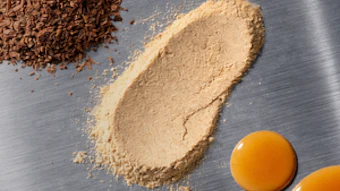
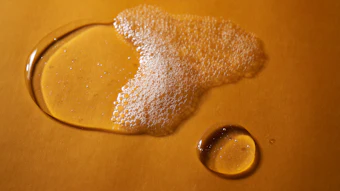
Early attempts at conditioning shampoos sought to include liquid oleoresin from wood in products that were dubbed balsam shampoos. A two-phase shampoo was introduced that consisted of a mineral oil layer floating on top of an aqueous detergent layer, with an alkyl alcohol as an emulsion destabilizer. This product was designed to deposity the oily material during the shampooing process.
However, wood rosin was difficult to formulate in a stable homogenous shampoo. It tended to flocculate, coagulate and separate from the composition. Wood rosin deposited on hair because it was imcompatible with dilute shampoo and it was sticky. Unfortunately, these "attricutes" also caused the rosin to build up on the hair with successive shampoo cycles and this was unpopular with consumers.