Log In/Register
Facebook icon
LinkedIn icon
Instagram icon
Testing
Animal Alternatives
Efficacy
Method/Process
Microbiology
Saftey/Stability
Sensory
Sun Protection
Tech/Equipment/Services
Method/Process
Method/Process
The Predictive Formulation Era Arrives as L’Oréal Brings Nvidia Alchemi AI into the Lab
The approach allows researchers to test thousands of formulation variables simultaneously, accelerating discovery cycles by up to 100x.
Featured
Methods/Tools
How In silico Innovation is Transforming Cosmetic Ingredient Discovery and Development
This article delves into in silico methods including AI and machine learning for cosmetic ingredient discovery and development. It covers virtual screening, QSAR analyses and molecule repurposing, and gives a case study in progress for psoriasis peptides.
Sponsored
Optimizing Texture & Stability with JD Jojoba Esters – Get a Free Sample
Refine skin feel, structure, and hydration with JD Jojoba Esters. Access the technical sheet and request a free sample to explore the full formulation potential.
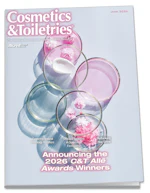
Read the latest issue
June 2026
Top Headlines
Method/Process
Shiseido Develops AI-Based System to Assess Ingredient Biodegradability, Safety Information
Event Coverage
Which Cosmetic Devices, Tech and Test Methods/Tools Will Stand Up to the 2026
C&T Allē Awards
Challenge?
Balancing/Soothing
Sea Buckthorn to Calm Oxi-Inflammatory Assault in Sensitive Skin
Sponsored
Recharge Skin in the Digital Age: Rethinking Longevity with SkinCharge CLR™
Latest
Sponsored
Recharge Skin in the Digital Age: Rethinking Longevity with SkinCharge CLR™
As digital lifestyles reshape daily habits, skin aging is increasingly influenced by prolonged screen exposure. SkinCharge CLR™ introduces a new approach to longevity by supporting skin resilience, comfort and appearance in an always-on world.
Method/Process
3 Anti-aging Discoveries: InnCoCells' Screening Collab Uncovers Sustainable Plant Extracts with Proven Benefits
The EU-funded InnCoCells project, a €7.9 million initiative spanning 4.5 years and 17 partners across 11 countries, represents the most comprehensive exploration of plant-derived cosmetic ingredients to date, according to project leaders.
Tech/Equipment/Services
[interview] How High-speed AFM Revolutionizes Precision Efficacy Testing: Cosmetic Victories Winner Profile
"Basically, an extremely small needle will glide on top of the sample, collecting topographic data in order to create a nanoscale 3D map of a single cell."
Actives
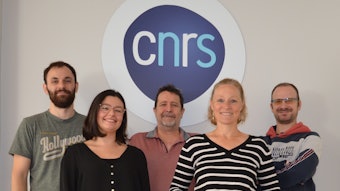
[interview] How Protein Instability Serves as a Biomarker of Aging — Cosmetic Victories Profile with IBGC/CNRS
"...The rationale is to measure the acceleration of natural protein aging in response to various endpoints of the exposome..."
Hair Care
Testing Tactics: Decoding Repair and Conditioning Claims to Deliver Real Results in Hair
This article explores the evolving world of hair conditioning and repair, including prevalent
bonding
claims. It examines what these terms mean, the types of damage being addressed, tests to substantiate these claims and how consumers perceive them.
Event Coverage
Urgent Action Demanded: Ahead of CPR Revisions, MEPs Rally to Secure EU’s Animal Testing Ban for Cosmetics
The organization is concerned that a misalignment between the CPR and REACH regulations is weakening the cosmetics animal testing ban.
Actives
Does Your Product Belong Among the
C&T Allē Award
Elites? Enter the 2026 Program to Find Out
The
C&T Allē Awards
have a long history of recognizing excellence across the cosmetic landscape. Does your innovation have what it takes to join them? Enter now to find out.
Event Coverage
Rising to the Occasion: What it Means to Win a
C&T Allē Award
— Earn Your Standing Ovation in 2026
"We are profoundly grateful to the
C&T
team for acknowledging our efforts, which motivates us to persist in pushing boundaries and revolutionizing the cosmetics industry."
Method/Process
Frizz Factors Revealed: A Novel Approach Linking Humidity, Moisture and Hair Porosity
A simple method is described here to measure frizz formation under low-to-high and high-to-low relative humidity. The results are converted to a frizz ratio and correlated with moisture sorption and hair porosity, as will be shown.
Skin Care
[interview] Empowering Personalized Care with Instant Microbiome Test + Derm-trained AI Advisor — Byome Labs Cosmetic Victories Profile
Personalized beauty continues to grow as innovations emerge to make it possible. For example, Byome Labs, a 2025 Cosmetic Victories finalist, developed a point-of-sale skin microbiome test with derm-trained AI to make product suggestions. Learn more here.
Actives
Croda Highlights New Findings in Indian-heritage Consumers for its Ameyezing 4.0 Under-eye Brightener
Visible improvements were reported in 100% of participants after 56 days, with excellent tolerance
Method/Process
[interview] Stanford University Explores How Cosmetics Influence Sensory Activation and Perception — Cosmetic Victories Profile
Stanford University, a finalist in the 2025 Cosmetic Victories competition, partnered with L’Oréal to study how cosmetics activate sensory neurons and shape perception. Here, Stanford graduate researcher Ross Bennett-Kennett, Ph.D., explains.








!['We believe [Byome Derma] will redefine how products are tested, recommended and marketed, moving the industry away from intuition or influence, toward evidence-based personalization.' Pictured: Byome Labs Team](https://img.cosmeticsandtoiletries.com/mindful/allured/workspaces/default/uploads/2025/08/byome-labs-group-photo.AKivj2669s.jpg?auto=format%2Ccompress&crop=focalpoint&fit=crop&fp-x=0.49&fp-y=0.5&fp-z=1&h=191&q=70&w=340)