Cosmetics’ relationship with beauty used to be something superficial. Women would powder their noses and routinely apply face creams merely as a means of making themselves look better. It slowly morphed to a deeper level, where self esteem and feeling good about one’s image exist. Nowadays, however, personal care has evolved even further to encompass the root of human being-ethics and morals, where the purchase of a personal care item relates to one’s concern about the environment and animal welfare. But the involvement of ethics does not just apply to the consumers using the products; it applies to scientists conducting safety studies.
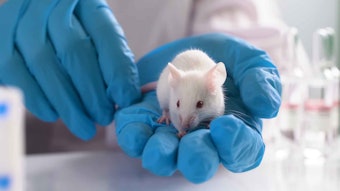
It used to be a widely accepted practice to test cosmetic products on animals. Theresa Callaghan, PhD, president of DermPharCos, finds that most individuals have conducted animal testing at one point in their careers. “Many of my colleagues in the industry will somewhere along the line have used animals either for the safety testing of cosmetic products and their ingredients, or by today’s standards even worse, conducted efficacy testing all in the name of that leading edge cosmetic product,” writes Callaghan.
Man Says No More Animal Testing
As consumers became more aware of how animals were being used for safety and efficacy testing, not only in the cosmetics industry but in other industries, they began to band together against the practice. The hammer came down with the passing of the European Union’s Cosmetic Directive in 2003, which immediately banned efficacy testing of cosmetics on animals and stipulated a six-year waiver on the banning of cosmetic ingredient animal testing. The industry is frantically working to come up with suitable alternatives by 2009 but many wonder if those alternatives will affect the safety of humans. “[Eliminating animal testing] is indeed a challenge because even though an ingredient may be classified as toxicologically safe, it does not mean that when that ingredient is actually applied to the skin in a formulated product, some poor consumer out there is not going to break out in a pruritic response, let alone the proverbial erythematous patches,” Callaghan explains.
Testing on Humans
Many companies have eliminated animal testing altogether, instead proudly touting that their testing is conducted on human volunteers. Callaghan finds that this practice places enormous pressure on a study’s sponsor. “The crossroad between accountability and ‘gimme the data’ lays squarely on the sponsor of the study,” writes Callaghan. “In clinical terms, you as the customer are the sponsor of the project that you conduct with any clinical testing house. “As the sponsor of a project or study, you have a number of key responsibilities under the guidelines for good clinical practice, not just to the clinical testing organization (CRO) and any regulatory or advertising authorities of the EU, Japan and the United States, but most importantly to the volunteers who agree to be the human ‘guinea-pig’ in order for your novel product to be evaluated and ultimately reach its final destination, i.e. in the hands of the end consumer.”
Making It Ethical
Responsibilities and accountabilities are the same in non-GMP cosmetic studies, according to Callaghan, and cutting corners in testing obviously never ends well. Enter the ethic responsibility of those conducting the study on human volunteers. There are 23 sponsor responsibilities within the good clinical practice framework when it comes to running a study. Callaghan highlights the following seven that are specifically important to testing cosmetic products on humans: quality, volunteers, authorized persons, testing articles, study reports, investigators selection and consequences.
Quality assurance is one of the highest responsibilities of the sponsor, according to Callaghan, who elaborates, “A sponsor may transfer any or all of the sponsor’s trial related duties and functions to a CRO but the ultimate responsibility for the quality and integrity of the trial data always resides with the sponsor, irrespective of whether [it was transferred] or not.” Callaghan highly emphasizes the importance of considering the safety of the human volunteers. She references the Declaration of Helsinki, where it is stated that concerns for the humans involved must always supersede science or society. One way to ensure the safety of the volunteers is to supply a study protocol to an independent ethics committee.
To ensure the accuracy and safety of a study, Callaghan recommends closely monitoring the volunteers, those carrying out the tests and the tests themselves. She adds, “Only by rigorously inspecting your study with trained resources can you be reasonably sure the study follows/followed the agreed, signed protocol.”
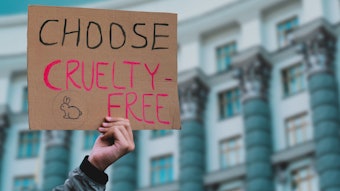

![A 2019 petition to the House of Commons stated, 'We, the undersigned residents of Canada, draw the attention of the House of Commons ... [that] animal testing is unnecessary to prove the safety of cosmetic products.'](https://img.cosmeticsandtoiletries.com/files/base/allured/all/image/2023/01/animal_testing_ban_canada_dreamstime_m_215632720.63d313232306d.png?auto=format%2Ccompress&fit=crop&h=191&q=70&rect=0%2C73%2C1800%2C1013&w=340)