Picture this: I am driving in a taxi somewhere with a female colleague from the industry. After an entire day of cosmetic claim substantiation work, she asks me an intriguing question.
“Tell me, Johann, how would you measure breast firming?”
The only obvious response I knew immediately was not a politically correct one. I clinched my fists and let my brain do some work. One thing was obvious—this lady was after an alternative test method. A hilarious discussion followed on how a woman could lower her breast into a cup (or container, depending on cup size) filled with water and measure the quantity of spilled water before and after having applied the firming product. This simply had to be an appropriate, albeit very Dutch, method of measuring breast firming since, according to my dictionary, the Dutch word for bosom (“boezem”) also means a “system of reservoirs for superfluous polder-water.”
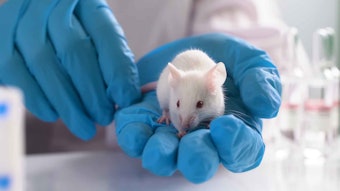
The cosmetic world needs testing alternatives because doing the logical thing is sometimes too painful, too embarrassing, too dangerous, too difficult or, in this case, politically incorrect. Especially in toxicology, the need for alternative testing is enormous. Actually, there is a need for testing alternatives for test alternatives since animal testing is, after all, already an alternative for human testing.
The Draize test is a beautiful example thereof. This is a test in which 0.5 ml or 0.5 g of a test chemical or test product is applied to a small area of shaved skin of albino rabbits for up to 4 hr. The production of an irritant response--erythema and edema formation--is measured by visual inspection of the skin at 1, 24, 48 and 72 hr after patch removal. But, as every child can understand, such testing brings suffering, and this is perceived differently now than when the test was developed more than 60 years ago.1
Alternative tests have, therefore, been developed, and some have now been accepted as alternative test methods. Julia Fentem of Unilever’s Safety & Environmental Assurance Centre (SEAC) writes,2 “in February 2000, the European Union (EU) Member States approved the first replacement alternative (in vitro) methods to be mandated for use in regulatory toxicity testing. In vitro tests for skin corrosion (the rat skin transcutaneous electrical resistance [TER] method and tests employing human skin models) and phototoxicity (the 3T3 neutral red uptake [NRU] phototoxicity test) have both been shown unequivocally to be reliable and relevant, in extensive pre-validation and formal validation studies conducted under the auspices of ECVAM [European Centre for the Validation of Alternative Methods].”
So, these tests for skin corrosion and phototoxicity have been on the market for a while. Rich Ulmer, President and CEO of InVitro International, Irvine, CA, USA, writes:3 “On May 2, 2007, the first of several likely in vitro test methods to replace animal testing for skin and eye irritation was approved by a European Government Regulatory Agency--The European Centre for the Validation of Alternative Methods (ECVAM).” This skin irritation test came a lot later, not because ECVAM did not care, but maybe because they cared too much.
Jon Heylings, PhD, from Syngenta worked or maybe still works with Fentem in the ECVAM Management Team. My information is from April 2002 when Heylings gave a magnificent presentation for the Dutch Society of Cosmetic Chemists about his experience with setting up alternative tests. He outlined the whole procedure and to be honest, it is not something to be very happy about if you are a rabbit and waiting to be shaved if a testing alternative is not found in time.
Heylings told us that ECVAM funded a pre-validation study that lasted from 1999 until 2001 with the objective to find a replacement for the Draize rabbit skin irritation test to distinguish irritants from nonirritants. The challenge to the industry was to provide tests that could do this using 10 chemicals. The Task Force initially reviewed a test protocol, prediction model and supporting data used with the EpiDerm human skin model, recommending to ECVAM that this test was put forward for pre-validation. In addition, since it was felt preferable to be able to include other in vitro tests in such a pre-validation study, the Task Force recommended that an open “challenge” was set, which involved laboratories submitting data on 10 specified chemicals, and on 20% sodium lauryl sulfate as a reference standard, for review by the Task Force.
Following review of test protocols, prediction models and data submitted by test developers, the Task Force recommended that ECVAM should support a pre-validation study on four tests: EpiDerm, EPISKIN, PREDISKIN (BIOPREDIC, Rennes, France) and the nonperfused pig ear method. Again, on the recommendation of the management team, following its review of the test protocol, prediction model and supporting data, an additional test--the mouse skin integrity function test (SIFT)--was incorporated into the study in November 1999, following the completion of phase II with the four methods selected initially.
Heylings had worked extensively on the SIFT model; he already had published on it at the IFSCC in 2000 in Berlin, Germany. He concluded that of the five methodologies that went into the pre-validation study, only three passed ECVAM Phases I and II. And none of them fully met the management team criteria for a Phase III blind study, which made him wonder how good the in vivo data actually was. Now eight years later, ECVAM finally picked two alternative assays. Guess which ones? EPISKIN and EpiDerm--the two reconstituted human epidermal models. My alternative predictive testing, also known as scientific gut-feel, could have predicted that one with a high probability.
On the ECVAM website (http://ecvam.jrc.it/index.htm) you can find a statement on the validity of in vitro tests for skin irritation. I quote: “Of these [EpiDerm and EPISKIN], the EPISKIN method showed evidence of being a reliable and relevant stand-alone test for predicting rabbit skin irritation, when the endpoint is evaluated by MTT reduction, and for being used as a replacement (…) for the Draize skin irritation test.”
Let’s now go back to what Ulmer wrote. He stated that “...ECVAM showed an ability to balance risks, such as public safety, with the benefits of eliminating unnecessary animal testing by stepping in as the first group of government regulators to actually move a segment of the industry toward in vitro testing.” But I am not that sure whether the ability to balance risks is coming at too high a price.
First of all, Episkin is owned by L’Oréal and some other manufacturing companies may not want to give money to the competition. Tough, bad luck; those can still use EpiDerm. Secondly and more importantly, what alternative test methods always do is predict the values obtained with a previous test. The Draize test was a test on rabbit skin to predict the irritancy of chemicals on human skin but was performed on rabbit skin, so what it really told us was rabbit skin irritancy. As you could read in the statement of ECVAM’s Scientific Advisory Committee, the new test alternatives are tests that predict rabbit skin irritancy. Rabbits don’t use cosmetics--now that is what I call an alternative, folks!
Instead of spending all that time, money and effort on finding a replacement for an animal test, should we not calibrate it against true human in vivo skin irritancy data? Heylings already wondered how good the in vivo data actually was and rightly so. Our alternative tests should measure or predict the best and not a surrogate. Is that alternative testing or a testing alternative? Nothing can replace the real thing. Think of breast firming and you know what I mean. ...
-Johann W. Wiechers, PhD
Technical Advisor, Allured Publishing
Independent Consultant for Cosmetic Science
JW Solutions, Gasthuispolderweg 30 2807 LL Gouda, The Netherlands
[email protected]
References
1. JH Draize, G Woodard and HO Calvery, Methods for the study of irritation and toxicity of substances applied topically to the skin and mucous membranes, J Pharmacol Exper Therap 377-390 82 (1944)
2. J Fentem, ATLA 30, suppl 2, 61-67 (2002)
3. R Ulmer, Letter to the Editor, Cosm & Toil (Sep 2007)

![A 2019 petition to the House of Commons stated, 'We, the undersigned residents of Canada, draw the attention of the House of Commons ... [that] animal testing is unnecessary to prove the safety of cosmetic products.'](https://img.cosmeticsandtoiletries.com/files/base/allured/all/image/2023/01/animal_testing_ban_canada_dreamstime_m_215632720.63d313232306d.png?auto=format%2Ccompress&fit=crop&h=191&q=70&rect=0%2C73%2C1800%2C1013&w=340)