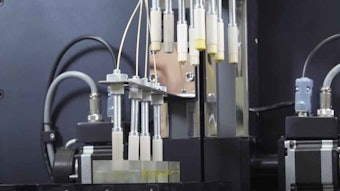
Iontophoresis is a well-known, noninvasive method that uses a small electric charge to deliver chemicals through the skin. However, according to Gregory Schultz, PhD, and Daniel Gibson, a professor and doctoral candidate, respectively, at the University of Florida, this method of delivery can have its drawbacks. Together with co-inventor, Sonal Sanjeev Tuli, MD, the team developed a method to iontophorese macromolecules into tissue such as the skin without causing damage; however, initial research focused on the eye.
Optimizing Delivery
Initial iontophoresis research began with the eye for a number of reasons. “We studied this delivery method on the cornea because not only is it a significant barrier, but also because the techniques used to deliver drugs into the skin, such as creams, penetrants and dimethyl sulfoxide, are toxic to the cornea,” noted Gibson.
The team began with the delivery of oligonucleotide-based drugs such as antisense oligonucleotides (ASOs) into the cornea. These DNA/RNA-based drugs serve as biomolecules to drive therapeutics in a targeted approach. “While we initially started with topical delivery, we found it was not getting into the cornea at all,” said Gibson.
Schultz agreed, “The passive diffusion methods for delivering these larger molecules was not delivering therapeutic amounts of the drugs.” Gibson likened the delivery of these macromolecules (1,000 g/mole) into the cornea to passing a tennis ball through a chain-link fence covered in Velcroa; the size is too large and the molecules adhere to the matrix or cells through normal biological reactions.
Schultz added that the affinity of macromolecules to water or lipids affects delivery. “Molecules that are applied topically and penetrate the skin well have a large hydrophobic component; but many drugs are hydrophilic, so they do not get across the lipid barrier of the stratum corneum,” he said.
Buffering Delivery
Besides optimizing delivery, the team also had to address the tissue damage often caused by the method. “Previous methods of iontophoresis have been found to cause significant damage to the tissue,” said Gibson, who noted that their technology sought to control those factors causing the damage while also enabling the delivery of larger molecules.
The team identified that damage was being caused by one electrode producing acid and the other producing a base, essentially leading to a chemical burn. “Basically, it’s like putting sodium hydroxide at one end or hydrochloric acid at the other end,” said Gibson.
To prevent this chemical burn, the team used the basic principle of buffering to place another molecule within the fluid to scavenge the generation of acids and bases. However, as Gibson notes, “If you use the wrong buffer it might be toxic or interfere with delivery.” Specific to the team’s method is the buffer they chose and the method of buffering the solution, which they could not disclose. Gibson stated further that the molecule as a buffer will depend on the tissue where it is applied.
Iontophoresis and Skin
After effectively delivering macromolecules through the cornea without causing tissue damage, the team has expanded its research to other barriers including the skin. According to Gibson, however, the team has not fully researched the method’s application in skin care or dermatology.
Gibson explains that cosmetic ingredient molecules are 10–100 times smaller than the drug molecules he is currently delivering, and therefore believes this is an achievable target. “If we can deliver the large molecules, we can deliver the smaller ones,” he said, adding that small charged molecules such as retinoic acid and salicylic acid should not be a problem.
Schultz added the technology may be beneficial for the delivery of MMP inhibitors to reduce the appearance of wrinkles. Further, he notes the use of iontophoresis by physical therapists to deliver lidocaine into skin, by dermatologists treating hyperhydrosis, and by dentists delivering painkillers into the gums; however, these uses all involve small molecules and sometimes result in chemical burns.
According to Gibson, in general, iontophoresis utilizes a patch or a device, which is application-dependent. For instance, in ophthalmology, a cup including the deliverable solution and an electrode sits on the eye while another electrode rests on the forehead. Gibson notes that with design improvements, the team’s iontophoresis method could be developed for at-home use.
Regarding ASOs, Schultz says research supports their healing effects on scars via injection, and he believes iontophoresis may provide a non- invasive method to deliver them to scarred areas. In the future, the team plans to expand its work to test the delivery of other biotechnology-derived and small molecules via iontophoresis.