Chosen biweekly by Rachel Grabenhofer, editor of Cosmetics & Toiletries magazine, for their relevance to personal care, Patent Picks are taken from publicly available sources. This edition features a mix of recent patents and patent applications related to color, sensory, hair, skin, delivery and antimicrobial technologies.
Color
C.I. pigment Violet 37 in rodlike form
US Patent Application 20110009536
Publication date: Jan. 13, 2011
Assignee: Ciba Corp.
This invention is directed to a new C.I. Pigment Violet 37 in rodlike form, a process for its preparation and its use for coloring high molecular weight organic material. The described pigment has a length of 0.5 to 30 μm, a width of 0.05 to 1 μm, especially 0.100 to 0.500 μm, and an average thickness of 0.01 to 0.200 μm, especially 0.03 to 0.100 μm. According to the inventors, new color properties are obtained with the pigment; for example, different colors in remission and transmission, or different colors depending upon the viewing angle. The pigment is reportedly useful for purposes such as decorative cosmetic preparations and coatings and inks, including security printing inks. Further, it is possible to combine two colors (violet/green or violet/brown) in the matrix of the application medium using only one pigment, which is a unique effect.
Anhydrous, transfer-resistant cosmetic lip compositions
US Patent 7871633
Publication date: Jan. 18, 2011
Assignee: The Procter & Gamble Company
The present invention relates to anhydrous, transfer-resistant cosmetic lip compositions suitable for application to lips that comprise modified silicones, particularly, aminosilicones; epoxy modified and carboxy modified silicones; an organosiloxane resin; a definitive diorganopolysiloxane polymer; and a volatile carrier. Upon application, the composition forms a thin but durable film that is resistant to transfer upon contact with objects such as clothing, towels, cups, handkerchiefs and tissues. The present invention also relates to methods of enhancing performance and/or appearance by the addition of modified silicone fluids in long wearing lip color products.
Sensory
Topical compositions and methods for enhancing or treating female sexual response
US Patent 7875299
Publication date: Jan. 25, 201
Assignee: Semprae Laboratories, Inc.
This patent relates to compositions for the enhancement of sexual pleasure, conditions, disorders, and diseases related to female reproductive physiology. For instance, the present invention relates to all aspects of modulating the female sexual response and enhancing sexual pleasure. Accordingly, the described compositions, preferably for topical or local use, comprise botanical extracts and/or actives such as the following: borage seed oil, Angelica pubescens root and other angelica species, Coleus forskohlii extract, vinpocetine, ferulic acid, magnesium, ascorbyl palmitate, capric/caprylic triglyceride, silica, and equivalents thereof.
Substances that increase the activation threshold of immune cells
US Patent Application 20110008394
Publication date: Jan. 13, 2011
Assignee: BASF Beauty Care Solutions France S.A.S.
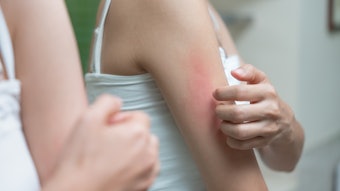
This patent discloses active substances to increase the activation threshold of immune cells and a method for screening such active substances. The main aim is reportedly to increase the activation threshold of immune cells in an individual, in particular the cutaneous and/or mucosal immune cells, to decrease the cutaneous and/or mucosal sensitivity, and/or cutaneous and/or mucosal reactivity, and/or increase the skin and/or mucosal tolerance (i.e., like an anti-irritant). The invention would therefore be of interest in the context of cosmetic or pharmaceutical, in particular dermatological, treatment and/or care.
Hair and Skin
Pharmaceutical and cosmeceutical wash-off mousse shampoo compositions
US Patent Application 20110008267
Publication date: Jan. 13, 2011
Assignee: Perrigo Israel Pharmaceuticals Ltd.
Disclosed in this patent is a method for treating a disease or disorder of the skin or scalp while simultaneously cleansing the skin or scalp. The method involves administering a mousse formed from a composition that includes a therapeutically or cosmeceutically effective amount of at least one active pharmaceutical ingredient, 10% to 50% w/w, of a cleansing agent selected from anionic surfactants and/or nonionic surfactants and combinations thereof in a pharmaceutically acceptable, mousse-forming carrier that includes a propellant (3% to 50% w/w) and water (40% to 90% w/w). After administration, the user waits a period of time before rinsing said skin or scalp with water to remove the mousse.
Cosmetic composition forming after application a supramolecular polymer
US Patent 7862805
Publication date: Jan. 4, 2011
Assignee: L'Oreal
The present invention relates to a care and/or treatment and/or makeup cosmetic composition for keratin materials including, in a physiologically acceptable medium, an efficient amount of at least one linear, branched or cyclic polymer, or dendrimer, comprising: a -POL- polymeric backbone with at least two repeating patterns and at least two binding groups attached on the polymeric backbone and adapted to create H links with one ore more partner binding groups of an identical or different chemical nature. Further, each coupling of two binding groups involves at least three H links.
Combinations of herb extracts having synergistic antioxidant effects
WIPO Patent Application WO/2010/147814
Publication date: Dec. 23, 2010
Assignee: The Dial Corp.; H Ge; EP Seitz, Jr.; and T Doering
This patent comprises mixtures of herb extracts that exert synergistic antioxidant effects. Said mixtures include the herb ginger and at least one other herb selected from honeysuckle and sophora. Skin care preparations incorporating such herb extract mixtures, and their methods of preparation and use, are also claimed.
Delivery
Formulations comprising exine shells for delivery
US Patent Application 20110002984
Publication date: Jan. 6, 2011
Assignee: University of Hull
The present invention describes a formulation containing an active substance encapsulated within an exine shell of a naturally occurring spore, together with a protective additive that is also encapsulated within the exine shell. It is known from previous work that exine coatings of naturally derived, typically plant spores can be used as delivery vehicles for pharmaceuticals and dietetic substances. These coatings can be isolated from spores by successive treatments with organic solvents, alkali and acid so as to remove the lipid, carbohydrate, protein and nucleic acid components that may be attached to or contained within the exine shell. Enzymatic methods have also been used to isolate the exine coating from other components of a spore.
The invention thus proposes that a protective additive be co-encapsulated with the active substance, both within the exine shell, rather than applied as a coating around the external surface of the shell. This approach reportedly has been found to provide an effective degree of protection for the encapsulated active substance.
Antimicrobial
Topical antimicrobial compositions and uses thereof
US Patent Application 20100331276
Publication date: Dec. 30, 2010
Assignee: VirBac SA
This invention relates to a composition for topical application that comprises at least one first and one second mono- or oligosaccharide, each of said first and second mono- or oligosaccharides being capable of limiting the adhesion of microorganisms to the skin. According to the patent, the presence of a single mono- or oligosaccharide capable of limiting the adhesion of a limited number of families of specific pathogenic microorganisms. However, when a composition includes at least two mono- or oligosaccharides, the inhibition of the microorganisms affects a much larger number of families and an effective inhibition of the microorganisms is observed, thus the adherence of the pathogenic microorganisms on the skin is considerably reduced. The addition of a third mono- or oligosaccharide is also highly advantageous. Nevertheless, the addition of numerous other mono- or oligosaccharides reportedly appears to be of only minor benefit.
Broad spectrum preservation blends
US Patent 7854940
Publication date: Dec. 21, 2010
Assignee: Arch Chemicals, Inc.
The present patent discloses a composition having effective broad spectrum preservation activity comprising a mixture of caprylyl glycol or one or more analogs thereof, or mixtures thereof with a preservative selected from the group consisting of: (1) chloroxylenol and 2-phenoxyethanol, (2) chloroxylenol and chlorphenesin, (3) chlorphenesin and 2-phenoxyethanol, and (4) chloroxylenol, chlorphenesin and 2-phenoxyethanol.