The Independent Cosmetic Manufacturers & Distributors (ICMAD) has joined the Personal Care Products Council, the US Food and Drug Administration (FDA), the Occupational Safety and Health Administration (OSHA) and consumer groups to support the Cosmetic Ingredient Review (CIR) Expert Panel's review for the use of formaldehyde/methylene glycol in professional hair straightening products.
The CIR Expert Panel initiated the review of the two ingredients after an Oregon OSHA laboratory followed up on a salon worker complaint that found 8–10% formaldehyde in a popular straightening treatment. Following this finding, the FDA requested that the CIR Expert Panel review the safety of formaldehyde in these treatments in addition to methylene glycol, which is now listed as a cosmetic ingredient.
Regarding the two ingredients, the CIR noted: Of special importance is the understanding that in an aqueous formulation, an equilibrium mixture of formaldehyde and methylene glycol will be present regardless of whether formaldehyde or methylene glycol is the added ingredient. Accordingly, these two ingredients are considered equivalent, and are referred to from here forth as formaldehyde equivalents.
The CIR Expert Panel report found that formaldehyde/methylene glycol are safe in cosmetic products at 0.2% or less. In addition, it noted that a safety conclusion cannot be made regarding formaldehyde/methylene glycol in cosmetic products intended to be aerosolized, or in which formaldehyde/methylene glycol vapor or gas will be produced under conditions of use. Also uncertain is the safety of formaldehyde/methylene glycol in nail care products, pending receipt of additional information clarifying the FDA's position on allowed levels of these ingredients in nail care products and nail salon exposure levels.
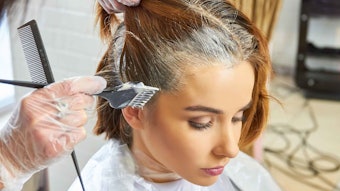
The CIR Expert Panel noted that hair straightening products containing these ingredients, when heated, can release low levels of formaldehyde gas. Formaldehyde and methylene glycol are sensitizing agents, and consumers or salon workers may experience allergic reactions if they become sensitized. Various studies also have indicated a link to cancer in humans when inhaled chronically over a long period of time.
John Bailey, chief scientist of the Personal Care Product Council's responded in a press statement, saying, "Safe and proper use depends largely on the ventilation in the salon and the application procedure. For this reason, we strongly advise consumers and beauticians not to use professional hair straightening products in the home. Consumers who do visit a salon to receive hair-smoothing treatments by a trained salon worker should be certain that the salon is properly ventilated and that the products and application process meet the safety guidelines set by the U.S. Occupational Safety and Health Administration (OSHA), which is responsible for regulating workplace safety. OSHA has established limits for safe levels of inhalation exposure to formaldehyde gas."
He added that the council urges the FDA to work expeditiously with OSHA and appropriate state and local organizations to "objectively determine if salon hair smoothing products emit levels of formaldehyde gas that are unsafe for consumers or salon workers under their intended conditions of use and taking into consideration salon ventilation practices." The group further recommend that the FDA take prompt and appropriate action to ensure these products have been fully tested and substantiated for safety under their given conditions of use.
In its response statement, the ICMAD wrote, We support the work of OSHA, its state counterparts in ensuring compliance with worker safety and hazard communication rules, and the work of FDA in ensuring that the safety of these products is substantiated and the labeling is compliant.




!['I think the biggest game-changer about [MoCRA's] ... requirement for GMPs is how it changes what it means to be adulterated,' Brandi Reinbold, senior manager of global certification for NSF International, said in this sponsored videocast. Register now to watch and learn more. It's free.](https://img.cosmeticsandtoiletries.com/files/base/allured/all/image/2023/11/NSF_Intl_Thumbnail.6554efdc29816.png?auto=format%2Ccompress&fit=crop&h=191&q=70&rect=275%2C70%2C1328%2C748&w=340)


