Little is more confusing to marketers and cosmetic formulators than product claims regulations. Questions regarding the rules commonly arise, including: What proof is needed? Who decides what can be claimed? What’s the penalty? and Who regulates the claims? When speaking with various governments about cosmetic regulations, I jokingly refer to Steinberg’s First Rule of Regulation: Do not promulgate regulations that you do not have the resources or ability to enforce completely. Why? Because without uniform enforcement, companies do not know which rules to follow or what they can get away with—they always seem to be chasing a competitor that is making prohibited claims without any repercussions. The mentality is, “If they can do it, why can’t I?”
Ingredient Listings
The rules for ingredient listings are fairly simple and straightforward; for instance, only INCI names are allowed on cosmetic product labels. However, without enforcement of the rules, companies are listing all sorts of claims in their ingredient statements. The question is, do consumers read the ingredient listings, or are cosmetic chemists the only ones reading them?
One major labeling infraction is the use of an adjective to describe water, such as purified, deionized, natural, spring, etc. Of these errors, purified water is the most common. Purified water is the drug name for water, as defined in the US Pharmacopoeia, and may only be listed on the labels of drugs that do not make cosmetic claims. Purified water on the product label is automatically considered a drug claim, yet many companies do this without repercussions.
References
Send e-mail to [email protected].
1. Cosmetic Product Manufacturers (2/95), available at: www.fda.gov/ICECI/Inspections/InspectionGuides/ucm074952.htm (Accessed Jun 15, 2009)
2. FDA Cosmetics Handbook (1994) p13, available at www.mlmlaw.com/library/guides/fda/Coshdbok.htm(Accessed Jun 15, 2009) 3. Federal Register vol. 58 no. 90 (May 12, 1993) p 28208
4. www.Cosmeticsdesign-europe.com (Mar 13, 2009)
5. Guidelines for Cosmetic Advertising and Labeling Claims, available at www.hc-sc.gc.ca/cps-spc/alt_formats/hecs-sesc/pdf/pubs/indust/cosmet/guidelines-ld-eng.pdf (Accessed Jun 10, 2009)
The word vitamin is another advertising claim that is prohibited on cosmetic ingredient labels. Companies often list the correct INCI designation but parenthetically add “vitamin A, C, E, etc.” after the INCI name. The US Food and Drug Administration (FDA) considers vitamins as separate from cosmetic ingredients1 as they are not recognized as providing health benefits in the cosmetic product.
A product that features vitamin E, for example, must list the chemical name tocopherol in the ingredient declaration since listing it as vitamin E could mislead consumers by giving the impression that it offers a nutrient or health benefit. In fact, vitamin E typically is added as an antioxidant to prevent the chemical deterioration of the product.2 On the other hand, the FDA does not object to stating that the product contains vitamins outside of the ingredient listing.
Since the FDA has not taken action against these infractions, some companies believe they can list ingredients in impermissible ways without consequence. However, many foreign countries enforce the rules, especially during customs inspections, and this can delay a product from reaching the market. This sometimes occurs when foreign goods are shipped into the United States as well.
Another labeling trend is highlighting the origins of ingredients by using terms like vegetable, natural, organic, or even better—certified organic. Some marketers further emphasize these origins by inserting an asterisk (*) within the ingredients declaration to call attention to materials in the product that are of a certain origin.
Readers of this column know there is no difference in chemicals from different origins; a molecule of glycerin is just that. Readers also know that there is no data showing “certified organic” materials to be safer or different from other materials with the same INCI designation.
Free-from Claims
To this author, nothing is more damaging to the personal care industry than using free on the product label or in its advertising—unless it’s the selling price. The first time that marketers discovered they could sell more of a product by promoting what it does not contain was in the early 1980s, when PABA-free became the term du jour for sunscreens.
The number of sunscreens that actually used PABA, or Aminobenzoic acid (the correct US drug name), were few since it was a poor sunscreen active that was too water-soluble and oil-insoluble; it also stained fabrics and required application at least 30 min before sun exposure to work. On the positive side, it is found in nature—Health Canada still lists it as a permitted natural health product active—and for about 25 years, it was the only UV filter universally allowed.
The sunscreen used at that time had an INCI designation of Octyl Dimethyl PABA (drug name: Padimate O; current INCI: Ethylhexyl Dimethyl PABA). When the first US sunscreen rules were published in 1978, this was the most popular UV filter in use. Marketers were allowed to claim that products containing octyl dimethyl PABA contained PABA, although these are different chemicals. The biblical saying, “People who live by the sword, die by the sword,” came true when marketers of the potential competition for Padimate O, octyl methoxycinnamate (OMC; drug name: Octinoxate; current INCI: Ethylhexyl Methoxycinnamate), began claiming PABA-free on product labels, inferring that something was wrong with PABA. This carried over to Padimate O and led to a domination of the sunscreen market by OMC, as well as the near disappearance of Padimate O from the market.
The labeling of sunscreens as PABA-free became almost automatic and the FDA addressed this in its 1993 proposed rules stating that PABA is not the correct ingredient name.3 In addition, the FDA noted that PABA was a safe and effective Category I sunscreen; however, the PABA-free labeling still inferred it was not. In the 1999 Final Monograph, the FDA allowed the claim for Aminobenzoic acid (PABA)-free but as of yet, to this author’s knowledge, no sunscreens have been marked with this claim.
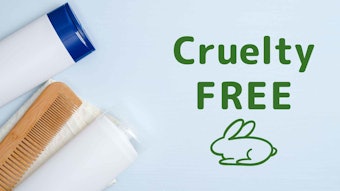
Since the PABA-free claim worked, marketers began using other negative claims: oil-free, silicone-free, fragrance-free, chemical-free, phthalate-free, preservative-free, and the latest, paraben-free. Marketing would probably claim uranium-free or even battery-acid free if they thought it would sell products. The mentality is always the same: our products are safer than our competitors’, which contain “unsafe” ingredients.
With each new free-from claim, consumer press started to ask questions: How many people were killed or injured until this dangerous ingredient was removed? What other dangerous ingredients are being used that have not been disclosed yet? Shouldn’t the FDA pre-approve all cosmetic ingredients since so many are dangerous? This is why nongovernmental organizations (NGOs) call for more and stricter regulations on cosmetics and their ingredients. Why doesn’t the Personal Care Products Council add a requirement to its Consumer Commitment Code that cosmetic companies refrain from this practice of free-from marketing?
In March 2009, the UK Cosmetic, Toiletry and Perfumery Association (CTPA) advised members against labeling products as being free-from certain ingredients.4 Advertising Standards Canada has gone even further, allowing such claims to be made but under limited conditions, including:
- Manufacturers must supply proof that the ingredient was in their product but has since been removed completely; even trace amounts of the chemical are not allowed.
- This claim may only be made for up to one year; and
- Claims may also state that the product never contained a material if the statement is true. For example, phrasing such as, “This product naturally never contained automobile tires,” would be acceptable.
Drug vs. Cosmetic Claims
In the United States, the FDA makes the distinction between drugs and cosmetics principally by the product’s promoted intent. If the claim indicates a product to have drug-like effects, that product will be regulated as a drug. This ruling based on intent is subjective and leads many companies to “push the envelope”—that is, to make stronger drug-like claims until the FDA issues a warning letter; then they pull back.
Health Canada, on the other hand, publishes a list of claims that it considers to be unacceptable for cosmetics but permissible for drugs, as well as a list of acceptable cosmetic claims with some examples. All claims must be true, verifiable and accurate. The group recently revised its “Guidelines for Cosmetic Advertising and Labeling Claims.”5 These guidelines are broken into three categories of substrate, product and claim type, with sub-categories listed for each (see Categories for Advertising and Labeling Claims).
European Union
The 7th Amendment to the Cosmetic Directive, under Article 7a part (g), states that one must have “proof of the effect claimed for the cosmetic product, where justified by the nature of the effect or product.” In relation to this, as part of the product information package, companies are required to list an EU address that the Competent Authorities may contact in order to inspect evidence of the claims made.
Going further with labeling requirements, the 8th Amendment, known as a recast since it changes the Cosmetic Directive to Cosmetic Regulations, has been approved but at press time had not yet been published in the Official Journal of the European Union. It states that:
- Names, trademarks, pictures and other signs should not be used to imply that products have characteristics or functions that they do not have;
- The commission will adopt a list of common criteria for claims that may be used for cosmetic products. Three years after the Cosmetic Regulations are implemented (approximately 2012), the commission will submit to the Parliament and Council a report regarding the use of claims on the basis of common criteria; and
- The “responsible person” (a new provision within the regulations) may allow the fact that no animal tests have been carried out by the manufacturer or ingredient suppliers to comply with this regulation.
Proof of Claims
Since claims substantiation is expensive, some companies seek ways to make claims without doing the work or incurring the expense. Frequently they rely upon claims made by ingredient suppliers. In the United States, the National Advertising Division (NAD) of the Council of Better Business Bureaus acts as the watch dog for all consumer advertising claims. This group does not accept ingredient claims as a base for finished goods claims. In the EU, ingredient suppliers’ claims have been accepted provided that manufacturers use the exact same ingredient and at the exact same dosage in a formulation. However, with the recast (described above), it is likely this will not be permitted in the future.
Comments
In my 40 years in the personal care industry, I cannot recall a time when so many new laws were being introduced in the US Congress and state legislative bodies for the regulation of cosmetics. It is clear that the NGOs are active and probably successfully swaying public (and now political) opinion toward the idea that cosmetics contain unsafe ingredients and that the public needs more protection by added legislation.
Such legislation takes the form of banning ingredients even when overwhelming scientific evidence supports their safety, and calling for the FDA’s pre-approval of all ingredients for use in cosmetics. If this comes to pass, ingredient approvals by the FDA will likely advance at the same pace as approvals for new UV filters—just three have been approved in 30 years. Further, where will the money come from to pay for this? User fees. This will drive all small- to medium-sized entrepreneurial companies out of business.
Who is to blame? The industry itself. The continued negative promotion of ingredients is like the industry wearing a “kick me” sign on its back.
Natural and organic marketers are active in this practice of free-from marketing. They are also some of the most guilty when it comes to ignoring regulations. Here’s an example from an unnamed company’s Web site: The first and only cosmetics made from antioxidant rich fruit and vegetable pigments. While other color cosmetics are made with either FD&C colors (synthetic dyes) or minerals, only 100% pure color cosmetics are made with fruit and vegetable pigments (patent-pending) ... .
The fact that these products contain colors that are unapproved in the United States (and most of the world) and that they lack safety data has not deterred them from calling attention to the fact that these certified colors—the only ingredients the FDA does pre-approve—are synthetic. In fact, even non-batch certified colors first must be allowed by the FDA.
Health Canada is to be commended even if one disagrees with the list of permitted claims. The group spells out what can and cannot be claimed. In my opinion, all cosmetic regulators should adopt this approach. Finally special notice should go to the CTPA for its aggressive stance against negative advertising. Now if only the US companies could be convinced.