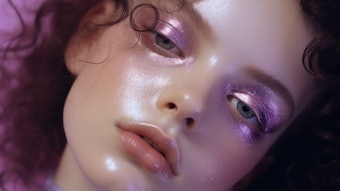
Exotic color additives are materials that provide different effects than standard colors. In cosmetic applications, the US Food and Drug Administration (FDA) does not differentiate between the two per its regulation. It states: “No matter how exotic or novel the color additive or its intended use, it is subject to the same regulations as the more everyday colors and products.”
The following items are a sampling of some unique color additives. This list is not exhaustive, but rather, is intended to show how US regulations apply to such colors.
Color-changing pigments: Colors that change in response to factors such as altered pH, oxygen exposure or temperature change are subject to the same regulations as all other color additives as long as they do not change chemically.
Composite pigments: Color additives used in combination to achieve variable effects, such as those found in pearlescent products, are subject to the same regulations as all other color additives. Some color additives when combined may form new pigments, which may not be approved for the intended use. An example is a holographic glitter, comprised of the approved color additive aluminum, that is then bonded to an etched plastic film. Some acceptable coatings protect the ingredient from reacting with other substrates in the formula, such as water.
Fluorescent colors: Only the following fluorescent colors are approved for use in US cosmetics, with limits on their intended uses: D&C Orange No. 4 (21 CFR 74.2254), No. 10 (21 CFR 74.2260) and No. 11 (21 CFR 74.2261); and D&C Red No. 21 (21 CFR 74.2321), No. 22 (21 CFR 74.2322), No. 27 (21 CFR 74.2327) and No. 28 (21 CFR 74.2328).
Glow-in-the-dark colors: Luminescent zinc sulfide is the only approved glow-in-the-dark color additive (21 CFR 73.2995), but it has use restrictions for Halloween and for external use only. The restrictions are clearly stated in the Code of Federal Regulations (CFR) in the Federal Register.
Halloween makeup: These products are considered cosmetics [FD&C Act, Sec. 201(i); 21 U.S.C. 321(i)]; therefore, they are subject to the same regulations as other cosmetics, including the same restrictions on color additives.
Liquid crystal colors: These additives, which produce color motifs in a product through diffraction, are unapproved color additives. Their use in cosmetics as color additives is illegal [FD&C Act, Sec. 601(e), 21 U.S.C. 361(e)], but they can still be used for their intended use in cosmetics as emollients or moisturizers.
Tattoo pigments: As noted above, no color additives are approved for injection into the skin, as in tattoos and permanent makeup. Temporary (or rinse-off) tattoos are governed by the same cosmetic regulations as any other product.
Theatrical makeup: Like Halloween makeup, these products are considered cosmetics [FD&C Act, Sec. 201(i); 21 U.S.C. 321(i)]; therefore, they are subject to the same regulations as other cosmetics, including the same restrictions on color additives.
In short, while exotic color additives provide additional functionality, they are regulated in exactly the same way as standard cosmetic colors. Therefore, if a formulator is planning to use a color additive, they should review the regulations before starting. It may save them unnecessary trouble in the future.